Ukrainian
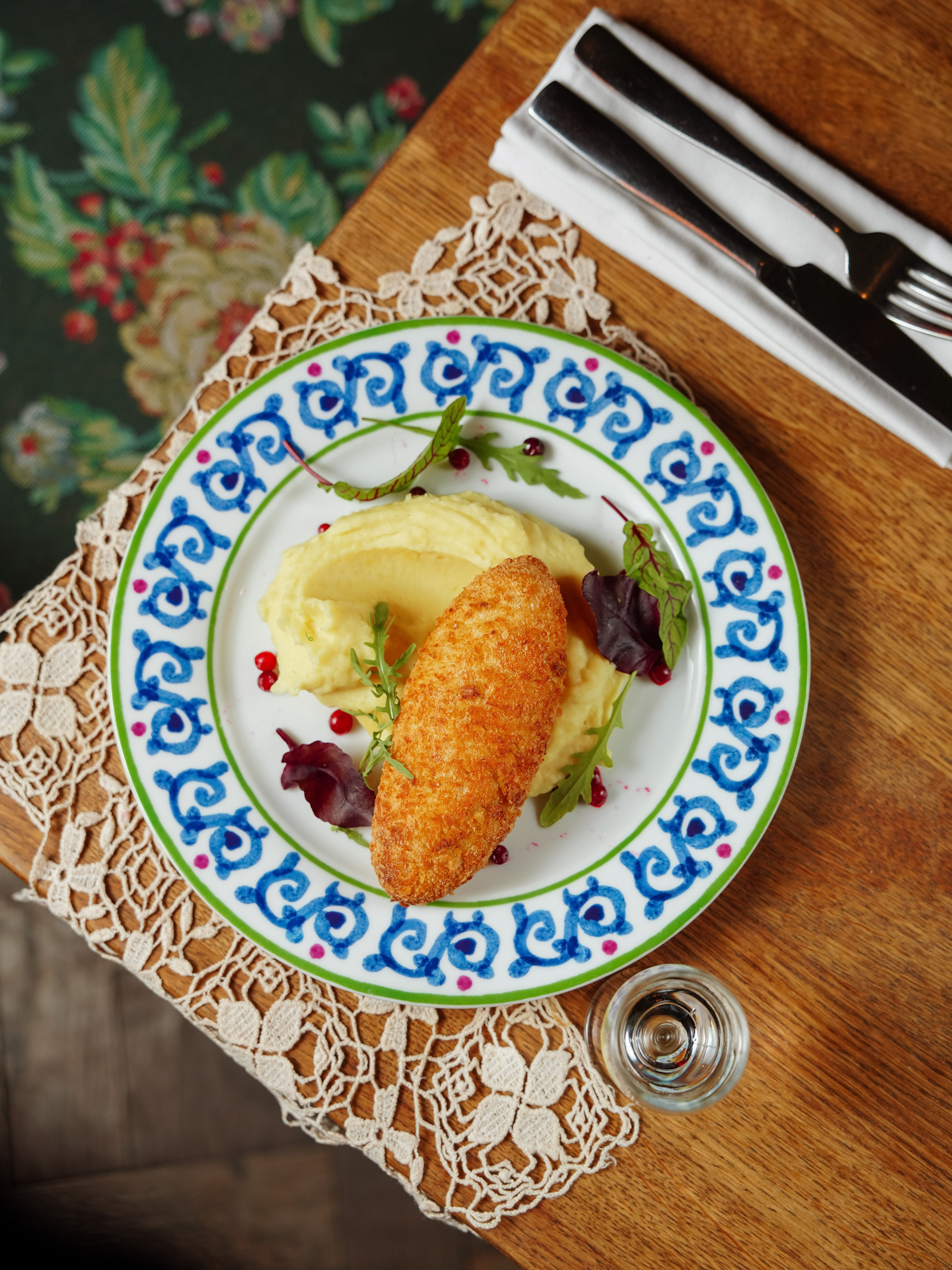
Kotlet po Kyivsky
The diets react (see scores below)
Common Ingredients
- chicken breast
- butter
- garlic
- parsley
- eggs
- breadcrumbs
- flour
- oil
Specific recipes may vary.
Incompatible with 7 of 11 diets
Diet Ratings
Chicken Kyiv is fundamentally incompatible with ketogenic diet in its traditional form. The dish requires flour for dredging, eggs for binding, and breadcrumbs for coating — a triple-layer carbohydrate coating that significantly raises net carbs per serving. Breadcrumbs alone can add 15-25g of net carbs per piece, and the flour dredging adds additional carbs. While the core components (chicken breast, butter, garlic, parsley) are keto-friendly, the breading process disqualifies this dish as prepared. The dish would need substantial modification (e.g., replacing breadcrumbs with crushed pork rinds or almond flour, and omitting the wheat flour) to become keto-compatible.
Kotlet po Kyivsky (Chicken Kyiv) is a Ukrainian classic consisting of a pounded chicken breast fillet wrapped around a core of seasoned butter, then coated in egg and breadcrumbs before frying. It contains multiple animal-derived ingredients: chicken breast (poultry), butter (dairy), and eggs. There is no ambiguity here — this dish is fundamentally built on animal products and is entirely incompatible with a vegan diet.
Chicken Kyiv (Kotlet po Kyivsky) is firmly non-paleo. The dish relies on breadcrumbs and flour as a coating — both grain-derived and explicitly excluded from the paleo diet. Butter is a dairy product, also excluded under strict paleo guidelines. The 'oil' used for deep-frying is most likely a seed or vegetable oil (canola, sunflower, or vegetable blend), which are all prohibited. While the chicken breast, garlic, parsley, and eggs are individually paleo-approved, the structural and cooking components of this dish make it incompatible with the paleo framework. This is not a borderline case — grains and dairy are among the clearest exclusions in paleo, and breadcrumbs plus flour are central to the dish's identity, not optional additions.
Chicken Kyiv is a breaded, deep-fried chicken dish with a butter core, which creates several tensions with Mediterranean diet principles. Chicken itself is an acceptable moderate protein in the Mediterranean diet, but the preparation method introduces significant issues: deep-frying in oil (though oil is acceptable, deep-frying adds excessive fat and calories), refined white breadcrumbs and flour (refined grains are discouraged), and a substantial butter filling (butter is not the canonical fat — extra virgin olive oil is). The eggs and garlic are fine, and parsley is a positive herb addition. Overall, this is a heavily processed preparation of an otherwise acceptable protein, making it a borderline caution item at the lower end of the range.
Some Mediterranean diet interpretations are more permissive about preparation methods, noting that chicken with herbs and garlic reflects broadly healthy ingredient choices; if pan-fried in olive oil rather than deep-fried and made with whole-grain breadcrumbs, this dish could be viewed as a more acceptable moderate indulgence within the framework.
Chicken Kyiv is fundamentally incompatible with the carnivore diet despite containing animal proteins. The dish is heavily dependent on plant-based ingredients: breadcrumbs and flour form the entire breading coating (grain-derived), parsley is an excluded herb, and garlic is a plant. The cooking oil is likely a plant-based oil. While chicken, butter, and eggs are carnivore-compatible components, the dish as traditionally prepared cannot be separated from its grain-based breading, which is a core structural element — not an optional garnish. No carnivore practitioner of any tier (strict Lion Diet, Baker-style, or Saladino animal-based) would approve this dish in its traditional form.
Chicken Kyiv contains multiple excluded ingredients. Breadcrumbs are made from wheat (a grain) and flour is also a grain-derived product — both are explicitly excluded on Whole30. Additionally, regular butter is excluded (only ghee/clarified butter is permitted as a dairy exception). The classic preparation of this dish is fundamentally incompatible with Whole30.
Chicken Kyiv contains two significant high-FODMAP ingredients that make it unsuitable during the elimination phase. First, garlic is one of the highest-FODMAP foods tested by Monash University, containing dense fructans even in tiny amounts — and in Chicken Kyiv, garlic is a core flavoring in the butter filling. Second, traditional breadcrumbs are made from wheat bread, which is high in fructans. Flour used for dredging is also wheat-based and adds further fructan load. The chicken breast, butter, parsley, eggs, and oil are all low-FODMAP and unproblematic, but the garlic and wheat-based coating are deal-breakers during elimination. Even if garlic were replaced with garlic-infused oil (which is low-FODMAP), the wheat breadcrumb and flour coating would still need to be substituted with gluten-free alternatives (e.g., rice flour, gluten-free breadcrumbs) to make this dish safe.
Chicken Kyiv (Kotlet po Kyivsky) features a lean protein base (chicken breast) which aligns well with DASH principles, but the preparation method raises significant concerns. The dish is characterized by a substantial butter core (typically 1-2 tablespoons per serving), which adds saturated fat that DASH limits. The breading process involves flour, eggs, and breadcrumbs, adding refined carbohydrates rather than whole grains. Critically, the dish is deep-fried in oil, dramatically increasing total fat content and caloric density. While chicken breast itself is a DASH-approved lean protein, and garlic and parsley are positive additions, the overall preparation transforms it into a high-fat, calorie-dense dish. Sodium content depends heavily on whether salt is added to the butter filling and breadcrumbs, but even without added salt, the saturated fat load from butter and frying oil is the primary DASH concern. This dish can be consumed occasionally in moderation but is not a core DASH food.
NIH DASH guidelines emphasize limiting saturated fat and total fat intake, which this preparation clearly challenges due to butter and deep-frying. However, some updated DASH-oriented clinicians note that if the dish were oven-baked rather than deep-fried and the butter filling reduced, chicken breast-based dishes can fit within DASH more comfortably — the verdict shifts significantly based on preparation method.
Chicken Kyiv (Kotlet po Kyivsky) presents a mixed Zone profile. The base protein — chicken breast — is an ideal Zone lean protein source. However, the dish's preparation introduces several Zone-unfavorable elements. The butter core is high in saturated fat, conflicting with Zone's preference for monounsaturated fats. The breading (breadcrumbs + flour) adds high-glycemic carbohydrates that spike insulin — the opposite of Zone's low-glycemic carb philosophy. The frying oil (likely a seed oil) contributes omega-6 fatty acids, which Sears explicitly discourages due to pro-inflammatory effects. Eggs contribute favorably to the protein block. The dish is technically 'workable' in the Zone framework if portions are carefully controlled and paired with low-glycemic vegetables (e.g., a large green salad or steamed broccoli), but the breading-to-protein ratio and butter filling make it difficult to hit a clean 40/30/30 block ratio without significant modification. A typical serving likely skews toward excess fat (saturated) and moderate-to-high glycemic carbs from the crust, disrupting the Zone hormonal balance Sears prioritizes.
Some Zone practitioners note that Sears' later work (particularly 'The Zone Diet' anti-inflammatory evolution) acknowledges that occasional saturated fat from natural sources like butter is less concerning than processed trans fats or omega-6 seed oils. Additionally, the breading component is relatively thin, meaning a small serving could still be block-balanced if the carb portion is counted carefully and paired with abundant fibrous vegetables. In this reading, Chicken Kyiv is an 'unfavorable' Zone meal rather than an 'avoid' — similar to how Zone treats pasta: possible in strict portions, but not recommended as a staple.
Chicken Kyiv is a classic Ukrainian dish with a mixed anti-inflammatory profile. On the positive side, chicken breast is lean white poultry, which is acceptable in an anti-inflammatory diet, and garlic and parsley are genuinely anti-inflammatory ingredients — garlic contains allicin and organosulfur compounds that reduce inflammatory markers, while parsley provides flavonoids and vitamin C. Eggs contribute some anti-inflammatory nutrients (selenium, choline). However, the dish has several features that reduce its anti-inflammatory standing: (1) Butter is the defining element of Chicken Kyiv, forming the herb compound butter core — butter is a saturated fat that anti-inflammatory guidelines recommend limiting; (2) The breadcrumb-and-flour coating represents refined carbohydrates, which promote inflammatory responses; (3) Deep-frying in oil (typically a refined seed oil such as sunflower or vegetable oil) adds significant omega-6 fatty acids and introduces oxidized lipids from high-heat frying, both of which are pro-inflammatory concerns. The net result is a dish with genuinely beneficial ingredients undermined by a preparation method (deep-frying in refined oil, butter-heavy filling, refined breading) that is inconsistent with anti-inflammatory principles. Occasional consumption is acceptable, but it should not be a regular fixture in an anti-inflammatory diet.
Some anti-inflammatory practitioners would rate this more favorably if prepared with high-quality ingredients — for instance, using extra virgin olive oil or avocado oil for frying, grass-fed butter (which has a better omega-3 to omega-6 ratio than conventional butter), and whole-grain breadcrumbs. In that interpretation, the dish is lean protein with potent anti-inflammatory aromatics and is no worse than many 'caution' foods. Conversely, strict anti-inflammatory protocols would push this toward 'avoid' given the combination of refined breading, deep-frying, and saturated fat from butter.
Chicken Kyiv is a deep-fried dish consisting of a chicken breast stuffed with a butter-herb core, then breaded and fried in oil. While the base protein (chicken breast) is excellent for GLP-1 patients, the preparation method fundamentally undermines its nutritional suitability. The dish is deep-fried, adding substantial fat from the cooking oil. The butter core melts during cooking and saturates the interior, delivering a high saturated fat load per serving. The breading (flour, egg, breadcrumbs) adds refined carbohydrates with minimal fiber. This combination — high fat, fried, rich — is precisely the profile most likely to worsen GLP-1 side effects including nausea, bloating, reflux, and prolonged gastric discomfort due to slowed gastric emptying. Nutrient density per calorie is poor relative to what GLP-1 patients need. The dish is also portion-dense in fat rather than protein per calorie consumed.
*See how scores were generated at our methodology page.
Nutritional profile
Six traits that cut across every diet.
Fiber & Plants
How much whole-plant food and fiber it delivers.
Healthy Fats
The quality of its fats (unsaturated, omega-3).
Whole / Unprocessed
How close it is to its natural, unprocessed form.
Gut Gentle
How easy it is on digestion (low FODMAP, few irritants).
Low Glycemic
How little it spikes your blood sugar.
Protein Density
How much protein it packs per calorie.
Controversy Index
Higher controversy = more disagreement between diets.
Diet-Specific Tips
 Mediterranean — 4/10
View tips
- Chicken is an acceptable moderate protein (poultry category)
- Butter filling conflicts with olive oil as the primary fat source
- Deep-frying method adds excessive unhealthy fat load
- Refined breadcrumbs and flour are discouraged refined grains
- Garlic and parsley are positive Mediterranean ingredients
- Eggs are acceptable in moderation
- Preparation is highly processed relative to Mediterranean ideals
 DASH — 4/10
View tips
- Chicken breast is a DASH-approved lean protein
- Butter filling adds significant saturated fat, which DASH limits
- Deep-frying in oil substantially increases total fat and caloric content
- Breadcrumb coating uses refined grains rather than whole grains
- Garlic and parsley are positive, DASH-compatible flavor additions
- Sodium level depends on preparation but butter fillings are often salted
- Baked, reduced-butter versions would score meaningfully higher (6-7)
- Occasional consumption acceptable within overall DASH dietary pattern
 Zone — 4/10
View tips
- Chicken breast is an ideal Zone lean protein (favorable)
- Butter filling is high in saturated fat, conflicting with Zone's monounsaturated fat preference
- Breading (flour + breadcrumbs) introduces high-glycemic refined carbohydrates
- Frying oil (likely seed oil) adds pro-inflammatory omega-6 fatty acids
- Eggs contribute positively to the protein block
- Dish can be partially balanced by strict portioning and large low-glycemic vegetable sides
- Overall macro ratio skews toward excess fat (saturated) and unfavorable carbs
 Anti-Inflammatory — 4/10
View tips
- Chicken breast is lean white poultry — acceptable in anti-inflammatory eating
- Garlic: potent anti-inflammatory (allicin, organosulfur compounds, reduces CRP)
- Parsley: anti-inflammatory flavonoids and antioxidant vitamin C
- Butter core is high in saturated fat — anti-inflammatory guidelines recommend limiting
- Breadcrumb-and-flour coating = refined carbohydrates, pro-inflammatory
- Deep-frying in refined oil (typically sunflower/vegetable) adds oxidized omega-6 fatty acids
- High-heat frying creates potential for advanced glycation end-products (AGEs)
- Overall preparation method substantially undermines the anti-inflammatory value of individual ingredients