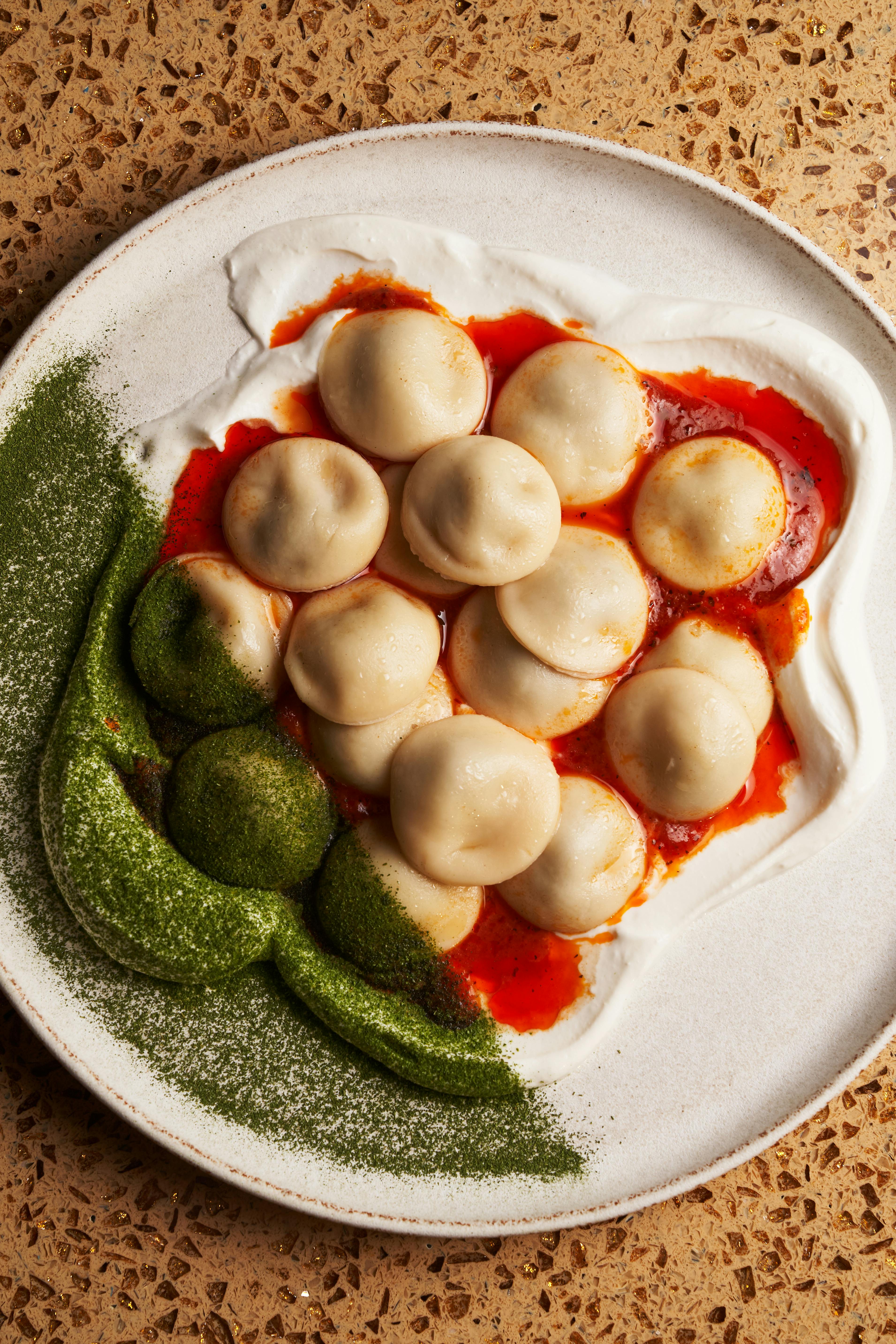
Photo: Alexander Afanasyev / Pexels
The diets react (see scores below)
Common Ingredients
- wheat flour
- beef
- onions
- black pepper
- broth
- cumin
- salt
Specific recipes may vary.
Incompatible with 7 of 11 diets
Diet Ratings
Chuchvara is an Uzbek dumpling soup where the dumplings are made with wheat flour dough — a grain-based wrapper that is fundamentally incompatible with ketogenic eating. Wheat flour is high in net carbs (roughly 70g net carbs per 100g), and a standard serving of chuchvara soup would easily contain 40-60g or more of net carbs from the dough alone, far exceeding the daily keto limit. While the beef filling, broth, onions, and spices are keto-friendly, the flour-based dough is the dominant structural component of the dish and cannot be removed without fundamentally changing what the dish is.
Chuchvara is an Uzbek dumpling soup containing beef as the primary protein. Beef is an animal product and is unambiguously excluded from a vegan diet. The dish is fundamentally built around a meat filling and likely a meat-based broth, making it incompatible with veganism regardless of the other plant-based ingredients present (wheat flour, onions, black pepper, cumin, salt).
Chuchvara is an Uzbek dumpling soup where wheat flour is a foundational, structural ingredient — the dumplings themselves are made from wheat dough. Wheat is a grain and one of the clearest exclusions in the paleo diet, with unanimous consensus across all major paleo authorities. Additionally, salt is listed as an added ingredient, which is excluded under paleo rules. The beef, onions, broth, black pepper, and cumin are all paleo-compatible, but the wheat flour alone is disqualifying. This dish cannot be modified into a paleo meal without fundamentally changing its identity.
Chuchvara is an Uzbek dumpling soup featuring beef as the primary protein wrapped in refined wheat flour dough. Both core components conflict with Mediterranean diet principles: red meat (beef) is limited to only a few times per month, and refined wheat flour dumplings represent refined grains rather than the whole grains encouraged by the diet. While the soup format with onions, cumin, and black pepper has some positive elements, the dish is fundamentally built around two problematic ingredients with no olive oil, vegetables, legumes, or other Mediterranean staples present. The broth-based preparation is the only mildly positive aspect.
Chuchvara is an Uzbek dumpling soup that is fundamentally incompatible with the carnivore diet. The dish's primary structure relies on wheat flour dumplings (a grain-based food), which is explicitly excluded from all tiers of carnivore eating. Additionally, the recipe includes onions (a plant vegetable), cumin (a plant-based spice), and black pepper (a plant-based spice). While the beef filling and broth are carnivore-approved components, the plant-derived ingredients dominate the dish's composition and cannot be separated from it as a prepared dish. The only salvageable elements are the beef and the broth, but as a complete dish, Chuchvara is firmly off-limits for any carnivore practitioner.
Chuchvara is an Uzbek dumpling soup featuring small dumplings made with wheat flour dough wrapped around a beef filling. Wheat flour is a grain and is explicitly excluded on the Whole30 program. Regardless of the compliant ingredients (beef, onions, black pepper, broth, cumin, salt), the wheat flour dumplings are a disqualifying ingredient. Additionally, dumplings are essentially a pasta/noodle analog, which falls under the 'no recreating baked goods/junk food' rule that explicitly excludes pasta and noodles. There is no compliant substitution that would preserve the identity of this dish.
Chuchvara is an Uzbek dumpling soup where the dumplings are made with wheat flour wrappers and filled with beef and onion. Both wheat flour (high in fructans) and onions (very high in fructans) are among the most problematic high-FODMAP ingredients and are present in meaningful quantities in this dish. The wheat dough wrapper alone would make this unsuitable during the elimination phase, and the onion-heavy filling compounds the issue significantly. Broth, beef, black pepper, cumin, and salt are all low-FODMAP, but they cannot offset the two major high-FODMAP ingredients central to the dish's structure. There is no realistic way to reduce the wheat or onion content to a low-FODMAP serving while still consuming a recognizable portion of Chuchvara.
Chuchvara is an Uzbek dumpling soup featuring small beef-filled dumplings in broth. While it contains some DASH-friendly elements (onions, lean protein potential, spices like cumin and black pepper), several factors create concern. The beef filling can be high in saturated fat depending on the cut used. More critically, the broth and added salt together make this dish likely high in sodium — traditional soup broths are a major sodium source, and combined with salt in both the dough and filling, a serving could easily exceed 800-1,200mg sodium. Refined wheat flour (likely white flour) offers minimal fiber. Red meat (beef) is also a food DASH recommends limiting. The dish lacks the vegetables, potassium, magnesium, and fiber that DASH emphasizes. It could be made more DASH-compatible with low-sodium broth, lean beef (90%+ lean), reduced salt, and added vegetables, but as traditionally prepared it warrants caution.
NIH DASH guidelines recommend limiting red meat and sodium-heavy soups, placing traditional Chuchvara in the caution-to-avoid range. However, some DASH-oriented clinicians note that if prepared with lean beef, low-sodium broth, and minimal added salt, dumpling soups can fit within DASH as an occasional meal providing adequate protein — the key variable is preparation method rather than the dish category itself.
Chuchvara is an Uzbek dumpling soup featuring small wheat-flour dumplings filled with spiced beef and onions, served in broth. From a Zone perspective, this dish has a reasonable protein source (beef) and a broth base, but several challenges emerge. The wheat flour wrappers are refined carbohydrates with a moderate-to-high glycemic load, which Zone classifies as 'unfavorable' carbs. The beef filling, while providing protein, is not a lean protein source — Zone prefers skinless chicken, fish, or very lean cuts, and unspecified ground beef often carries higher saturated fat. The dish also lacks the colorful, low-glycemic vegetables Zone emphasizes (8 servings/day). On the positive side, the broth base is low-calorie, onions and spices (cumin, black pepper) are Zone-friendly, and the soup format naturally limits dumpling density. With careful portioning — a moderate serving of dumplings with extra broth and a side of non-starchy vegetables — chuchvara can be incorporated into a Zone meal, but the refined flour wrappers and potentially fatty beef make the 40/30/30 ratio difficult to hit without modification. The dish is not inherently incompatible with Zone, but it requires intentional portioning and ideally a leaner beef filling.
Some Zone practitioners may rate this higher if lean ground beef (90%+ lean) is used for the filling and portion size is limited to 2-3 blocks of carbs worth of dumplings, paired with additional vegetables. In that case, the macro balance becomes more manageable. However, in a traditional preparation, the carb-to-protein ratio typically skews unfavorably toward carbs.
Chuchvara is a traditional Uzbek dumpling soup consisting of small beef-filled dumplings served in broth, similar to Chinese wontons or Turkish manti. From an anti-inflammatory perspective, this dish presents a mixed profile. On the positive side, the broth base is generally beneficial, onions provide quercetin (a notable anti-inflammatory flavonoid), cumin has meaningful anti-inflammatory properties including potential antioxidant effects, and black pepper contains piperine which has shown anti-inflammatory activity. However, the dish has two primary inflammatory concerns: (1) Beef is classified under 'limit' in anti-inflammatory frameworks due to saturated fat content and arachidonic acid, which can promote inflammatory pathways; the inflammatory impact depends heavily on the fat content of the specific cut used. (2) Refined wheat flour (standard dumpling wrappers) is a refined carbohydrate that anti-inflammatory frameworks consistently recommend limiting due to its high glycemic load and lack of fiber. The overall dish is not aggressively pro-inflammatory — it lacks seed oils, added sugars, processed additives, or trans fats — but its two main structural components (refined flour dumplings and red meat) both fall into 'limit' territory. This places it firmly in the caution zone: acceptable occasionally but not a regular anti-inflammatory choice. Substituting lean ground turkey or lamb with higher omega-3 content, and using whole grain or alternative flour wrappers, would improve the profile significantly.
Chuchvara is an Uzbek dumpling soup — small wheat-flour dumplings filled with minced beef and onion, served in broth. The broth base provides hydration and easy digestibility, which is favorable for GLP-1 patients. The beef filling offers meaningful protein, and portion sizes are naturally small, which suits reduced appetite well. However, the primary protein is beef, which can range from lean to moderately fatty depending on the cut used (traditional recipes often use fattier minced beef), introducing saturated fat concerns. The wheat flour wrapper is a refined carbohydrate with low fiber content, reducing nutrient density per calorie. The overall dish is moderate in protein density relative to its calorie load from the dough. Spices (cumin, black pepper) are mild and unlikely to trigger GI distress. The soup format aids hydration and digestion. Overall, this is a borderline acceptable dish — better than a fried or heavy preparation, but the refined flour dumplings and potentially fatty beef limit its GLP-1 friendliness compared to a lean protein soup without dumplings.
Some GLP-1-focused dietitians would view this more favorably as a culturally appropriate, broth-based, small-portion dish that supports hydration and is easy to digest — particularly relevant for patients struggling with nausea. Others would flag the refined flour dumplings as nutritionally empty carbohydrates that displace protein and fiber intake in an already calorie-restricted diet, and would caution against regular consumption depending on the fat content of the beef used.
*See how scores were generated at our methodology page.
Nutritional profile
Six traits that cut across every diet.
Fiber & Plants
How much whole-plant food and fiber it delivers.
Healthy Fats
The quality of its fats (unsaturated, omega-3).
Whole / Unprocessed
How close it is to its natural, unprocessed form.
Gut Gentle
How easy it is on digestion (low FODMAP, few irritants).
Low Glycemic
How little it spikes your blood sugar.
Protein Density
How much protein it packs per calorie.
Controversy Index
Higher controversy = more disagreement between diets.
Diet-Specific Tips
 DASH — 4/10
View tips
- High sodium risk from broth plus added salt — likely 800-1,200mg+ per serving
- Refined wheat flour provides minimal fiber compared to whole grain alternatives
- Beef is a red meat, which DASH recommends limiting due to saturated fat
- No vegetables included, missing key DASH nutrient sources (potassium, magnesium, fiber)
- Spices (cumin, black pepper) are DASH-positive and sodium-free flavorings
- Could score higher if made with low-sodium broth, lean beef, and added vegetables
 Zone — 5/10
View tips
- Wheat flour dumplings are refined, moderate-to-high glycemic carbohydrates — 'unfavorable' in Zone terminology
- Beef filling provides protein but is not a lean Zone-preferred source; saturated fat content varies by cut
- Broth base is Zone-friendly and helps control caloric density
- Dish lacks low-glycemic vegetables, a Zone dietary cornerstone
- Onions and spices (cumin, black pepper) are benign or beneficial in Zone
- Portion control is critical — a small serving can fit within a Zone meal if paired with vegetables and lean additions
- 40/30/30 macro ratio is difficult to achieve without modification of traditional recipe
 Anti-Inflammatory — 4/10
View tips
- Beef is a 'limit' food in anti-inflammatory frameworks due to saturated fat and arachidonic acid content
- Refined wheat flour dumplings are high-glycemic refined carbohydrates with minimal fiber
- Broth base is neutral to mildly beneficial
- Onions contribute quercetin, a well-researched anti-inflammatory flavonoid
- Cumin provides antioxidant and anti-inflammatory compounds
- Black pepper (piperine) has documented anti-inflammatory properties
- No seed oils, trans fats, added sugars, or artificial additives present
- Portion size and beef fat content would significantly influence the actual inflammatory impact
 GLP-1 Friendly — 5/10
View tips
- Broth base supports hydration and easy digestibility — a plus for GLP-1 patients
- Beef provides protein but saturated fat content depends on cut/fat percentage used
- Wheat flour dumpling wrappers are refined carbohydrates with minimal fiber
- Mild spices (cumin, black pepper) are well-tolerated and unlikely to worsen GI side effects
- Small dumpling format is naturally portion-friendly
- Protein density per calorie is moderate, not high — dough dilutes nutritional value
- No fried components, no high-sugar ingredients, no carbonation — no major red flags