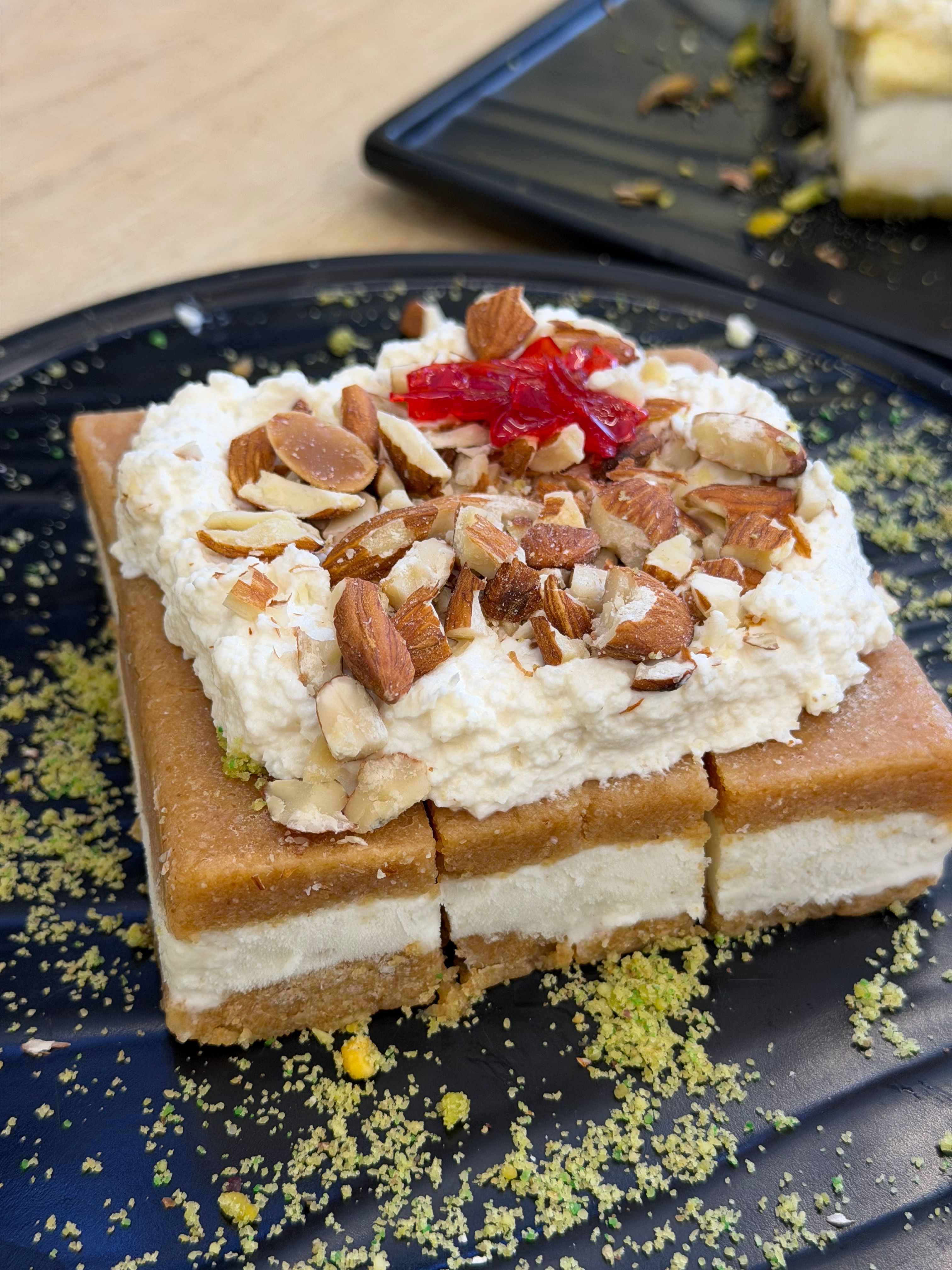
Photo: Anthony Rahayel / Pexels
The diets react (see scores below)
Common Ingredients
- wheat flour
- butter
- sugar
- water
- walnuts
- vanilla
Specific recipes may vary.
Incompatible with 11 of 11 diets
Diet Ratings
Uzbek halva is fundamentally incompatible with a ketogenic diet. It is built on wheat flour and sugar as its primary ingredients — both are strictly prohibited on keto. Wheat flour is a high-glycemic grain that will immediately spike blood glucose and break ketosis, while sugar adds a massive hit of net carbs. A typical serving of this halva would contain an extremely high net carb load (likely 30-50g+ per small portion), far exceeding safe keto limits. The butter and walnuts are keto-friendly ingredients, but they are entirely overwhelmed by the dominant carbohydrate sources in this recipe. There is no meaningful portion size at which this dish becomes compatible with ketosis.
This Uzbek halva contains butter, which is a dairy product derived from cow's milk and is therefore not vegan. All other ingredients — wheat flour, sugar, water, walnuts, and vanilla — are plant-based and fully compatible with a vegan diet. The single disqualifying ingredient is butter, an unambiguous animal-derived product. A vegan version could easily be made by substituting butter with a plant-based fat such as refined coconut oil or vegan margarine.
Uzbek halva contains multiple paleo-prohibited ingredients that make it clearly incompatible with the paleolithic diet. Wheat flour is a grain and one of the most explicitly excluded foods in all paleo frameworks. Butter is a dairy product, excluded under strict paleo rules. Refined sugar is a processed sweetener with no place in paleo eating. Only walnuts and vanilla are paleo-compliant. With three of six ingredients being hard paleo violations, there is no meaningful way to consider this dish paleo-compatible in any form.
Uzbek halva is a confection made primarily from wheat flour, butter, and sugar — three ingredients that Mediterranean diet guidelines discourage. Refined wheat flour is a refined grain, butter is a saturated animal fat directly at odds with olive oil as the preferred fat source, and added sugar is explicitly minimized. Walnuts are a Mediterranean-approved ingredient and provide some redeeming nutritional value (healthy fats, polyphenols), and vanilla is neutral, but they cannot offset the dominant problematic ingredients. This dish is essentially a high-sugar, high-saturated-fat sweet with refined carbohydrates — the profile of foods the Mediterranean diet is designed to limit.
Some Mediterranean diet scholars note that traditional sesame-based halva (tahini halva), common in Greece, Turkey, and the Levant, is a culturally embedded food with plant-based fats and is consumed occasionally as a treat. If this dish were sesame-based, some practitioners would consider small portions acceptable within a Mediterranean framework. However, this Uzbek flour-and-butter variant does not share that more favorable profile.
Halva is entirely plant-based and heavily processed, containing no animal products whatsoever. Wheat flour (grain), walnuts (nuts), sugar, water, and vanilla are all explicitly excluded on the carnivore diet. The only potentially animal-derived ingredient is butter, but it is a minor component in a dish that is fundamentally incompatible with carnivore principles. This dish violates virtually every core carnivore rule simultaneously: it contains grains, nuts, refined sugar, and plant-based additives.
Uzbek halva contains multiple Whole30-excluded ingredients. Wheat flour is a grain and explicitly excluded. Butter (not ghee/clarified butter) is a dairy product and excluded. Sugar is an added sweetener and explicitly excluded. These three violations alone make this dish firmly off-limits, regardless of the compliant ingredients (walnuts, water, vanilla, walnuts). There is no version of this traditional confection that could be made compliant without fundamentally altering its nature.
Uzbek halva made with wheat flour is high-FODMAP due to wheat being a significant source of fructans, one of the main FODMAP groups. Wheat flour is the primary structural ingredient in this recipe, meaning even a standard single serving will deliver a substantial fructan load. Walnuts are low-FODMAP at a standard serving (30g), butter is low-FODMAP (fat-based, negligible lactose), sugar (sucrose) is low-FODMAP, and vanilla is low-FODMAP. However, the wheat flour alone disqualifies this dish for the elimination phase. There is no practical serving size reduction that would make a wheat flour-based halva safe during elimination, as wheat fructans accumulate quickly even in small quantities.
Uzbek halva made with wheat flour, butter, sugar, and water is essentially a high-fat, high-sugar confection. It is dominated by refined carbohydrates (white wheat flour, sugar) and saturated fat (butter), all of which DASH explicitly limits. While walnuts provide beneficial unsaturated fats, omega-3s, and magnesium, and vanilla is benign, these minor positives are overwhelmed by the large amounts of added sugar and saturated fat. DASH guidelines specifically call for limiting sweets and foods high in saturated fat. This dish offers virtually no fiber (refined flour), no meaningful potassium or calcium from a DASH perspective, and contributes significantly to added sugar and saturated fat intake. It belongs firmly in the 'sweets' category that DASH limits to 5 or fewer servings per week, and even then only in small amounts. As a regular snack it is incompatible with DASH principles.
Uzbek halva (un halvasi) is essentially a fried wheat flour confection cooked in butter with large amounts of sugar, resulting in a dish that is calorie-dense, extremely high-glycemic, and dominated by saturated fat with virtually no lean protein. The macro profile is almost entirely refined carbohydrates and saturated fat — the two things the Zone Diet most strongly discourages. Sugar is the primary carbohydrate source (high-glycemic, zero fiber, no net carb advantage), wheat flour adds more high-GI carbs, and butter provides saturated fat rather than the preferred monounsaturated fats. Walnuts do offer some omega-3s and monounsaturated fat, but they are a minor ingredient and cannot meaningfully redeem the overall profile. There is no lean protein to build a Zone block around. Even in small portions, halva provides no favorable Zone building blocks — it would spike insulin sharply (opposite of Zone's core goal of insulin control) and offer no protein to balance any carb block. This is one of the clearest 'avoid' cases in Zone methodology: a sugar-and-refined-starch confection with saturated fat and no protein.
Uzbek halva (un halvasi) made from wheat flour, butter, sugar, and water is essentially a roux-based confection with very high saturated fat and refined sugar content — two of the primary pro-inflammatory dietary drivers. Butter contributes significant saturated fat, which elevates inflammatory markers like CRP and IL-6 at high intake levels. Refined wheat flour is a high-glycemic refined carbohydrate that spikes blood glucose and promotes inflammatory signaling. The large quantity of added sugar further exacerbates glycemic load and suppresses anti-inflammatory immune function. Walnuts are a genuinely anti-inflammatory ingredient (rich in ALA omega-3s and polyphenols), and vanilla contains trace antioxidants, but both are present in quantities too small relative to the dominant pro-inflammatory base to meaningfully offset the overall profile. This dish is essentially a concentrated delivery of the three ingredients the anti-inflammatory framework most consistently warns against: saturated fat, refined flour, and added sugar. Appropriate as an occasional treat, but not compatible with regular anti-inflammatory eating patterns.
Uzbek halva made with wheat flour, butter, sugar, water, walnuts, and vanilla is essentially a high-sugar, high-fat confection with negligible protein and minimal fiber. The primary caloric drivers are refined sugar and butter (saturated fat), making this a near-perfect example of empty calories — the very category most counterproductive for GLP-1 patients eating significantly reduced volumes. The dense, rich, fatty composition is also likely to worsen GLP-1 side effects including nausea, bloating, and reflux, as slowed gastric emptying means this heavy, greasy preparation will sit in the stomach for an extended period. Walnuts do contribute small amounts of unsaturated fat and trace nutrients, but their presence does not meaningfully offset the dominant negatives. There is no meaningful protein contribution, no significant fiber, and the high sugar load works against blood sugar stabilization — a key goal for most GLP-1 patients who commonly have metabolic dysregulation.
*See how scores were generated at our methodology page.
Nutritional profile
Six traits that cut across every diet.
Fiber & Plants
How much whole-plant food and fiber it delivers.
Healthy Fats
The quality of its fats (unsaturated, omega-3).
Whole / Unprocessed
How close it is to its natural, unprocessed form.
Gut Gentle
How easy it is on digestion (low FODMAP, few irritants).
Low Glycemic
How little it spikes your blood sugar.
Protein Density
How much protein it packs per calorie.
Controversy Index
Higher controversy = more disagreement between diets.