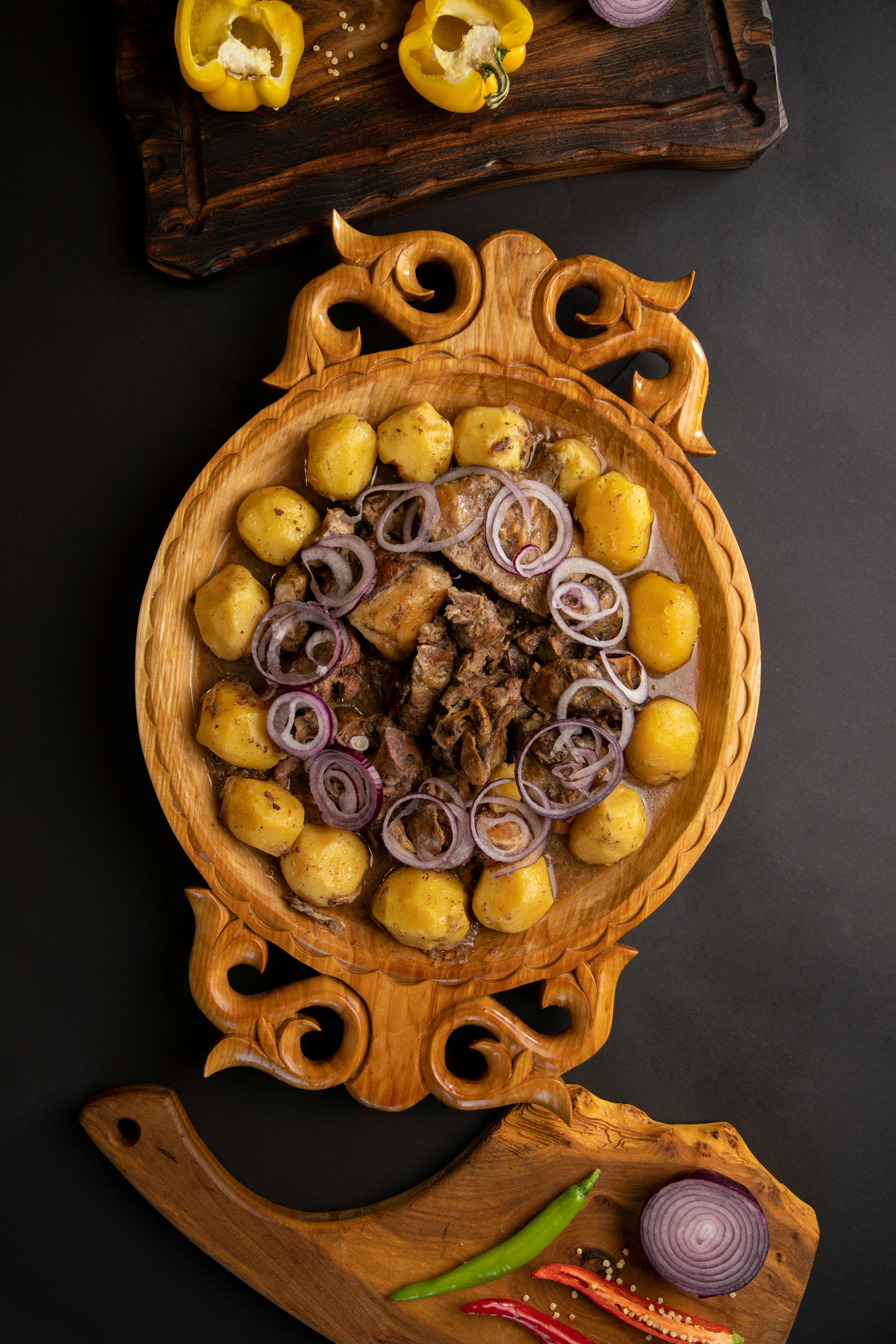
The diets react (see scores below)
Common Ingredients
- lamb
- potatoes
- onions
- cumin
- garlic
- vegetable oil
- black pepper
- salt
Specific recipes may vary.
Incompatible with 7 of 11 diets
Diet Ratings
Kazan Kabob is fundamentally incompatible with keto due to the inclusion of potatoes as a core ingredient. Potatoes are a high-starch vegetable with approximately 15-17g net carbs per 100g, and a standard serving of this dish would contain enough potato to easily exceed the entire daily keto carb limit on its own. While lamb is an excellent keto protein with favorable fat content, and onions, garlic, and spices are keto-acceptable in moderation, the potatoes make this dish a non-starter. The dish cannot be meaningfully adapted without fundamentally changing its character — removing the potatoes would leave it as a simple lamb dish, which is no longer Kazan Kabob.
Kazan Kabob contains lamb as its primary protein, which is an animal product and therefore fundamentally incompatible with a vegan diet. Lamb is red meat from a young sheep — there is no ambiguity here. The remaining ingredients (potatoes, onions, cumin, garlic, vegetable oil, black pepper, salt) are all plant-based, but the presence of lamb alone makes this dish non-vegan.
Kazan Kabob contains multiple paleo-incompatible ingredients. Vegetable oil (likely a seed/refined oil blend) is explicitly excluded from paleo due to its industrial processing and poor omega-6 fatty acid profile. Added salt is also excluded under strict paleo rules. White potatoes occupy a debated gray area — originally excluded by Cordain but increasingly accepted in modern paleo circles. Lamb, onions, cumin, garlic, and black pepper are all paleo-approved. However, the combination of vegetable oil and added salt as core cooking ingredients pushes this dish into avoid territory. If the vegetable oil were replaced with animal fat, olive oil, or coconut oil, and salt were omitted or minimized, this dish could potentially reach caution or even approve status.
Mark Sisson and the Whole30 protocol now accept white potatoes as a whole food starch, and many modern paleo practitioners allow modest salt use and consider it a practical concession. If one substitutes a paleo-approved fat and uses minimal salt, the core of this dish — lamb, onions, and spices — is entirely paleo-compliant.
Kazan Kabob is centered on lamb, a red meat that the Mediterranean diet restricts to only a few times per month. The dish uses vegetable oil rather than extra virgin olive oil as the fat source, further distancing it from Mediterranean principles. While potatoes, onions, and garlic are acceptable vegetables, they serve as sides to a substantial portion of red meat, making red meat the dish's defining component. The overall nutritional profile — high in saturated fat from lamb, no legumes, no whole grains, non-olive oil fat — conflicts directly with Mediterranean dietary guidelines.
Kazan Kabob is fundamentally incompatible with the carnivore diet. While lamb is an excellent ruminant meat and would score a 9-10 on its own, this dish is heavily built around plant-based components. Potatoes and onions are significant plant foods that are strictly excluded. Vegetable oil is a plant-derived fat that carnivore explicitly rejects in favor of animal fats (tallow, lard). Cumin and garlic are plant-derived spices excluded on strict carnivore. The dish cannot be meaningfully separated from these ingredients — they are structural to the recipe, not minor garnishes. The only carnivore-compatible elements are the lamb and salt.
Kazan Kabob is a traditional Uzbek braised lamb dish cooked in a heavy pot (kazan) with potatoes, onions, and spices. Every ingredient listed — lamb, potatoes, onions, cumin, garlic, vegetable oil, black pepper, and salt — is fully compliant with Whole30 rules. All are whole, unprocessed foods or natural spices explicitly permitted by the program. There are no grains, legumes, dairy, added sugars, or other excluded ingredients present. The dish is a straightforward meat-and-vegetable preparation that aligns perfectly with the spirit and letter of Whole30.
Kazan Kabob contains two major high-FODMAP ingredients that make it unsuitable during the elimination phase. Garlic is one of the highest-FODMAP foods tested by Monash University, containing significant fructans even in very small amounts. Onions are similarly very high in fructans and are a primary trigger for IBS symptoms — they are high-FODMAP at any culinary serving size. Both garlic and onions are typically used in meaningful quantities in this dish and cannot realistically be reduced to safe levels while maintaining the dish's character. Lamb itself is low-FODMAP (plain protein), potatoes are low-FODMAP at a standard serve (~75g), cumin is low-FODMAP in typical culinary amounts, vegetable oil is low-FODMAP, and black pepper and salt are low-FODMAP. However, the garlic and onion content alone makes this dish a clear avoid during elimination phase.
Kazan Kabob is a Central Asian dish slow-cooked in a cast-iron pot, featuring lamb as the primary protein. While it contains DASH-friendly vegetables (potatoes, onions, garlic) and beneficial spices (cumin, black pepper), lamb is classified as red meat, which DASH guidelines recommend limiting due to its saturated fat content. The dish relies on added salt and vegetable oil, raising sodium and fat concerns depending on preparation amounts. Lamb in particular tends to be higher in saturated fat than poultry or fish, which DASH emphasizes. The potatoes and onions contribute potassium and fiber, partially redeeming the dish. The overall profile places it in the 'caution' category — acceptable occasionally in moderate portions if salt is minimized, but not a DASH staple. Confidence is medium because DASH does not categorically ban lean cuts of red meat, and some DASH-aligned interpretations allow lean red meat (e.g., loin cuts) in limited quantities (no more than 6 oz/day lean meat total), so the verdict depends heavily on the cut of lamb and preparation salt levels.
NIH DASH guidelines categorize red meat as a food to limit, favoring poultry, fish, and plant proteins instead. However, updated clinical interpretations note that lean cuts of lamb (e.g., leg or loin) with trimmed fat, prepared with minimal salt, can fit within DASH's broader allowance of up to 6 oz/day of lean meat — making portion size and cut selection the key variables.
Kazan Kabob presents multiple Zone Diet challenges. Lamb is a moderately fatty red meat — it provides adequate protein but comes with higher saturated fat content than ideal Zone proteins like skinless chicken or fish, making lean portioning critical. Potatoes are explicitly classified as an 'unfavorable' high-glycemic carbohydrate in Dr. Sears' Zone framework and are specifically discouraged alongside corn and rice. The vegetable oil used for cooking is likely a seed oil (sunflower or cottonseed is common in Uzbek cuisine), which is high in omega-6 fatty acids — directly contrary to Zone's anti-inflammatory focus. On the positive side, onions and garlic are favorable low-glycemic Zone carbs with polyphenol benefits, and cumin adds anti-inflammatory value. A Zone-adapted version would require replacing potatoes with low-glycemic vegetables, selecting leaner cuts of lamb and trimming visible fat, and substituting olive oil for the vegetable oil. As served traditionally, the dish is difficult to fit into Zone blocks without significant modification, primarily because potatoes dominate the carbohydrate block and drive glycemic load high while the fat profile is unfavorable.
Some Zone practitioners argue that lamb, while higher in saturated fat than chicken, contains a reasonable proportion of monounsaturated fat (oleic acid) and conjugated linoleic acid (CLA), which Sears' later anti-inflammatory writings acknowledge more favorably. Additionally, if potato portions are kept very small and bulk carbohydrates come from the onions and garlic, the dish could technically be block-balanced with careful portioning — making it a 'caution' rather than 'avoid' even without full ingredient substitution.
Kazan Kabob presents a mixed anti-inflammatory profile. On the positive side, garlic is a well-established anti-inflammatory ingredient rich in allicin and organosulfur compounds. Cumin contains apigenin and luteolin, antioxidant flavonoids with meaningful anti-inflammatory activity. Onions are rich in quercetin, a potent anti-inflammatory polyphenol. Potatoes, while starchy, contain vitamin C, potassium, and resistant starch (especially when cooled), and are not inherently pro-inflammatory for the general population. The negative factors center on lamb as the primary protein: lamb is red meat with notable saturated fat content, which most anti-inflammatory frameworks recommend limiting — not eliminating, but not eating regularly. The cooking method (braised/slow-cooked in a kazan/cauldron) typically involves rendering fat from the lamb, which increases overall saturated fat load. The 'vegetable oil' is unspecified; if it is a high-omega-6 refined oil such as sunflower or corn oil, this adds a pro-inflammatory element. If it is canola or a more neutral oil used in small quantities, the impact is lower. Overall, this is a modestly spiced, whole-food dish without processed ingredients or added sugars, but the lamb and ambiguous oil keep it out of the approved zone for regular consumption.
Some anti-inflammatory researchers and practitioners (including those following a Mediterranean-adjacent pattern) would note that traditional lamb dishes with aromatic spices consumed occasionally are perfectly compatible with an anti-inflammatory lifestyle, especially if the lamb is pasture-raised (higher CLA and omega-3 content). Others following stricter anti-inflammatory or AIP protocols would flag lamb more strongly due to saturated fat and arachidonic acid content, rating this closer to a 3.
Kazan Kabob is a traditional Uzbek dish slow-cooked in a cast-iron kazan (cauldron), typically using fatty cuts of lamb (shoulder or ribs) layered with potatoes and onions in a significant amount of oil or rendered lamb fat. The cooking method — essentially braising or slow-frying in fat — results in a high-fat, calorie-dense dish that is poorly suited for GLP-1 patients. Lamb as prepared here is a fatty red meat, and the oil-heavy cooking method compounds the saturated fat load. High fat content directly worsens GLP-1 side effects including nausea, bloating, reflux, and gastroparesis-related discomfort. Potatoes add mostly refined starch with limited fiber or protein contribution per calorie. While the dish does provide protein from lamb, the fat-to-protein ratio is unfavorable compared to lean alternatives. The portion is also volumetrically large and heavy — the opposite of small, easy-to-digest servings recommended on GLP-1 therapy. The cumin and garlic are fine, but the overall profile of this dish — fatty red meat, oil-heavy cooking, starchy filler, low fiber — hits multiple avoid criteria simultaneously.
Some GLP-1-experienced dietitians note that a small portion of lamb (specifically lean cuts like leg) can be an acceptable protein source given lamb's complete amino acid profile, and would rate this dish as caution rather than avoid if prepared with significantly less oil and leaner meat. However, as traditionally prepared, the fat content is too high for most GLP-1 patients, particularly in the early months of treatment when GI side effects are most pronounced.
*See how scores were generated at our methodology page.
Nutritional profile
Six traits that cut across every diet.
Fiber & Plants
How much whole-plant food and fiber it delivers.
Healthy Fats
The quality of its fats (unsaturated, omega-3).
Whole / Unprocessed
How close it is to its natural, unprocessed form.
Gut Gentle
How easy it is on digestion (low FODMAP, few irritants).
Low Glycemic
How little it spikes your blood sugar.
Protein Density
How much protein it packs per calorie.
Controversy Index
Higher controversy = more disagreement between diets.
Diet-Specific Tips
 Whole30 — 9/10
View tips
- Lamb is an approved Whole30 protein
- Potatoes are explicitly allowed on Whole30
- Onions and garlic are compliant vegetables
- Cumin, black pepper, and salt are all approved spices/seasonings
- Vegetable oil is generally compliant (check label for soy or other additives, but as listed it qualifies)
- No excluded ingredients: no grains, legumes, dairy, or added sugar
- Dish is a whole-food preparation, consistent with the spirit of Whole30
 DASH — 4/10
View tips
- Lamb is red meat, which DASH recommends limiting due to saturated fat
- Salt is a listed ingredient, raising sodium concerns — preparation quantity is critical
- Potatoes and onions contribute potassium and fiber, supporting DASH goals
- Cumin and garlic are DASH-friendly flavorings that can reduce reliance on salt
- Vegetable oil is preferred over saturated fats (e.g., butter, lard) per DASH guidelines
- No fruits, whole grains, or low-fat dairy present — limited DASH nutrient density
- Dish is DASH-compatible occasionally in moderate portions with lean lamb cuts and reduced salt
 Zone — 4/10
View tips
- Potatoes are explicitly 'unfavorable' high-glycemic carbs in Zone — primary concern
- Lamb is higher in saturated fat than preferred Zone proteins; lean cuts partially mitigate this
- Vegetable oil likely high in omega-6 fatty acids, contrary to Zone anti-inflammatory principles
- Onions and garlic are favorable low-glycemic Zone carbohydrates with polyphenol benefits
- No favorable monounsaturated fat source present (no olive oil, avocado, or almonds)
- Dish can be Zone-adapted but requires significant modification to portion and ingredient substitution
 Anti-Inflammatory — 4/10
View tips
- Lamb is red meat with significant saturated fat — anti-inflammatory frameworks recommend limiting red meat consumption
- Garlic is a potent anti-inflammatory ingredient (allicin, organosulfur compounds)
- Cumin and black pepper provide anti-inflammatory phytochemicals (apigenin, piperine)
- Onions are rich in quercetin, a well-researched anti-inflammatory flavonoid
- Unspecified 'vegetable oil' introduces uncertainty — high-omega-6 refined oils (sunflower, corn) would worsen the rating
- Potatoes are neutral-to-acceptable for the general population; not a meaningful inflammatory driver
- No processed ingredients, additives, refined sugars, or trans fats — a whole-food dish
- Suitable occasionally but not as a regular staple on an anti-inflammatory diet