Photo: Merkhat Amangeldinov / Pexels
The diets react (see scores below)
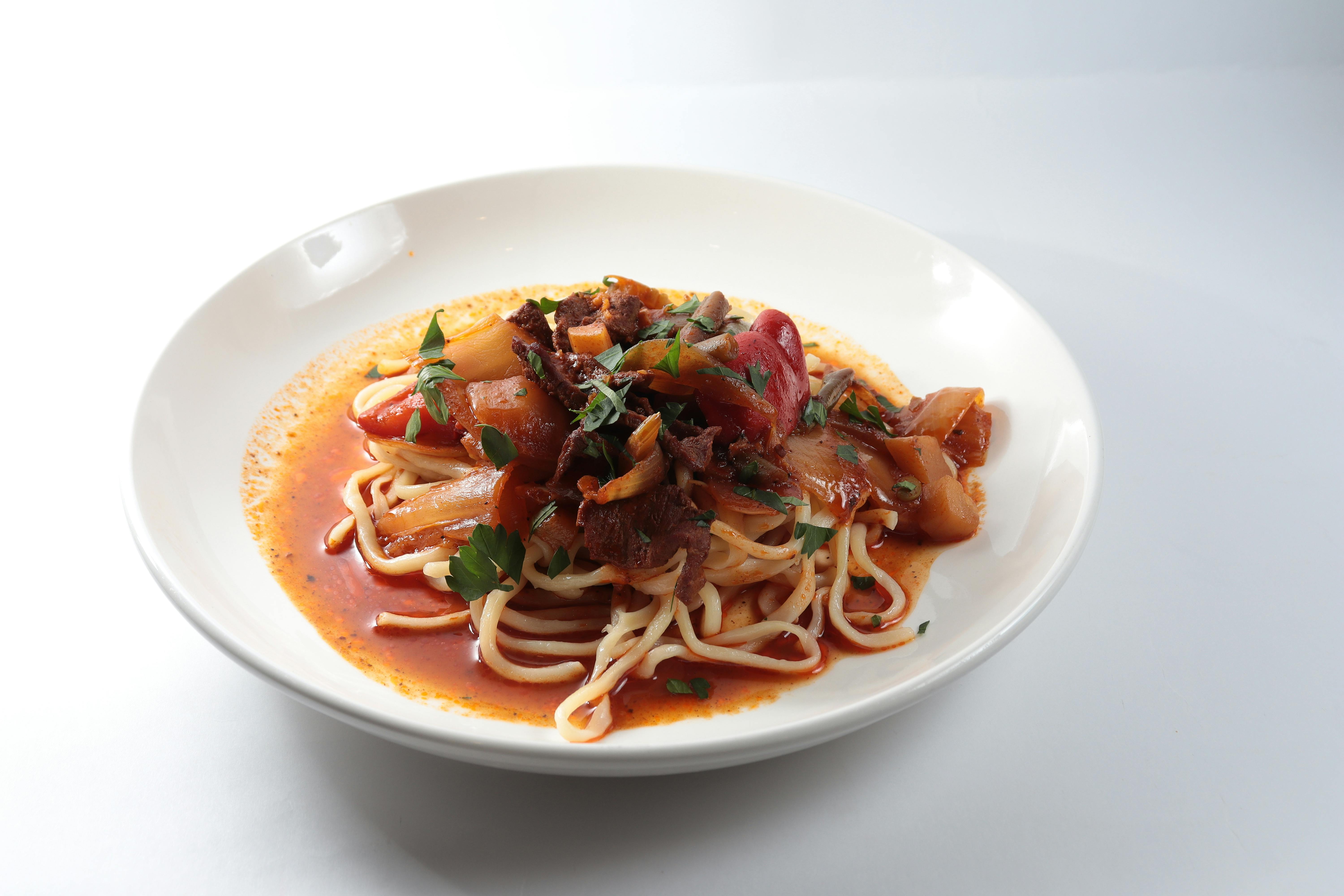
Common Ingredients
- wheat noodles
- beef
- bell peppers
- tomatoes
- onions
- garlic
- cumin
- carrots
Specific recipes may vary.
Incompatible with 7 of 11 diets
Diet Ratings
Lagman is built around wheat noodles, which are a grain-based, high-carb ingredient that single-handedly disqualifies this dish from ketogenic compatibility. A standard serving of wheat noodles contains 40-60g of net carbs, instantly exceeding the entire daily keto carb budget. The remaining ingredients (carrots, bell peppers, tomatoes, onions) also add meaningful net carbs on top. While the beef component is keto-friendly, the foundational structure of this dish is incompatible with ketosis. There is no meaningful portion adjustment that would make this dish work — the noodles cannot simply be reduced; they are the dish.
Lagman contains beef as a primary protein, which is an animal product and explicitly excluded from a vegan diet. There is no ambiguity here — beef is animal flesh and clearly disqualifies this dish from vegan compliance regardless of the otherwise plant-based ingredients (noodles, vegetables, spices).
Lagman is fundamentally built around wheat noodles, which are a grain-based ingredient and one of the clearest violations of the paleo diet. There is universal agreement among paleo authorities that wheat and wheat-derived products — including noodles, pasta, and bread — are excluded due to their gluten content, anti-nutrients (lectins, phytates), and incompatibility with the hunter-gatherer framework. The remaining ingredients (beef, bell peppers, tomatoes, onions, garlic, cumin, carrots) are all paleo-compliant, but the wheat noodles are the dish's defining and non-negotiable component. Removing them would produce a fundamentally different dish. The dish cannot be considered paleo in its traditional form.
Lagman is a Central Asian noodle dish whose primary components conflict with Mediterranean diet principles in two key ways. First, beef is the primary protein, and red meat is restricted to a few times per month in Mediterranean eating patterns — making it a significant red flag. Second, wheat noodles are typically made from refined white flour, a refined grain that the Mediterranean diet discourages in favor of whole grains. On the positive side, the vegetable base (bell peppers, tomatoes, onions, carrots, garlic) and spices like cumin are well-aligned with Mediterranean principles, and the dish is not heavily processed. However, the combination of red meat as the central protein and refined-grain noodles as the starch base means the dish as traditionally prepared sits outside Mediterranean dietary guidance. With substitutions (whole wheat or legume-based noodles, reduced beef portion or substitution with lamb in very small amounts), the dish could be improved, but as described it warrants an 'avoid' rating.
Some Mediterranean diet interpreters, particularly those drawing on Middle Eastern and Levantine traditions that border Central Asia, note that small amounts of red meat in a vegetable-rich broth context are not categorically excluded — traditional Mediterranean meals occasionally featured meat as a flavoring agent rather than a centerpiece. If the beef portion is modest and the noodles are whole wheat, some practitioners might rate this 'caution' rather than 'avoid.'
Lagman is almost entirely incompatible with the carnivore diet. The dish is built around wheat noodles — a grain-based carbohydrate that is strictly excluded. The remaining ingredients are overwhelmingly plant-based: bell peppers, tomatoes, onions, garlic, carrots, and cumin are all plant foods forbidden on carnivore. The only carnivore-compatible ingredient is the beef itself. This dish represents essentially everything the carnivore diet eliminates: grains, vegetables, and plant spices. Even the most lenient carnivore practitioners who allow occasional spices or dairy would reject wheat noodles and a full roster of vegetables as core components.
Lagman contains wheat noodles, which are a grain-based pasta product. Grains (including wheat) are explicitly excluded on the Whole30 program. Additionally, pasta and noodles are specifically listed under the 'no recreating baked goods/junk food' rule, making this dish doubly non-compliant. All other ingredients — beef, bell peppers, tomatoes, onions, garlic, cumin, and carrots — are fully Whole30-compliant, but the wheat noodles alone disqualify the dish entirely.
Lagman contains multiple high-FODMAP ingredients that make it unsuitable during the elimination phase. Wheat noodles are high in fructans at any standard serving size. Onions are one of the highest-FODMAP foods tested by Monash University, containing significant fructans even in small amounts. Garlic is similarly very high in fructans and should be avoided entirely during elimination. Together, these three ingredients make Lagman clearly off-limits. The remaining ingredients — beef, bell peppers, tomatoes, carrots, and cumin — are generally low-FODMAP at standard servings, but they cannot offset the high-FODMAP staples in this dish.
Lagman is a Central Asian noodle soup/stew with a mixed DASH profile. On the positive side, it contains an abundance of DASH-friendly vegetables (bell peppers, tomatoes, onions, carrots, garlic) that provide potassium, fiber, and antioxidants, and the tomato-based broth aligns well with DASH principles. However, several factors require caution: (1) Beef is a red meat that DASH limits due to saturated fat and cholesterol content — the cut used matters significantly (lean cuts like sirloin are more acceptable than fatty cuts). (2) Wheat noodles are typically refined flour, not whole grain, which DASH de-emphasizes. (3) Traditional Lagman preparations often use substantial amounts of oil for stir-frying the meat and vegetables, adding fat. (4) Sodium content varies widely — home-prepared versions can be moderate, but restaurant versions or those using commercial spice mixes or broths can be high in sodium. The vegetable density is a genuine strength, and with modifications (lean beef, whole-wheat noodles, minimal oil, low-sodium broth), this dish could score higher.
NIH DASH guidelines explicitly limit red meat and emphasize lean poultry and fish as preferred proteins, placing beef-centered dishes in the caution category by default. However, updated clinical interpretations note that lean cuts of beef (≤5g total fat, ≤2g saturated fat per 3.5oz) can fit within DASH's overall saturated fat target of <7% of calories, and some DASH practitioners would approve this dish if prepared with lean beef, whole-grain noodles, and minimal added sodium.
Lagman is a hearty Uzbek noodle dish with a genuinely mixed Zone profile. On the positive side, it contains excellent Zone-favorable vegetables — bell peppers, tomatoes, onions, garlic, and carrots — which provide low-glycemic carbohydrates, polyphenols, and anti-inflammatory compounds aligned with Sears' recommendations. Beef provides a solid protein source, though it is not lean like skinless chicken or fish, introducing moderate saturated fat. The primary Zone concern is the wheat noodles, which are a high-glycemic carbohydrate that can spike insulin — the exact hormonal disruption the Zone aims to prevent. As traditionally served, the noodle-to-vegetable ratio is heavily skewed toward noodles, making the carbohydrate load high-glycemic and difficult to balance into a proper 40/30/30 block structure without significant modification. A Zone-adapted version would reduce noodle portions dramatically (treating them as a small carb block supplement), increase the beef and vegetable portions relative to noodles, and ideally use lean cuts. With careful portioning, this dish can be incorporated into a Zone meal, but as traditionally prepared it leans carbohydrate-heavy and high-glycemic.
Lagman is a Central Asian noodle dish with a mixed anti-inflammatory profile. On the positive side, it contains several anti-inflammatory vegetables — bell peppers (rich in vitamin C and carotenoids), tomatoes (lycopene), onions (quercetin), carrots (beta-carotene), and garlic (allicin) — along with cumin, which has modest anti-inflammatory properties. These ingredients collectively provide antioxidants and polyphenols that support an anti-inflammatory pattern. However, the dish has two notable drawbacks: (1) Beef is a red meat with saturated fat, which anti-inflammatory guidelines recommend limiting. Depending on the cut and preparation, it can contribute to pro-inflammatory arachidonic acid and saturated fat intake. (2) Wheat noodles are typically refined carbohydrates, which spike blood sugar and can promote inflammatory markers like CRP. Whole-grain noodles would significantly improve the profile. The overall dish lands in 'caution' territory — the vegetable base is genuinely beneficial, but the refined noodles and red meat prevent an approval. Preparation matters: a lean beef cut in modest portions with a generous vegetable-to-noodle ratio would push this toward the upper end of caution.
Some anti-inflammatory practitioners (aligned with Mediterranean-adjacent whole-food approaches) would note that traditionally prepared lagman with lean beef, abundant vegetables, and cumin-forward spicing is nutritionally reasonable in moderation, and might rate it closer to approve if whole-grain noodles are used. Conversely, stricter anti-inflammatory protocols would flag red meat more heavily and recommend substituting beef with legumes or fish entirely.
Lagman is a hearty Uzbek noodle soup with a mixed nutritional profile for GLP-1 patients. On the positive side, it contains beef (a complete protein source), a rich array of vegetables (bell peppers, tomatoes, onions, carrots, garlic) that contribute fiber, micronutrients, and water content, and a broth base that supports hydration. The vegetables and spices (cumin) are easy on digestion and anti-inflammatory. However, the dish has notable drawbacks: wheat noodles are refined carbohydrates with low fiber and low protein density per calorie, essentially filling stomach space with nutritionally less valuable content — a significant concern given the small appetite window on GLP-1s. Beef, depending on the cut used, can be moderately to highly fatty (saturated fat), which worsens nausea, bloating, and reflux — common GLP-1 side effects. Protein per serving is meaningful if beef is portioned generously, but the noodle-to-protein ratio in traditional preparations often skews toward carbs. The dish is not fried or heavily processed, which keeps it out of the avoid category. With modifications — lean beef cut (sirloin or round), reduced noodle portion, extra vegetables — it becomes more GLP-1 compatible.
Some GLP-1-focused dietitians would rate a broth-based beef and vegetable dish like Lagman more favorably, emphasizing its hydration support, vegetable fiber, and real-food ingredients over processed alternatives. Others would flag the refined noodles and potentially fatty beef as meaningful enough concerns — especially for patients in the early high-side-effect phase — to recommend avoiding it until GI tolerance improves.
*See how scores were generated at our methodology page.
Nutritional profile
Six traits that cut across every diet.
Fiber & Plants
How much whole-plant food and fiber it delivers.
Healthy Fats
The quality of its fats (unsaturated, omega-3).
Whole / Unprocessed
How close it is to its natural, unprocessed form.
Gut Gentle
How easy it is on digestion (low FODMAP, few irritants).
Low Glycemic
How little it spikes your blood sugar.
Protein Density
How much protein it packs per calorie.
Controversy Index
Higher controversy = more disagreement between diets.
Diet-Specific Tips
 DASH — 5/10
View tips
- High vegetable density (bell peppers, tomatoes, carrots, onions, garlic) supports DASH goals for potassium, fiber, and micronutrients
- Beef is a red meat limited by DASH; saturated fat content depends heavily on the cut used
- Refined wheat noodles are not whole grain — a key DASH substitution opportunity
- Sodium content highly variable: home preparation can be moderate, but restaurant versions or commercial broths may be high-sodium
- Traditional preparation often involves significant oil for stir-frying, adding to total and saturated fat
- Cumin and garlic are DASH-neutral spices that can reduce need for added salt — a positive factor
- Dish can be modified toward DASH compliance with lean beef, whole-wheat noodles, low-sodium broth, and minimal oil
 Zone — 5/10
View tips
- Wheat noodles are an 'unfavorable' high-glycemic carbohydrate in Zone terminology — insulin-spiking and difficult to portion correctly
- Traditional serving ratios are noodle-dominant, making the carb load too high and glycemic for Zone compliance
- Bell peppers, tomatoes, onions, garlic, and carrots are 'favorable' Zone carbohydrates — low-glycemic and polyphenol-rich
- Beef protein is usable but not ideal — higher saturated fat than lean Zone proteins like skinless chicken or fish
- No added fats listed; dish may be low in monounsaturated fat, requiring a side source like olive oil or avocado
- Zone-adaptable with significant portion modification: reduce noodles to 1 small carb block, increase vegetables, use lean beef cut
 Anti-Inflammatory — 5/10
View tips
- Bell peppers, tomatoes, and carrots provide carotenoids and vitamin C with anti-inflammatory antioxidant activity
- Garlic and onions supply quercetin and allicin, both with anti-inflammatory properties
- Cumin contributes modest anti-inflammatory phytochemicals
- Beef (red meat) contains saturated fat and arachidonic acid precursors — anti-inflammatory guidelines recommend limiting red meat
- Wheat noodles are typically refined carbohydrates, which can raise blood sugar and promote inflammatory markers
- No omega-3 sources present in the dish
- Dish is vegetable-forward in composition, which partially offsets the less favorable protein and carbohydrate components
 GLP-1 Friendly — 5/10
View tips
- Refined wheat noodles are low in fiber and protein density, occupying limited stomach capacity with lower-value calories
- Beef protein content is a positive, but cut-dependent fat level is a concern — fatty cuts worsen GLP-1 GI side effects
- Abundant vegetables (bell peppers, tomatoes, carrots, onions) contribute fiber, micronutrients, and water content
- Broth base supports hydration, which is important as GLP-1s reduce thirst sensation
- Not fried, not highly processed, and mildly spiced — digestibility is acceptable for most patients
- Traditional portion sizes may be too large for GLP-1 patients; dish should be served in a reduced portion emphasizing protein and vegetables over noodles