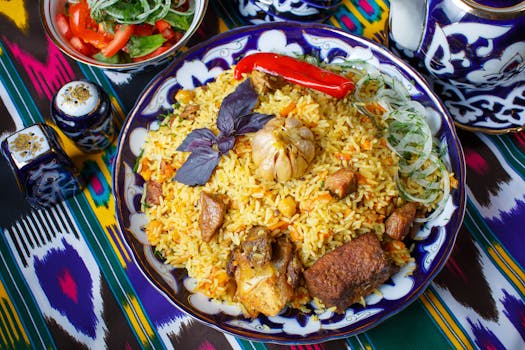
The diets react (see scores below)
Common Ingredients
- rice
- lamb
- carrots
- onions
- cumin
- garlic
- vegetable oil
- chickpeas
Specific recipes may vary.
Incompatible with 7 of 11 diets
Diet Ratings
Plov is fundamentally incompatible with a ketogenic diet. The dish is built on a rice base, which is a high-glycemic grain containing roughly 45g of net carbs per cooked cup — a single serving would likely exceed the entire daily keto carb limit. Chickpeas add further starch and carbohydrates (~22g net carbs per half cup), compounding the problem significantly. While lamb and vegetable oil are keto-friendly components, and spices like cumin and garlic are fine in small amounts, the core structural ingredients (rice and chickpeas) make this dish entirely incompatible with ketosis. Carrots and onions also contribute moderate carbs, but the rice and chickpeas alone are disqualifying. There is no practical portion size at which a standard serving of Plov could fit within a 20–50g daily net carb budget.
Plov contains lamb as its primary protein, which is a direct animal product. Lamb is unambiguously non-vegan — it is the flesh of a slaughtered animal. Despite the dish also containing several plant-based ingredients (rice, carrots, onions, cumin, garlic, vegetable oil, chickpeas), the presence of lamb makes the entire dish incompatible with a vegan diet. There is no debate within the vegan community about whether lamb is acceptable.
Plov contains multiple non-paleo ingredients that disqualify it clearly. Rice is a grain and excluded from paleo. Chickpeas are a legume and excluded. Vegetable oil is a seed/processed oil and excluded. These three violations are not peripheral — they are core, high-volume structural components of the dish. The lamb, carrots, onions, cumin, and garlic are all paleo-approved, but they cannot redeem a dish that is fundamentally built around grains, legumes, and seed oil. There is no meaningful paleo adaptation possible without rebuilding the dish from scratch.
Plov is centered on lamb as the primary protein, which is red meat — limited to a few times per month under Mediterranean guidelines. The dish uses white rice (a refined grain) rather than a whole grain, and is cooked in vegetable oil rather than extra virgin olive oil. While it does include beneficial Mediterranean-compatible ingredients (chickpeas, carrots, onions, garlic, cumin), the combination of red meat as the dominant protein with white rice as the base makes this dish largely incompatible with Mediterranean diet principles as a regular meal. The overall dish structure contradicts the plant-forward, olive oil-based ethos of the diet.
Some Mediterranean diet interpreters might rate this as 'caution' rather than 'avoid,' noting that lamb appears in traditional Greek and Middle Eastern Mediterranean cooking (e.g., lamb with rice pilaf in Levantine cuisine), and the chickpeas, vegetables, and spices align well with Mediterranean flavors. If portion size of lamb were small and the dish made infrequently, it could fit within the diet's flexible monthly allowance for red meat.
Plov is fundamentally incompatible with the carnivore diet. While it does contain lamb — an approved ruminant meat — the dish is dominated by plant-based ingredients: rice (grain), carrots (vegetable), onions (vegetable), cumin (plant spice), garlic (vegetable), vegetable oil (plant-derived fat), and chickpeas (legume). Every one of these ingredients is explicitly excluded on a carnivore diet. The vegetable oil alone disqualifies the dish as a cooking fat, and the rice and chickpeas represent high-carbohydrate plant foods directly opposed to carnivore principles. There is no version of traditional Plov that is carnivore-compatible without stripping it down to essentially just the lamb itself.
Plov contains two explicitly excluded ingredients: rice (a grain) and chickpeas (a legume). Both are clearly prohibited on the Whole30 program. Rice is on the excluded grains list, and chickpeas are a legume with no exception (unlike green beans, sugar snap peas, or snow peas). The remaining ingredients — lamb, carrots, onions, cumin, garlic, and vegetable oil — are all Whole30-compatible, but the presence of rice and chickpeas makes this dish non-compliant regardless.
Plov contains multiple high-FODMAP ingredients that make it unsuitable during the elimination phase. Onions are one of the highest fructan-containing foods and are a primary ingredient in plov, typically used in significant quantities. Garlic is another major fructan source and also features prominently in this dish. Chickpeas are high in GOS (galacto-oligosaccharides) and are unambiguously high-FODMAP at any standard serving. These three ingredients alone — each independently problematic at typical cooking quantities — make this dish a clear avoid. Rice and lamb are both low-FODMAP and safe, and garlic-infused oil would be low-FODMAP, but whole garlic cloves as used in traditional plov are not. Carrots, cumin, and vegetable oil are all low-FODMAP. However, the combination of onions, whole garlic, and chickpeas renders this dish high-FODMAP at any standard portion.
Plov contains a mix of DASH-friendly and DASH-problematic ingredients. On the positive side, it includes vegetables (carrots, onions, garlic), legumes (chickpeas), spices (cumin), and rice — all aligned with DASH principles. Chickpeas in particular are an excellent source of fiber, potassium, and plant-based protein that DASH strongly endorses. However, the primary protein is lamb, which is a red meat with relatively high saturated fat content — a category DASH guidelines explicitly limit. Traditional plov is also prepared with a significant amount of vegetable oil (sometimes cottonseed oil in Uzbek tradition), which adds to caloric density. The dish is typically low in added sodium if prepared at home without salt-heavy seasoning, which is a favorable characteristic. With moderate portions and preparation adjustments (leaner cuts of lamb or substituting with chicken/turkey, reducing oil quantity), plov can fit into a DASH eating plan. As commonly prepared, however, the lamb and oil quantity warrant a caution rating.
NIH DASH guidelines categorically limit red meat due to saturated fat concerns, placing lamb-based dishes in the caution-to-avoid zone. However, updated clinical interpretations note that lean cuts of lamb (e.g., leg of lamb) have a saturated fat profile closer to lean beef, and some DASH-oriented dietitians allow small portions (3 oz) of lean red meat a few times per week without meaningful cardiovascular impact, particularly when the overall dish is rich in fiber and vegetables as plov is.
Plov is a traditional Uzbek rice dish that presents several Zone Diet challenges but isn't categorically off-limits. The core issue is the macronutrient ratio: white rice is the dominant carbohydrate and is classified as an 'unfavorable' high-glycemic carb in Zone terminology, spiking insulin and making the 40/30/30 ratio very hard to maintain. Lamb is a fatty red meat — usable as a Zone protein source but higher in saturated fat than preferred lean proteins like chicken or fish. The vegetable oil used in traditional plov is typically a seed oil (cottonseed or sunflower), which is omega-6-heavy and directly conflicts with Zone's anti-inflammatory emphasis. On the positive side, the dish does contain genuinely favorable Zone ingredients: carrots and onions are low-glycemic vegetables, garlic provides polyphenols, chickpeas contribute plant protein and fiber (reducing net carb load), and cumin is anti-inflammatory. A Zone-adapted approach would significantly reduce the rice portion, increase the vegetable ratio, substitute leaner lamb cuts or reduce portion, and use olive oil. As served in traditional portions, the dish skews heavily toward high-GI carbs and saturated fat, making it difficult to hit Zone ratios without substantial modification.
Some Zone practitioners argue that chickpeas and the vegetable content (carrots, onions, garlic) provide enough fiber and polyphenols to moderate the glycemic response of the rice, making a small portion of plov workable as an occasional 'unfavorable' Zone meal. Dr. Sears' later writings (The OmegaRx Zone, Zone Perfect Meals in Minutes) acknowledge that traditional whole-food dishes with mixed macronutrients can fit into Zone eating if block portions are controlled — a small serving of plov paired with a large salad could approximate Zone balance.
Plov is a mixed dish from an anti-inflammatory perspective. On the positive side, it contains several beneficial ingredients: garlic and cumin are well-established anti-inflammatory spices with polyphenol content; carrots and onions provide carotenoids, quercetin, and fiber; and chickpeas are an excellent legume source of fiber and plant protein that supports a healthy gut microbiome and reduces inflammatory markers. On the negative side, lamb is red meat — high in saturated fat and arachidonic acid, both associated with pro-inflammatory pathways — and is the primary protein here. The vegetable oil used in traditional plov is typically a refined seed or cottonseed oil (common in Uzbek cooking), which is high in omega-6 fatty acids and falls squarely in the 'limit or avoid' category. White rice is a refined carbohydrate with a high glycemic index, offering little fiber or antioxidant benefit. The dish has a balanced profile overall: real anti-inflammatory elements (spices, legumes, vegetables) offset by concerning ones (red meat, refined oil, white rice). It is acceptable occasionally, but not as a regular staple. Substituting extra virgin olive oil, using brown or whole-grain rice, and reducing the lamb portion would meaningfully improve its anti-inflammatory profile.
Some anti-inflammatory practitioners, particularly those aligned with Mediterranean or whole-foods frameworks, would view the garlic, cumin, onion, carrot, and chickpea content more favorably and rate this dish more leniently — especially if olive oil is used. Conversely, stricter anti-inflammatory and autoimmune protocols (e.g., AIP) would flag lamb's arachidonic acid content and refined carbohydrates more harshly, potentially pushing this toward 'avoid.'
Plov is a traditional Uzbek rice dish that presents a mixed nutritional profile for GLP-1 patients. Lamb is a meaningful protein source but is a fatty red meat with significant saturated fat content, which can worsen GLP-1 side effects like nausea, bloating, and reflux. The dish is also oil-heavy by tradition — vegetable oil is used generously in authentic preparation. Rice is a refined carbohydrate with low fiber and low protein density per calorie, making it a low-value food for GLP-1 patients eating in small portions. The chickpeas are a genuine positive — they add fiber and plant protein — as do the carrots, onions, and garlic, which contribute micronutrients and some fiber. Cumin is GI-neutral and may actually aid digestion. The overall dish is calorie-dense relative to its protein and fiber yield, and the fat load from lamb plus cooking oil is the primary concern. A small portion of plov is unlikely to cause severe harm, but it is not a good GLP-1 meal candidate as traditionally prepared. Modifications — swapping lamb for chicken breast, reducing oil, increasing chickpea proportion — would significantly improve the profile.
Some GLP-1-focused dietitians would rate lamb-based dishes more harshly, arguing that any fatty red meat should be avoided rather than merely cautioned against, particularly in the early high-side-effect phase of GLP-1 therapy. Others note that chickpeas and vegetables partially redeem the dish and that portion control can make it acceptable occasionally, reflecting genuine disagreement about whether fat content or overall nutrient density should be the dominant rating factor.
*See how scores were generated at our methodology page.
Nutritional profile
Six traits that cut across every diet.
Fiber & Plants
How much whole-plant food and fiber it delivers.
Healthy Fats
The quality of its fats (unsaturated, omega-3).
Whole / Unprocessed
How close it is to its natural, unprocessed form.
Gut Gentle
How easy it is on digestion (low FODMAP, few irritants).
Low Glycemic
How little it spikes your blood sugar.
Protein Density
How much protein it packs per calorie.
Controversy Index
Higher controversy = more disagreement between diets.
Diet-Specific Tips
 DASH — 5/10
View tips
- Lamb is a red meat high in saturated fat, which DASH guidelines limit
- Chickpeas add beneficial fiber, potassium, and plant-based protein — strongly DASH-aligned
- Carrots and onions contribute vegetables toward DASH daily servings
- White rice is acceptable but lacks the fiber benefit of whole grains; brown rice would improve DASH score
- Vegetable oil is DASH-acceptable, but quantity used in traditional plov can be high
- Dish is naturally low in added sodium if prepared without heavy salting
- Garlic and cumin are flavorful DASH-friendly sodium substitutes
- Portion size of lamb is critical — DASH recommends limiting red meat to small, infrequent servings
 Zone — 4/10
View tips
- White rice is a high-glycemic 'unfavorable' carb that dominates the dish and disrupts Zone insulin control
- Lamb is higher in saturated fat than Zone-preferred lean proteins; conflicts with Zone's anti-inflammatory focus
- Vegetable oil (likely cottonseed or sunflower) is omega-6-heavy, directly counter to Zone anti-inflammatory principles
- Chickpeas add plant protein and fiber, reducing net carb load and improving the dish's Zone compatibility
- Carrots, onions, and garlic are favorable low-glycemic Zone vegetables that contribute polyphenols
- Traditional portion sizes make hitting 40/30/30 macronutrient ratio very difficult without significant modification
- Could be adapted for Zone by reducing rice, increasing vegetables, and substituting olive oil
 Anti-Inflammatory — 5/10
View tips
- Lamb (red meat): high in saturated fat and arachidonic acid — pro-inflammatory, should be limited
- Chickpeas: excellent anti-inflammatory legume, adds fiber, plant protein, and supports gut health
- Garlic and cumin: well-documented anti-inflammatory spices with polyphenol and sulfur compounds
- Vegetable oil (likely refined seed/cottonseed oil in traditional preparation): high in omega-6, pro-inflammatory — should be replaced with extra virgin olive oil
- White rice: refined carbohydrate, high glycemic index, low fiber — neutral to mildly pro-inflammatory
- Carrots and onions: provide carotenoids and quercetin, supporting antioxidant activity
 GLP-1 Friendly — 4/10
View tips
- Lamb is a fatty red meat high in saturated fat — can worsen GLP-1 GI side effects
- Traditional preparation uses significant vegetable oil, increasing fat load further
- White rice is a low-fiber, low-protein-density carbohydrate — poor calorie value for small-appetite patients
- Chickpeas add fiber and plant protein — a genuine positive ingredient
- Vegetables (carrots, onions, garlic) contribute micronutrients and modest fiber
- Cumin is digestive-neutral and generally well tolerated
- Dish is calorie-dense relative to protein and fiber yield per small serving
- Not GLP-1 optimized as traditionally prepared; modifications could improve rating significantly