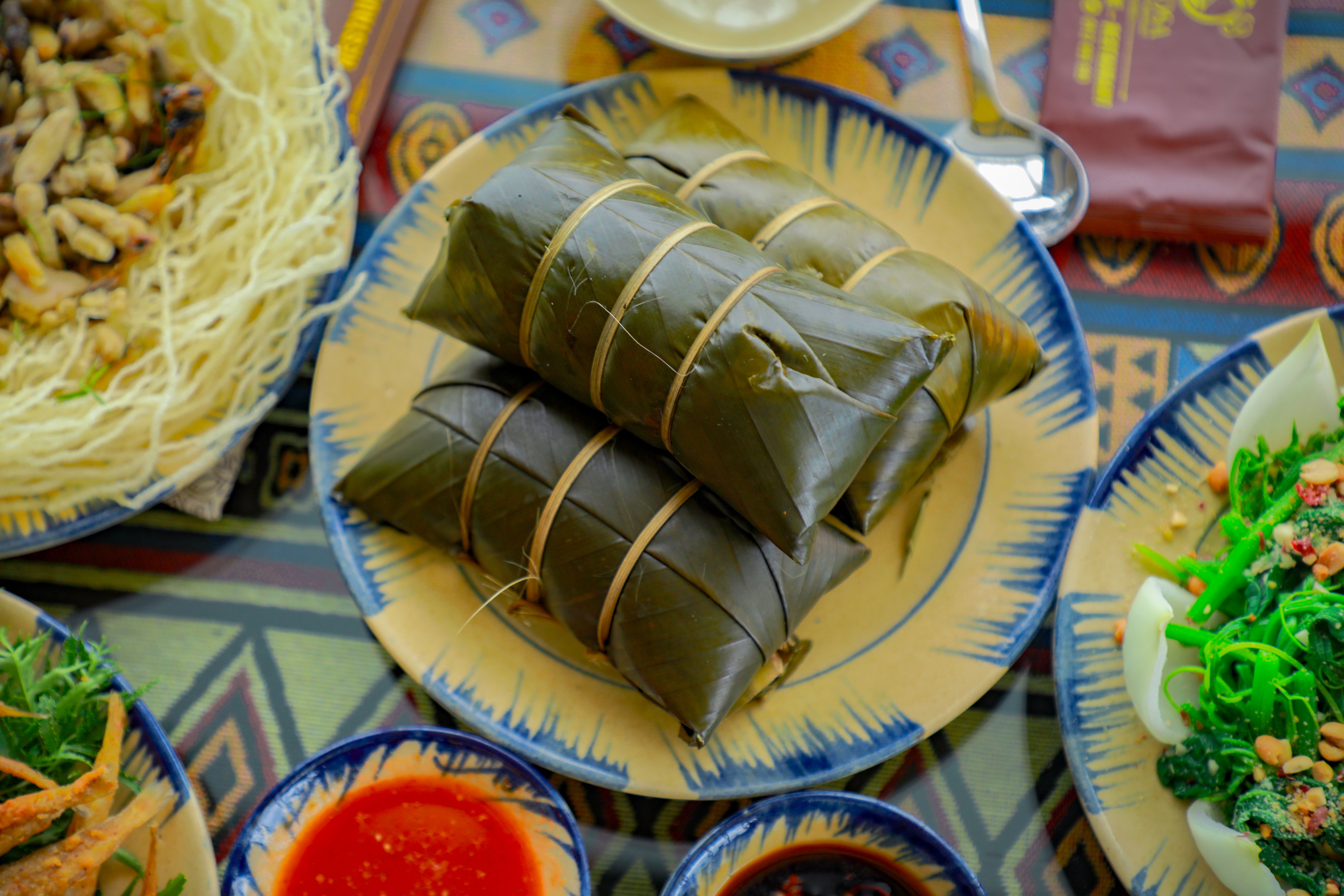
The diets react (see scores below)
Common Ingredients
- corn dough
- beef
- pork
- chicken
- olives
- raisins
- capers
- onion
- bell pepper
- banana leaves
Specific recipes may vary.
Incompatible with 8 of 11 diets
Diet Ratings
Hallaca is fundamentally incompatible with a ketogenic diet. The dish is built around a corn dough (masa) wrapper, which is a high-carb grain-based ingredient delivering a significant net carb load per serving — likely 30-50g or more from the dough alone. Additionally, raisins are a concentrated source of sugar, further disqualifying this dish. While the protein filling (beef, pork, chicken) and flavor components (olives, capers, onion) are largely keto-friendly, the structural foundation of corn masa and the inclusion of raisins make this dish entirely incompatible with maintaining ketosis.
Hallaca contains multiple animal products — beef, pork, and chicken — making it clearly incompatible with a vegan diet. All three are direct animal flesh, which is unambiguously excluded under any definition of veganism. The corn dough, olives, raisins, capers, onion, bell pepper, and banana leaves are all plant-based, but the presence of three distinct meats makes this dish firmly off-limits for vegans.
Hallaca is a traditional Venezuelan tamale-like dish whose defining base is corn dough (masa), which is a grain product and explicitly excluded from the paleo diet. Corn is a grain, and all grains are prohibited under paleo principles due to their lectin, phytate, and anti-nutrient content. While the fillings — beef, pork, chicken, olives, capers, onion, and bell pepper — are largely paleo-compatible, the dish cannot be separated from its corn dough wrapper, which is structurally essential. Raisins are technically paleo but are very high in sugar and should be consumed in moderation. The banana leaves used for wrapping are non-edible and not a concern. Regardless, the corn masa alone disqualifies this dish entirely.
Hallaca is a traditional Venezuelan holiday dish that conflicts with Mediterranean diet principles on multiple fronts. It contains three types of meat including beef and pork (red meats that should be limited to a few times per month), combined in a single dish. The corn dough base, while made from a whole grain, is a refined masa product. The combination of beef, pork, and chicken simultaneously pushes this well beyond acceptable Mediterranean meat consumption thresholds. While some ingredients like olives, capers, onion, and bell pepper are Mediterranean-friendly, they are minor components in a dish dominated by multiple red and processed meats. This is a festive, calorie-dense dish not aligned with the plant-forward, olive oil-centric Mediterranean approach.
Hallaca is a Venezuelan dish that is fundamentally incompatible with the carnivore diet. The primary base is corn dough (masa), a grain-based carbohydrate that is strictly excluded from carnivore eating. Beyond the corn dough, the dish contains multiple plant-derived ingredients: olives, raisins, capers, onion, and bell pepper — all of which are plant foods explicitly forbidden on carnivore. Banana leaves, while used as a wrapper rather than eaten, further highlight the plant-heavy nature of this dish. Although it does contain animal proteins (beef, pork, chicken), these are completely overshadowed by the dominant plant components. This is not a dish that can be easily modified into a carnivore-compliant version — the corn dough is structural and central to what makes a Hallaca a Hallaca.
Hallaca is a traditional Venezuelan dish made with masa (corn dough) wrapped in banana leaves. The corn dough (masa) is a grain-based ingredient — corn is explicitly excluded on the Whole30 program. Even if all other ingredients (beef, pork, chicken, olives, raisins, capers, onion, bell pepper) are individually compliant, the corn dough is a disqualifying ingredient. Additionally, hallaca is structurally similar to a tamale, which falls under the 'no recreating baked goods/wraps/dough-based comfort foods' rule. The banana leaves used as wrappers are fine, but the corn masa itself makes this dish incompatible with Whole30.
Hallaca contains multiple high-FODMAP ingredients that make it unsuitable during the elimination phase. Onion is one of the highest-fructan foods and a primary FODMAP offender — it is used as a key aromatic in the stew filling. Raisins are high in excess fructose and fructans, and at typical serving quantities in this dish would exceed safe thresholds. These two ingredients alone would disqualify the dish. Additionally, olives at higher quantities can be caution-level due to polyols (sorbitol), and capers have limited Monash testing. The corn dough (masa) itself is generally low-FODMAP, as corn/masa harina is well-tolerated. The mixed meats (beef, pork, chicken) are inherently low-FODMAP proteins, and bell pepper is low-FODMAP at standard servings. However, the structural role of onion in the filling — not used as a garnish but as a base ingredient cooked into the stew — and the inclusion of raisins as a traditional component means there is no realistic way to consume a standard serving of Hallaca without a significant FODMAP load.
Some FODMAP practitioners note that onion cooked into a sauce or stew may leach FODMAPs into the cooking liquid, and if only the solids are consumed, the fructan load may be somewhat reduced — but Monash University does not support using this as a mitigation strategy during elimination, and the raisins remain a clear high-FODMAP trigger regardless.
Hallaca is a traditional Venezuelan dish made with a masa (corn dough) typically enriched with lard or fat, wrapped in banana leaves and filled with a slow-cooked mixture of beef, pork, and chicken. This combination raises multiple DASH diet concerns: (1) The dough is traditionally prepared with high amounts of lard or annatto-infused fat, significantly increasing saturated fat content. (2) Multiple processed and cured components — including olives and capers — are extremely high in sodium; a single hallaca can easily contribute 800–1,200mg or more of sodium. (3) The combination of three meats, including red meat (beef) and pork, conflicts with DASH guidance to limit red and fatty meats. (4) While some ingredients like onion, bell pepper, and raisins are DASH-friendly, they are overwhelmed by the high-sodium, high-fat profile of the overall dish. The dish as traditionally prepared is not compatible with DASH dietary principles and would require substantial reformulation (lean proteins only, drastically reduced olives/capers, lard replaced with vegetable oil, low-sodium preparation) to approach acceptability.
NIH DASH guidelines do not specifically address traditional ethnic dishes like hallaca, and some DASH-oriented clinicians argue that cultural foods can be adapted and consumed occasionally in controlled portions without categorically being 'avoided.' An updated clinical interpretation might rate a reformulated, portion-controlled version with reduced sodium additives and leaner protein as 'caution' rather than 'avoid,' acknowledging the vegetable content and corn masa base.
Hallaca is a traditional Venezuelan tamale-like dish that presents significant Zone Diet challenges but is not entirely incompatible with the framework. The corn dough (masa) base is a high-glycemic, starchy carbohydrate that Zone methodology classifies as 'unfavorable' — it will spike insulin and is difficult to portion within a single 9g net carb block given typical serving sizes. The mixed meat filling (beef, pork, chicken) provides protein, though the combination likely includes fattier cuts, particularly pork, which increases saturated fat content beyond Zone ideals. The raisins are a flagged high-glycemic fruit that Sears specifically lists as unfavorable. Olives and capers are positives — olives provide monounsaturated fat and polyphenols. Bell pepper and onion are favorable low-glycemic vegetables. The banana leaves are purely structural. As a whole dish, the carbohydrate load from the masa is the primary concern: a single hallaca likely contains 30–50g of net carbs from corn dough alone, making it very difficult to balance within Zone ratios without dramatically reducing portion size. A half or quarter portion accompanied by additional lean protein and vegetables could theoretically be worked into a Zone meal, but the dish as traditionally served skews heavily carbohydrate-dominant and insulin-stimulating.
Some Zone practitioners applying Sears' later anti-inflammatory framework might argue that the dish's polyphenol contributors (olives, capers, bell pepper, onion) partially offset concerns, and that small portions of corn-based carbs are not categorically forbidden — corn masa, while unfavorable, is not in the same tier as pure sugar. In cultural and practical contexts, a small portion of hallaca as part of a larger Zone-balanced plate (with extra lean protein and vegetables on the side) could be accommodated, scoring closer to a 5–6 with disciplined portioning.
Hallaca is a traditional Venezuelan tamale-like dish with a complex inflammatory profile. On the negative side, it contains three animal proteins including red meat (beef) and pork, which are categorized as 'limit' foods in anti-inflammatory frameworks due to saturated fat content. The corn dough (masa) is a refined carbohydrate with moderate glycemic impact, and the dish is typically calorie-dense. On the positive side, the filling includes onions and bell peppers, which provide antioxidants, quercetin, and vitamin C. Olives contribute monounsaturated fats and polyphenols. Capers are rich in flavonoids (quercetin and kaempferol). Raisins add some polyphenols. The aromatics likely include garlic and herbs, which are anti-inflammatory. The triple-protein combination (beef + pork + chicken) is the primary concern — the saturated fat load from beef and pork together is meaningful. However, hallaca is traditionally a festive, occasional food rather than an everyday staple, and the portion of each meat per serving may be moderate given the dough-to-filling ratio. The banana leaf wrapping is neutral (not consumed). Overall, this dish leans toward caution: it has some genuinely beneficial components but is dominated by a high saturated fat, refined carbohydrate, and multi-red-meat profile that conflicts with anti-inflammatory principles.
Some anti-inflammatory nutritionists would note that traditional whole-food preparations like hallaca, consumed occasionally and as part of a broader plant-rich dietary pattern, are unlikely to drive systemic inflammation — context and frequency matter more than individual dishes. Conversely, strict anti-inflammatory protocol adherents (particularly those following AIP or Dr. Weil's guidance closely) would flag the beef-pork combination and refined corn masa as a meaningful inflammatory burden, especially for those with existing inflammatory conditions.
Hallaca is a traditional Venezuelan tamale-like dish made of masa (corn dough) filled with a mixed meat stew (beef, pork, chicken) and wrapped in banana leaves. The multi-meat filling provides meaningful protein, but the overall dish is nutritionally complex for GLP-1 patients. The corn masa is a refined starch with low fiber density and moderate glycemic load, making it a low-nutrient-per-calorie vehicle. The combination of beef and pork adds saturated fat, which can worsen nausea, bloating, and reflux — common GLP-1 side effects. Olives and capers contribute sodium, and raisins add sugar, though both are in small amounts. On the positive side, the chicken component is lean, the vegetables (onion, bell pepper) add some micronutrients and a small fiber contribution, and the banana leaf steaming method avoids frying. Portion size is a significant concern: a single hallaca is typically dense and filling, which may feel overwhelming given GLP-1-slowed gastric emptying. It is not an ideal GLP-1 food but can be consumed cautiously — eating half a hallaca, prioritizing the filling over the masa, and pairing with a fiber-rich side could make it more appropriate.
Some GLP-1-focused dietitians may rate this more leniently for patients from Venezuelan or Latin American backgrounds, emphasizing the cultural importance of the dish and the real protein contribution from three meat sources. Others would flag the saturated fat from beef and pork as a meaningful concern given how strongly GLP-1s amplify GI sensitivity to high-fat meals, particularly around injection day.
*See how scores were generated at our methodology page.
Nutritional profile
Six traits that cut across every diet.
Fiber & Plants
How much whole-plant food and fiber it delivers.
Healthy Fats
The quality of its fats (unsaturated, omega-3).
Whole / Unprocessed
How close it is to its natural, unprocessed form.
Gut Gentle
How easy it is on digestion (low FODMAP, few irritants).
Low Glycemic
How little it spikes your blood sugar.
Protein Density
How much protein it packs per calorie.
Controversy Index
Higher controversy = more disagreement between diets.
Diet-Specific Tips
 Zone — 4/10
View tips
- Corn dough (masa) is a high-glycemic, starchy carbohydrate classified as 'unfavorable' in Zone methodology
- High carbohydrate load per typical serving makes 40/30/30 ratio very difficult to achieve without extreme portion reduction
- Raisins are specifically flagged by Sears as an unfavorable high-sugar fruit
- Mixed beef and pork filling likely includes saturated fat above Zone recommendations
- Olives are a positive monounsaturated fat and polyphenol source
- Bell pepper and onion are favorable low-glycemic Zone vegetables
- Mixed protein sources (beef, pork, chicken) add complexity but chicken component is favorable
- Traditional serving size makes Zone-compliant portioning impractical without significant modification
 Anti-Inflammatory — 4/10
View tips
- Red meat (beef) and pork both present — elevated saturated fat load
- Corn masa is a refined carbohydrate with moderate glycemic impact
- Olives and capers contribute anti-inflammatory polyphenols and flavonoids
- Bell peppers and onions provide antioxidants and quercetin
- Traditionally a festive/occasional food, not everyday consumption
- No trans fats or artificial additives — whole-food preparation
- Triple protein combination increases overall saturated fat concern
 GLP-1 Friendly — 4/10
View tips
- Mixed meat filling (beef, pork, chicken) provides protein but also elevated saturated fat
- Corn masa is a refined starch with low fiber and low nutrient density per calorie
- Dense, large-format dish — GLP-1 patients may struggle with portion control and gastric emptying
- Steamed preparation (banana leaves) avoids frying — a meaningful positive
- Raisins add sugar; olives and capers add sodium — minor concerns in typical quantities
- Bell pepper and onion contribute modest fiber and micronutrients
- Culturally significant dish — complete avoidance guidance would be unnecessarily restrictive