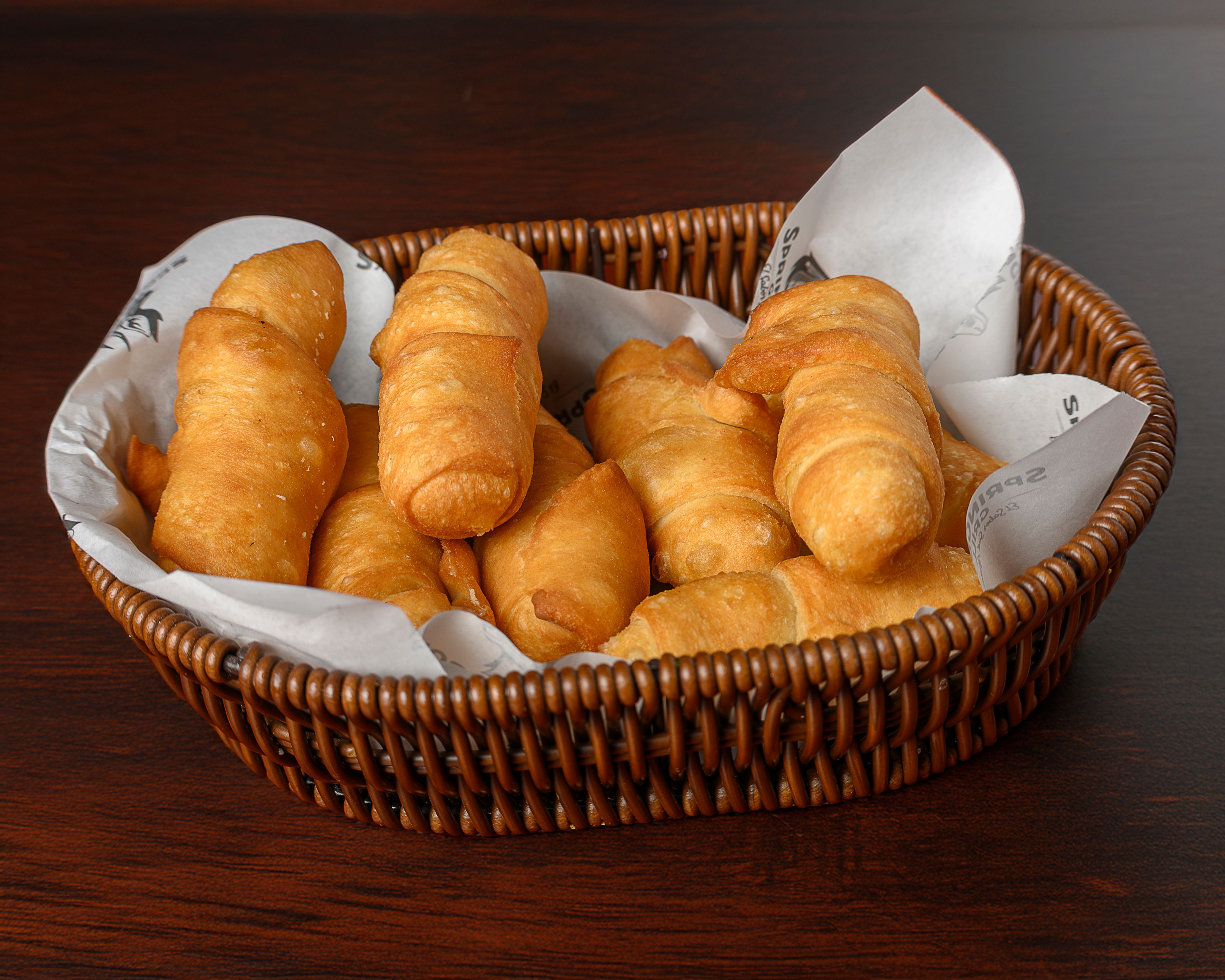
Photo: Christopher Welsch Leveroni / Pexels
Venezuelan
Tequenos
The diets react (see scores below)
Common Ingredients
- wheat flour
- cheese
- eggs
- butter
- sugar
- oil
Specific recipes may vary.
Incompatible with 11 of 11 diets
Diet Ratings
Tequeños are Venezuelan cheese-filled bread sticks made primarily from wheat flour, which is a high-carb grain that is fundamentally incompatible with ketogenic eating. A standard serving of tequeños would deliver a very large amount of net carbs from the wheat flour dough alone, far exceeding the daily keto limit of 20-50g net carbs. The added sugar compounds the problem further. While the cheese and butter components are keto-friendly, they are completely overshadowed by the dominant wheat flour base. There is no realistic portion size at which tequeños become keto-compatible.
Tequeños are Venezuelan cheese-filled bread sticks that contain multiple animal-derived ingredients. The recipe includes cheese (dairy), eggs, and butter (dairy) — all of which are explicitly excluded from a vegan diet. These are not trace contaminants but core, structural ingredients that define the dish. There is no meaningful debate within the vegan community about whether cheese, eggs, or butter are vegan — they are not.
Tequeños are a Venezuelan cheese-filled dough snack that contains multiple paleo-prohibited ingredients. Wheat flour is a grain and strictly excluded from any paleo framework. Cheese is a dairy product, also excluded. Butter is a dairy derivative, excluded under strict paleo (and even debated under lenient paleo). Sugar is a refined sweetener, excluded. The unspecified 'oil' is likely a seed oil (canola, vegetable, or similar), also excluded. With at least four clearly non-paleo ingredients — wheat flour, cheese, sugar, and likely seed oil — this dish has virtually no paleo-compatible components aside from the eggs. There is no version of this dish that could be considered paleo without fundamentally changing its nature.
Tequeños are deep-fried or baked cheese-filled dough sticks made from refined wheat flour, butter, sugar, and cheese. This combination strongly contradicts Mediterranean diet principles: refined white flour is a processed grain with no whole-grain nutritional value, butter is a saturated fat that displaces the preferred extra virgin olive oil, added sugar is explicitly minimized in the Mediterranean pattern, and the dish is effectively a fried/baked processed snack with very little nutritional alignment. While cheese and eggs appear in moderate amounts in Mediterranean eating, they are not the primary concern here — the refined flour base, butter, and sugar are the main disqualifiers. The dish offers no vegetables, legumes, whole grains, or other plant-forward components, and it functions as a calorie-dense processed snack food.
Tequeños are Venezuelan cheese-filled bread sticks that are fundamentally incompatible with the carnivore diet. The primary ingredient is wheat flour, a grain-based plant food that is strictly excluded on any tier of carnivore eating. Additionally, sugar and oil (plant-derived) are present. While the dish does contain some animal-derived ingredients (cheese, eggs, butter), these are entirely overshadowed by the dominant plant-based components. No variation of the carnivore diet — not even the most lenient 'animal-based' approach — permits wheat flour or grain-based foods.
Tequeños contain multiple Whole30-excluded ingredients. Wheat flour is a grain and explicitly excluded. Cheese is dairy and excluded (only ghee/clarified butter are the dairy exceptions). Butter is regular butter, also excluded dairy. Sugar is an added sweetener, explicitly excluded. Additionally, tequeños are a fried cheese-filled bread/dough snack that falls squarely into the 'no recreating baked goods/junk food' rule even if ingredients were somehow substituted. This dish fails on nearly every front.
Tequeños are Venezuelan cheese-filled bread sticks made primarily with wheat flour as their base dough. Wheat flour is high in fructans, a key FODMAP that must be avoided during the elimination phase. A standard serving of tequeños (3-4 pieces) would contain a significant amount of wheat flour, making this dish clearly high-FODMAP. The cheese filling adds a secondary concern depending on the type used — traditional tequeños use queso blanco or a semi-soft white cheese, which may contain moderate lactose levels. The remaining ingredients (eggs, butter, sugar, oil) are generally low-FODMAP. However, the wheat flour alone is sufficient to classify this dish as high-FODMAP at any reasonable serving size during the elimination phase.
Tequeños are deep-fried or baked cheese-stuffed dough sticks that are fundamentally at odds with DASH diet principles. The primary ingredients — full-fat cheese (high in sodium and saturated fat), butter (saturated fat), refined wheat flour (not whole grain), sugar, and frying oil — combine to create a food that violates multiple core DASH restrictions simultaneously. Full-fat cheese is typically high in sodium (200-400mg per ounce) and saturated fat, both of which DASH explicitly limits. Butter adds additional saturated fat. Refined white flour offers no fiber or micronutrient benefit compared to whole grains. The dish is fried or baked in oil, adding caloric density. As a Venezuelan snack food, tequeños are commonly consumed in portions of 3-6 pieces, multiplying the sodium and saturated fat load. There are no meaningful sources of potassium, magnesium, fiber, or other DASH-emphasized nutrients. This food falls squarely in the 'avoid' category for anyone following DASH guidelines.
Tequeños are Venezuelan cheese-filled bread sticks made primarily from wheat flour (high-glycemic refined carbohydrate), cheese (high saturated fat, moderate protein), butter (saturated fat), sugar, and oil. This combination is deeply unfavorable from a Zone perspective on multiple fronts: (1) The dominant carbohydrate source is refined white wheat flour, which is high-glycemic and explicitly categorized as 'unfavorable' in Zone methodology — it will spike insulin sharply. (2) The fat profile is poor — butter contributes saturated fat and the dough-frying oil is likely a pro-inflammatory omega-6 seed oil, neither of which aligns with Zone's monounsaturated fat priority. (3) The protein source (cheese) comes heavily bundled with saturated fat, making it difficult to hit lean protein targets. (4) Sugar is added, compounding the glycemic load. (5) There are no low-glycemic vegetables or fruits, no omega-3 sources, and no polyphenols. The macronutrient ratio is heavily skewed toward high-glycemic carbs and saturated fat, making it nearly impossible to incorporate into a Zone-balanced meal without completely overwhelming the block structure. Even a small portion contributes a poor carb-to-fiber ratio and an unfavorable fat profile simultaneously.
Tequeños are Venezuelan cheese-filled bread sticks made from refined wheat flour, full-fat cheese, butter, eggs, sugar, and oil. This combination presents multiple pro-inflammatory concerns from an anti-inflammatory diet perspective. Refined wheat flour is a high-glycemic refined carbohydrate that promotes insulin spikes and is associated with elevated inflammatory markers (CRP, IL-6). Full-fat cheese and butter are significant sources of saturated fat, which the anti-inflammatory framework consistently recommends limiting. The dish contains added sugar, another pro-inflammatory ingredient. There are no meaningful anti-inflammatory components — no omega-3 fatty acids, no colorful vegetables, no herbs or spices with anti-inflammatory polyphenols, no whole grains. The frying oil used (likely a refined vegetable or seed oil) may contribute excess omega-6 fatty acids. As a fried or baked snack food, tequeños are essentially a refined-carbohydrate-and-saturated-fat delivery vehicle with no redeeming anti-inflammatory properties. This is the type of processed, high-glycemic, high-saturated-fat snack that anti-inflammatory frameworks consistently categorize as pro-inflammatory.
Tequeños are deep-fried or baked cheese-filled dough sticks made primarily from refined wheat flour, butter, cheese, eggs, sugar, and oil. The ingredient profile is problematic across nearly every GLP-1 dietary priority: the primary macronutrients are refined carbohydrates and saturated fat, protein content per serving is modest relative to calorie load (cheese provides some protein but not at a density that justifies the fat burden), fiber is essentially zero, and the combination of butter, oil, and cheese creates a high-fat, greasy snack that is highly likely to worsen GLP-1 side effects including nausea, reflux, bloating, and delayed gastric emptying discomfort. Sugar adds empty calories. The dough is refined grain with no nutritional density benefit. This is a classic example of a small, calorie-dense, nutrient-poor snack — the opposite of what GLP-1 patients need when appetite is suppressed and every calorie must count. Even a 2-3 piece serving delivers substantial saturated fat and refined carbs with minimal protein or fiber return.
*See how scores were generated at our methodology page.
Nutritional profile
Six traits that cut across every diet.
Fiber & Plants
How much whole-plant food and fiber it delivers.
Healthy Fats
The quality of its fats (unsaturated, omega-3).
Whole / Unprocessed
How close it is to its natural, unprocessed form.
Gut Gentle
How easy it is on digestion (low FODMAP, few irritants).
Low Glycemic
How little it spikes your blood sugar.
Protein Density
How much protein it packs per calorie.
Controversy Index
Higher controversy = more disagreement between diets.