Vietnamese
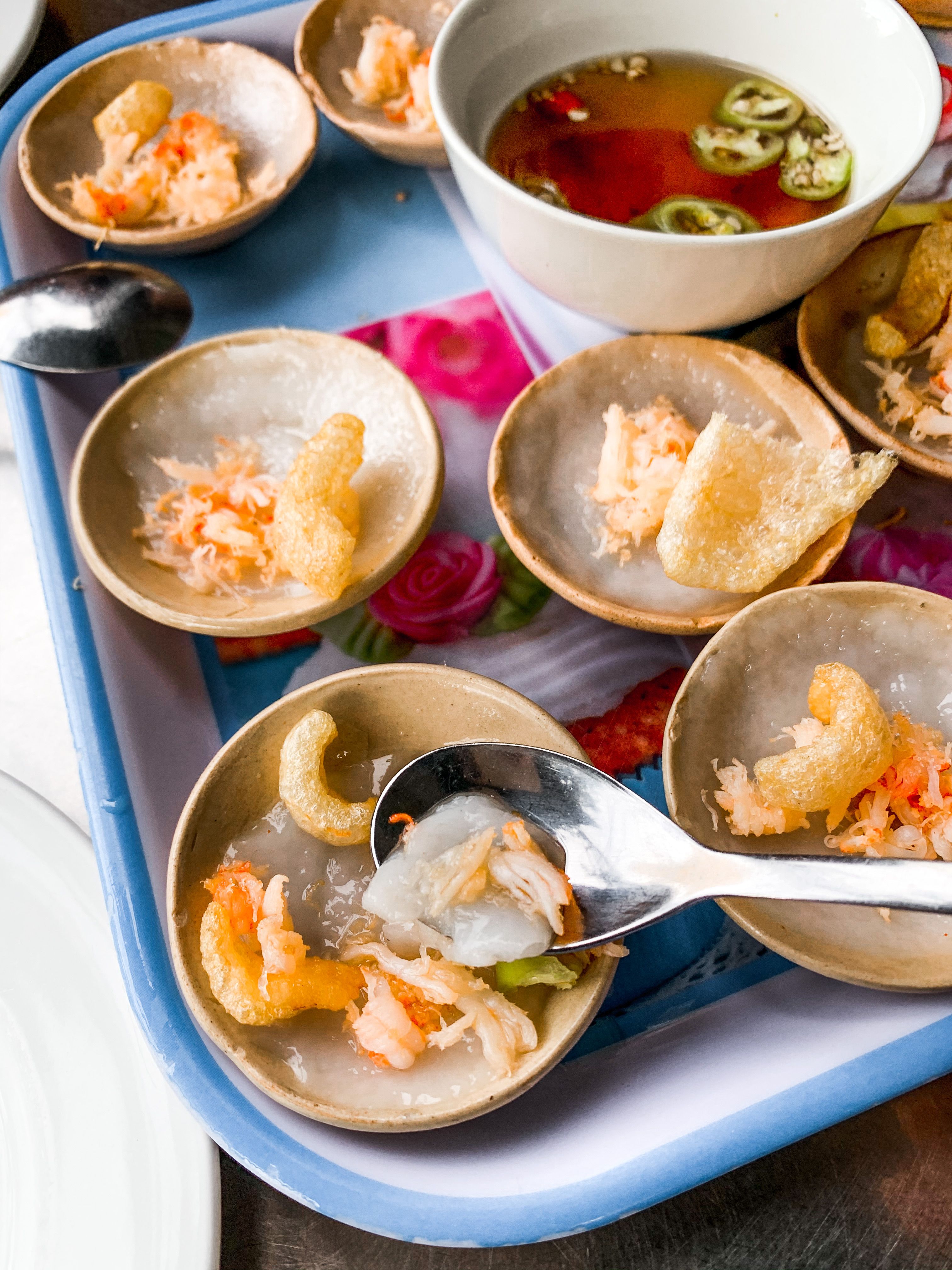
Banh Bot Loc
The diets react (see scores below)
Common Ingredients
- tapioca flour
- shrimp
- pork belly
- shallots
- fish sauce
- scallions
- banana leaves
- black pepper
Specific recipes may vary.
Incompatible with 6 of 11 diets
Diet Ratings
Banh Bot Loc is a Vietnamese tapioca dumpling whose wrapper is made almost entirely from tapioca flour, one of the highest-glycemic, highest-net-carb starches available. Tapioca flour contains roughly 26g of net carbs per 30g serving with virtually no fiber, fat, or protein to offset it. A typical serving of several dumplings would deliver far more carbohydrates than the entire daily keto budget of 20-50g net carbs. The shrimp, pork belly, fish sauce, and aromatics are keto-friendly in isolation, but the tapioca wrapper is the dominant ingredient and is fundamentally incompatible with ketosis. There is no meaningful way to modify this dish while retaining its defining character.
Banh Bot Loc contains multiple animal products that are strictly excluded from a vegan diet. Shrimp and pork belly are both animal flesh, fish sauce is derived from fermented fish, and the combination makes this dish entirely incompatible with veganism. There is no ambiguity here — this dish is built around animal ingredients as its core components.
Banh Bot Loc is a Vietnamese tapioca dumpling that fundamentally relies on tapioca flour as its wrapper — a heavily processed starch product extracted from cassava root. While cassava itself is a tuber and technically paleo in whole form, tapioca flour is a refined, processed derivative that strips away fiber and nutrients, placing it firmly in the processed/refined category that paleo excludes. Beyond the wrapper, fish sauce typically contains added salt and sometimes sugar or preservatives, making it a processed condiment. The dish is structurally a dumpling — a format built around a processed flour wrapper — which is incompatible with paleo principles regardless of the filling. The shrimp, pork belly, shallots, scallions, banana leaves, and black pepper are individually paleo-compliant, but the dish as a whole cannot be separated from its tapioca wrapper, which is the defining ingredient.
Banh Bot Loc is a Vietnamese steamed dumpling made with tapioca flour (a refined starch with no fiber), filled with shrimp and pork belly wrapped in banana leaves. The shrimp component aligns well with Mediterranean principles, as seafood is strongly encouraged. However, pork belly is a fatty red/processed meat that Mediterranean guidelines recommend limiting to a few times per month. Tapioca flour is a refined, low-nutrient starch — not a whole grain — which runs counter to Mediterranean emphasis on whole grains and fiber-rich carbohydrates. Fish sauce and shallots are acceptable flavor components. The dish is not heavily processed in an industrial sense and contains no added sugars, but the combination of refined starch and pork belly pulls it away from core Mediterranean ideals. As an occasional snack in modest portions, it is tolerable but not encouraged.
Some Mediterranean diet interpreters apply a 'traditional whole-food' lens broadly to non-Mediterranean cuisines, noting that tapioca is a minimally processed natural starch and pork belly appears only as a small filling component; under this view, the dish's shrimp-forward protein and absence of artificial additives might push it toward acceptable moderation rather than caution.
Banh Bot Loc is fundamentally incompatible with the carnivore diet. The primary structural component is tapioca flour, a plant-derived starch extracted from cassava root, which forms the translucent wrapper that defines this dish. Additional plant-based ingredients include shallots, scallions, black pepper, and banana leaves (used for wrapping/cooking). While the filling contains carnivore-compatible ingredients — shrimp and pork belly — these are embedded within and inseparable from a plant-starch wrapper. Fish sauce is generally accepted by carnivore practitioners, but it cannot redeem a dish whose base is a plant carbohydrate. This dish is essentially a starch dumpling with meat filling, making it clearly off-limits regardless of where one falls on the carnivore strictness spectrum.
Banh Bot Loc is a Vietnamese tapioca dumpling traditionally wrapped in banana leaves. The critical issue is tapioca flour, which is used to make the dumpling wrapper/dough. Even though tapioca flour itself is grain-free and technically a compliant starch (derived from cassava), this dish uses it to create a dumpling wrapper — a pasta/noodle-like dough structure that falls squarely into the Whole30 prohibition on recreating baked goods, noodles, pasta, wraps, and similar foods. The Whole30 program explicitly excludes pasta, noodles, and wraps even when made with compliant ingredients. A tapioca dumpling wrapper is functionally equivalent to a pasta or noodle product and violates Rule 4. The remaining ingredients (shrimp, pork belly, shallots, fish sauce, scallions, banana leaves, black pepper) are all individually compliant, but the dish as a whole cannot be approved due to its dumpling/pasta-like format.
Banh Bot Loc contains two significant FODMAP concerns that make it unsuitable during the elimination phase. First, shallots are high-FODMAP due to fructans and are used as a core flavoring in the filling — there is no realistic low-FODMAP version of this dish without fundamentally altering the recipe. Second, scallions (green onions) used in meaningful quantities can contribute fructans, though the green tops alone are low-FODMAP; the preparation context in this dish often uses the whole scallion or significant amounts. The remaining ingredients are generally low-FODMAP: tapioca flour is a safe starch, shrimp and pork belly are protein sources with no FODMAPs, fish sauce is low-FODMAP at standard serving sizes, black pepper is low-FODMAP, and banana leaves are inert wrappers. However, shallots are a non-negotiable ingredient in authentic Banh Bot Loc and cannot be present in any meaningful quantity during elimination. The dish as traditionally prepared should be avoided.
Monash University confirms shallots are high-FODMAP even in small amounts due to fructan content, so there is consensus on avoidance. However, some clinical FODMAP practitioners note that if scallion greens only are substituted for shallots and the recipe is modified, tapioca-based dumplings could theoretically be adapted to a low-FODMAP version — but this would not reflect the traditional dish being evaluated here.
Banh Bot Loc is a Vietnamese tapioca dumpling containing shrimp and pork belly wrapped in banana leaves. From a DASH perspective, this dish presents a mixed profile. The shrimp provides lean protein, potassium, and magnesium, which align with DASH principles. However, pork belly is a high-saturated-fat, high-calorie fatty cut of red meat that DASH explicitly limits. Fish sauce is a significant sodium concern — it contains approximately 1,400–1,500mg sodium per tablespoon, and as a seasoning base for the filling and typically a dipping sauce, the total sodium load of this dish can be substantial, potentially exceeding 800–1,200mg per serving. Tapioca flour is a refined starch with minimal fiber, potassium, or other DASH-friendly nutrients, unlike whole grain alternatives DASH recommends. Shallots and scallions offer modest vegetable benefits but in negligible quantities. The dish as commonly prepared is not inherently DASH-aligned due to the pork belly and fish sauce, but it is not categorically off-limits in the way bacon or processed deli meats would be. Portion-controlled consumption as an occasional snack, with reduced fish sauce and substitution of pork belly for leaner protein, could make it more compatible.
NIH DASH guidelines explicitly limit saturated fat and high-sodium condiments like fish sauce, making this dish a poor fit. However, updated clinical interpretations note that pork belly in small snack-sized portions contributes only modest saturated fat per serving, and some DASH-oriented dietitians focus primarily on overall dietary patterns rather than restricting individual dishes with mixed profiles, particularly in cultural dietary contexts.
Banh Bot Loc is a Vietnamese tapioca dumpling filled with shrimp and pork belly, wrapped in banana leaves. From a Zone perspective, this dish has several structural problems. The wrapper is made entirely of tapioca flour, which is a high-glycemic, pure starch with virtually no fiber — this is an 'unfavorable' carbohydrate in Zone terminology, spiking blood sugar rapidly. Pork belly contributes significant saturated fat rather than the preferred monounsaturated fat, and it is far from the lean protein the Zone recommends. Shrimp is an excellent lean Zone protein, but it is paired with the fatty pork belly, diluting the protein quality. The dish also lacks the colorful, low-glycemic vegetables that the Zone emphasizes heavily (8 servings/day). The macronutrient ratio would skew heavily toward carbohydrates from tapioca with excess saturated fat, making it difficult to balance into a proper 40/30/30 block structure without drastic portion reduction. As a snack, a very small portion (1-2 pieces) could theoretically be worked into a Zone framework if paired with lean protein and vegetables elsewhere in the meal, but the dish as prepared is poorly aligned with Zone principles.
Banh Bot Loc is a Vietnamese tapioca dumpling with a mixed anti-inflammatory profile. On the positive side, shrimp provides lean protein and some omega-3s, black pepper contains piperine (which enhances curcumin absorption and has mild anti-inflammatory properties), scallions and shallots offer flavonoids and quercetin, and fish sauce contributes umami without adding pro-inflammatory fats. The banana leaf wrapping is neutral. However, the dish has notable concerns: tapioca flour is a refined starch with minimal fiber, a high glycemic index, and essentially no antioxidant or polyphenol value — it contributes empty calories that can spike blood sugar and indirectly promote inflammatory pathways. Pork belly is a high-saturated-fat cut of red meat that falls in the 'limit' category under anti-inflammatory guidelines due to its contribution to saturated fat intake. Fish sauce, while flavorful, can be high in sodium, and excess sodium is weakly associated with inflammatory markers. The dish is not aggressively pro-inflammatory — it contains no seed oils, refined sugars, artificial additives, or trans fats — but the combination of refined tapioca starch and pork belly prevents it from achieving approval. As a small snack portion (traditional serving is a few small dumplings), the overall inflammatory burden is moderate and context-dependent.
Some anti-inflammatory practitioners take a more lenient view of traditional whole-food ethnic dishes like Banh Bot Loc, arguing that the absence of industrial seed oils, artificial additives, and refined sugars makes it acceptable in moderation — and that the shrimp and aromatic vegetables (shallots, scallions, black pepper) provide meaningful anti-inflammatory compounds. Conversely, stricter anti-inflammatory protocols (such as those informed by glycemic load research) would flag tapioca flour more harshly as a driver of blood sugar volatility and inflammation, and AIP-style frameworks would also flag shrimp's shellfish status and pork belly's saturated fat.
Bánh bột lọc are small Vietnamese tapioca dumplings wrapped in banana leaves, filled with shrimp and pork belly. The tapioca flour wrapper is essentially pure starch with negligible protein, fiber, or micronutrients — a low-nutrient-density carbohydrate base. The shrimp filling provides lean protein, but the pork belly component adds meaningful saturated fat, which worsens GLP-1 side effects like nausea, bloating, and reflux. Served as a snack in small pieces, a typical 3–4 piece serving likely delivers only 5–8g of protein while contributing moderate fat from the pork belly and nearly zero fiber. The dipping sauce (fish sauce-based) adds sodium but minimal concern otherwise. Black pepper is fine in typical amounts. The dish is not fried, is small-portioned, and is relatively easy to digest in modest amounts — which prevents a full avoid rating. However, the combination of low protein yield, zero fiber, low nutrient density per calorie, and saturated fat from pork belly makes this a poor fit for GLP-1 patients as a regular snack. Occasional consumption of 1–2 pieces is low-risk; eating it as a meaningful protein or fiber source is not appropriate.
Some GLP-1-aware dietitians may note that the small portion size and non-fried preparation make this less problematic than many processed snacks, and that the shrimp provides at least some lean protein. However, others would flag the pork belly fat content and near-zero fiber as making this a nutritionally poor use of limited appetite capacity on GLP-1 medications.
*See how scores were generated at our methodology page.
Nutritional profile
Six traits that cut across every diet.
Fiber & Plants
How much whole-plant food and fiber it delivers.
Healthy Fats
The quality of its fats (unsaturated, omega-3).
Whole / Unprocessed
How close it is to its natural, unprocessed form.
Gut Gentle
How easy it is on digestion (low FODMAP, few irritants).
Low Glycemic
How little it spikes your blood sugar.
Protein Density
How much protein it packs per calorie.
Controversy Index
Higher controversy = more disagreement between diets.
Diet-Specific Tips
 Mediterranean — 5/10
View tips
- Shrimp is a Mediterranean-approved seafood protein
- Pork belly is a fatty red meat, limited to occasional consumption
- Tapioca flour is a refined starch lacking fiber and nutrients of whole grains
- No added sugars or highly processed industrial ingredients
- Fish sauce adds sodium but is a traditional, minimally processed condiment
- Small portion snack context mitigates some concerns about pork belly quantity
 DASH — 4/10
View tips
- Pork belly is high in saturated fat, a key nutrient DASH limits
- Fish sauce is very high in sodium (~1,400mg/tbsp), elevating total dish sodium significantly
- Tapioca flour is a refined starch with minimal fiber — not a whole grain
- Shrimp provides lean protein aligned with DASH principles
- Small snack portion size may moderate saturated fat and sodium impact
- No significant source of potassium, calcium, magnesium, or dietary fiber
- Low-sodium fish sauce substitution would meaningfully improve DASH compatibility
 Zone — 4/10
View tips
- Tapioca flour wrapper is high-glycemic with no fiber — an 'unfavorable' Zone carbohydrate that spikes insulin rapidly
- Pork belly is a high saturated fat protein source, contrary to Zone's preference for lean proteins like skinless chicken, fish, or shrimp alone
- Shrimp filling is a Zone-favorable lean protein but is offset by the fatty pork belly component
- No low-glycemic vegetables present — the dish is entirely starch and protein/fat with no Zone-favorable produce
- Macronutrient ratio skews toward carbohydrates and saturated fat, making 40/30/30 block balancing very difficult
- Very small portions (1-2 pieces) could technically fit as a minor snack component if the rest of the day compensates, but the food itself is structurally unfavorable
 Anti-Inflammatory — 5/10
View tips
- Tapioca flour is a refined starch with high glycemic index and no fiber or polyphenols — a neutral-to-negative ingredient
- Pork belly is a high-saturated-fat red meat, falling in the 'limit' category under anti-inflammatory guidelines
- Shrimp provides lean protein and modest omega-3 fatty acids — a mild positive
- Shallots and scallions contribute quercetin and flavonoids with anti-inflammatory properties
- Black pepper contains piperine, a mild anti-inflammatory bioactive compound
- Fish sauce adds sodium but no significant pro-inflammatory fats or additives
- No seed oils, trans fats, refined sugars, or artificial additives — cleaner than many processed snacks
- Small portion size as a traditional snack mitigates overall inflammatory burden
 GLP-1 Friendly — 4/10
View tips
- Tapioca flour wrapper is pure starch — zero fiber, zero protein, low nutrient density
- Pork belly adds saturated fat, a known GLP-1 side effect trigger (nausea, bloating, reflux)
- Shrimp provides lean protein but total protein per serving is low (est. 5–8g for typical snack portion)
- No fiber in this dish — does not support the 25–30g daily fiber target
- Not fried and small-portioned, which reduces severity of concerns
- Fish sauce and shallots are acceptable condiment-level ingredients
- Poor protein-to-calorie ratio makes this a weak use of limited GLP-1 appetite capacity