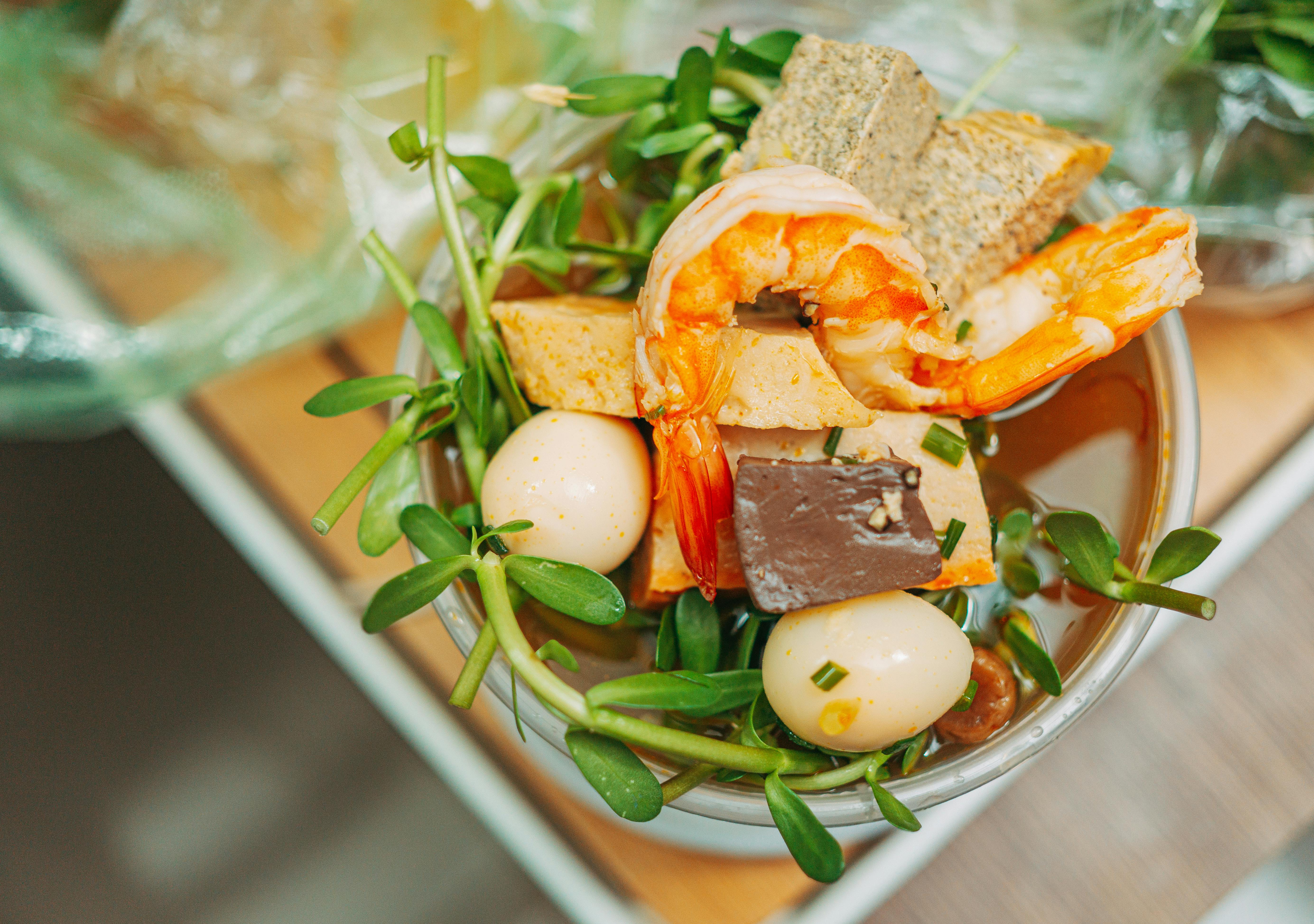
Photo: FOX ^.ᆽ.^= ∫ / Pexels
The diets react (see scores below)
Common Ingredients
- fermented fish
- rice noodles
- shrimp
- squid
- pork
- eggplant
- lemongrass
- pineapple
- water spinach
- chili
Specific recipes may vary.
Incompatible with 6 of 11 diets
Diet Ratings
Bun Mam is fundamentally incompatible with ketogenic eating due to its rice noodle base, which is the primary component of the dish. Rice noodles are a high-glycemic grain product delivering approximately 40-50g of net carbs per standard serving, easily exceeding the entire daily keto carb allowance in a single bowl. Compounding this, pineapple adds additional sugars and net carbs, while the fermented fish paste base (mam) often contains added sugars in its preparation. The proteins (shrimp, squid, pork, fish) and some vegetables (water spinach, lemongrass, chili, eggplant) would be keto-compatible in isolation, but the dish as a whole cannot be consumed in any meaningful portion without breaking ketosis. This is not a portion-control situation — the rice noodles are structural to the dish, not a garnish.
Bun Mam contains multiple animal products that are strictly excluded from a vegan diet. The dish is built on a fermented fish (mam) broth base, which is a direct animal product. Additional animal proteins include shrimp, squid, and pork. While rice noodles, eggplant, lemongrass, pineapple, water spinach, and chili are all plant-based, the dish is fundamentally non-vegan due to its core animal-derived ingredients. There is no ambiguity here — this is a meat, fish, and seafood-heavy dish.
Bun Mam is fundamentally incompatible with the paleo diet due to two core non-paleo ingredients. Rice noodles are a grain-based product — rice is excluded from strict paleo. Fermented fish paste (mam) is a heavily processed, salt-laden condiment that falls into the processed/preserved food category excluded by paleo principles. The remaining ingredients — shrimp, squid, pork, eggplant, lemongrass, pineapple, water spinach, and chili — are all paleo-approved, but the dish cannot be considered paleo as traditionally prepared because its defining structural components (the noodles and the fermented fish base) are both non-compliant.
Bun Mam is a complex Vietnamese fermented fish soup with several Mediterranean-compatible elements alongside some concerns. On the positive side, seafood (fermented fish, shrimp, squid) aligns well with the Mediterranean emphasis on fish and seafood, and the vegetables (eggplant, water spinach, lemongrass, pineapple) are plant-forward. However, the rice noodles are refined grains rather than whole grains, the pork component adds red/processed meat, and fermented fish paste (mắm) is very high in sodium — a concern not specifically addressed in Mediterranean guidelines but counter to general healthy eating principles underpinning the diet. The combination of pork with seafood also pushes the dish into mixed-protein territory that doesn't map cleanly onto Mediterranean protein hierarchy. Overall it is a nutritionally rich, vegetable-and-seafood-heavy dish, but the refined noodles, pork, and high sodium from fermented fish prevent a full approval.
Some Mediterranean diet interpreters, particularly those applying broader 'traditional diet' frameworks, might view the fermented fish as analogous to Mediterranean fermented/preserved fish products like anchovies or bottarga, and the abundance of vegetables and seafood as sufficient for a cautious approval; the pork could be seen as a small flavoring component similar to how cured meats are used sparingly in Southern European cooking.
Bun Mam is fundamentally incompatible with the carnivore diet. While it does contain animal proteins (fermented fish, shrimp, squid, pork), the dish is built around multiple plant-based components that are entirely excluded from carnivore: rice noodles (grain-based carbohydrate), eggplant (vegetable), lemongrass (plant spice), pineapple (fruit), water spinach (leafy vegetable), and chili (plant). The majority of the dish's volume and character comes from plant ingredients. No modification short of a complete reconstruction would make this carnivore-compatible.
Bun Mam is excluded from Whole30 primarily because of its rice noodles, which are a grain product (rice is explicitly excluded). Additionally, fermented fish paste (mắm) used as the soup base commonly contains added sugar and sometimes other non-compliant additives. Even if a compliant fermented fish sauce could be sourced, the rice noodles alone make this dish non-compliant. The remaining ingredients — shrimp, squid, pork, eggplant, lemongrass, pineapple, water spinach, and chili — are all Whole30-compatible on their own.
Bun Mam is a complex Vietnamese fermented fish soup with several high-FODMAP ingredients that make it unsuitable during the elimination phase. The most problematic ingredient is fermented fish (mắm), which is typically made with high concentrations of fish fermented with salt and sometimes added seasonings — fermentation processes can concentrate certain FODMAPs and the paste is often blended with garlic and shallots in traditional preparation. Eggplant is high-FODMAP above 75g (a standard serving in a soup would easily exceed this). Pineapple becomes high-FODMAP above 140g due to excess fructose, and a standard soup serving likely pushes into that range. Lemongrass is low-FODMAP in small amounts but concentrated broths may extract more FODMAPs. Chili is generally low-FODMAP. Rice noodles, shrimp, squid, and pork are all low-FODMAP proteins/grains. Water spinach (morning glory) has limited Monash data but is generally considered low-FODMAP in moderate amounts. The combination of fermented fish paste (likely containing garlic/onion), eggplant at soup portions, and pineapple at typical serving sizes makes this dish high-risk during elimination phase.
Monash University has not specifically tested traditional Bun Mam as a composite dish, and the FODMAP load depends heavily on the recipe — some versions use minimal eggplant or smaller pineapple portions. Clinical FODMAP practitioners would likely flag fermented fish paste as a wildcard ingredient since its FODMAP content varies significantly by brand and preparation method, and garlic/shallot content in the paste is rarely disclosed.
Bun Mam is a fermented fish-based Vietnamese soup that presents a mixed DASH profile. On the positive side, it contains several DASH-friendly ingredients: rice noodles (refined carbs, acceptable in moderation), shrimp and squid (lean seafood proteins), vegetables like water spinach and eggplant (rich in potassium, fiber, and magnesium), pineapple (fruit, DASH-approved), and lemongrass (flavor without sodium). However, the central ingredient — fermented fish (mắm) — is extremely high in sodium, often exceeding 1,500–2,500mg per serving from the broth base alone, which can surpass the entire daily DASH sodium allowance in one bowl. The addition of pork further contributes saturated fat. The dish as traditionally prepared would likely conflict with both standard DASH (<2,300mg/day) and low-sodium DASH (<1,500mg/day) sodium targets. While the vegetable and seafood components are genuinely DASH-compatible, the fermented fish base makes regular consumption problematic. A heavily modified version with reduced mắm, low-sodium broth, and omitted pork could shift toward 'approve,' but as commonly served, 'caution' is appropriate.
NIH DASH guidelines specifically target sodium reduction, which would flag fermented fish broth as a significant concern. However, some DASH-oriented nutritionists working with Southeast Asian populations argue for culturally adapted interpretations that allow smaller portions of fermented condiments combined with abundant vegetables and lean seafood, noting that the overall nutrient density from water spinach, eggplant, shrimp, and squid partially offsets sodium concerns — particularly for non-hypertensive individuals on standard (not low-sodium) DASH.
Bun Mam is a complex Vietnamese fermented fish soup with a mixed Zone profile. On the positive side, it contains multiple lean proteins (shrimp, squid, fish) that are Zone-favorable, along with anti-inflammatory ingredients like lemongrass and chili, and Zone-friendly vegetables like eggplant and water spinach that contribute low-glycemic carbohydrates and polyphenols. The pork adds protein but also saturated fat, requiring portion awareness. The primary Zone challenge is the rice noodles, which are a high-glycemic refined carbohydrate — the dominant carb source in the dish — making it difficult to achieve the 40/30/30 ratio without significantly reducing the noodle portion relative to a standard serving. Fermented fish (mam) adds sodium and some probiotic benefit, which aligns with Sears' later anti-inflammatory emphasis, but also adds complexity. Pineapple is a moderately high-glycemic fruit (Zone 'unfavorable' carb) that further elevates the glycemic load. A Zone-adapted version would reduce rice noodles to one small block equivalent, load up on the vegetables and water spinach, keep the mixed proteins balanced, and ensure fat is minimal given the protein variety. As served in a restaurant, the noodle-to-vegetable ratio is typically too high for Zone balance.
Some Zone practitioners following Sears' later work (The Anti-Inflammation Zone, The OmegaRx Zone) might view Bun Mam more favorably due to its fermented ingredients (gut health, polyphenols), omega-3-rich seafood base, and abundant vegetables. They would argue that with mindful eating — consuming more broth, protein, and vegetables while leaving some noodles — this dish is a reasonable Zone-compatible choice. The fermented fish base also provides beneficial bioactive compounds consistent with Sears' later anti-inflammatory framework.
Bun Mam is a richly complex Vietnamese fermented fish soup with a genuinely mixed anti-inflammatory profile. On the positive side, the dish features seafood proteins (fermented fish, shrimp, squid) that contribute omega-3 fatty acids and lean protein. Lemongrass has documented anti-inflammatory and antimicrobial properties. Pineapple provides bromelain, an enzyme with anti-inflammatory activity. Water spinach is a nutrient-dense leafy green rich in antioxidants. Chili peppers contribute capsaicin, a well-studied anti-inflammatory compound. Eggplant, a nightshade, provides nasunin and chlorogenic acid — potent antioxidants. The rice noodle base is a refined carbohydrate with a moderate glycemic impact, but less problematic than wheat-based noodles. The primary concern is the fermented fish paste (mắm), which is very high in sodium — chronically elevated sodium intake is associated with increased inflammatory markers and cardiovascular stress, though fermented foods also provide beneficial probiotics and bioactive peptides. The inclusion of pork adds saturated fat, which anti-inflammatory guidelines advise limiting. The overall dish sits in a genuine tension: it has notable anti-inflammatory ingredients but also meaningful inflammatory risk factors (high sodium from fermented fish, refined carbs, saturated fat from pork), making 'caution' the appropriate verdict for regular consumption.
Some fermented food advocates (including researchers aligned with the gut-microbiome-inflammation axis) would argue the probiotic and bioactive peptide content of high-quality fermented fish paste is net anti-inflammatory by supporting gut barrier integrity and reducing systemic inflammation. Conversely, stricter anti-inflammatory protocols like AIP would flag both the nightshade (eggplant) and the high sodium load of fermented fish as problematic, potentially rating this lower.
Bun Mam is a complex Vietnamese fermented fish soup with a mixed GLP-1 profile. On the positive side, it contains multiple protein sources (fermented fish, shrimp, squid, pork) that together can contribute meaningfully to daily protein targets, and the broth-based format is generally easy to consume in small portions. Vegetables like water spinach and eggplant add fiber and micronutrients. Pineapple provides digestive enzymes that may aid gastric comfort. However, several factors create concern for GLP-1 patients. The fermented fish base (mam) is extremely pungent and very high in sodium, which can contribute to water retention and may stress the kidneys when hydration is already a concern on GLP-1s. The pork component is often a fattier cut (pork belly or ribs), adding saturated fat that can worsen nausea and bloating. The chili garnish may trigger or worsen reflux and GI discomfort, which are already common GLP-1 side effects. Rice noodles are refined carbohydrates with low fiber and low protein density. The strong fermented aroma and flavor intensity can itself trigger nausea in GLP-1 patients who are already smell- and taste-sensitive. The dish is portion-sensitive — a small serving with lean proteins (shrimp, squid) and more vegetables, with chili omitted, is more tolerable than a full bowl.
Some GLP-1-focused dietitians would rate this higher, arguing that broth-based soups are among the best formats for patients with reduced appetite because they are hydrating, easy to digest in small amounts, and the seafood components (shrimp, squid) are genuinely lean, high-quality proteins. Others would rate it lower, citing the high sodium load of fermented fish paste as a significant concern for GLP-1 patients who are often eating less and may not be compensating with adequate fluid intake, and flagging the chili and fatty pork as near-certain GI irritants for sensitive patients.
*See how scores were generated at our methodology page.
Nutritional profile
Six traits that cut across every diet.
Fiber & Plants
How much whole-plant food and fiber it delivers.
Healthy Fats
The quality of its fats (unsaturated, omega-3).
Whole / Unprocessed
How close it is to its natural, unprocessed form.
Gut Gentle
How easy it is on digestion (low FODMAP, few irritants).
Low Glycemic
How little it spikes your blood sugar.
Protein Density
How much protein it packs per calorie.
Controversy Index
Higher controversy = more disagreement between diets.
Diet-Specific Tips
 Mediterranean — 5/10
View tips
- Seafood (fish, shrimp, squid) strongly aligns with Mediterranean fish emphasis
- Pork inclusion adds red/processed meat, a limited food in the Mediterranean diet
- Rice noodles are refined grains, not whole grains
- Abundant vegetables (eggplant, water spinach, pineapple, lemongrass) are a strong positive
- Fermented fish paste is very high in sodium, atypical of Mediterranean dietary patterns
- No olive oil; fat profile is not Mediterranean-aligned
- Dish is minimally processed overall aside from the fermented fish component
 DASH — 4/10
View tips
- Very high sodium from fermented fish (mắm) base — major DASH concern
- Pork adds saturated fat, which DASH limits
- Water spinach and eggplant are potassium- and fiber-rich DASH vegetables
- Shrimp and squid are lean seafood proteins aligned with DASH
- Pineapple is a DASH-approved fruit component
- Rice noodles are refined carbs — acceptable in moderation but not emphasized
- Lemongrass adds flavor without sodium penalty
- As commonly served, likely exceeds daily DASH sodium limit in a single bowl
- Low-sodium adaptation (reducing mắm) would significantly improve DASH compatibility
 Zone — 5/10
View tips
- Rice noodles are high-glycemic and dominate carbohydrate blocks, making Zone ratios difficult to achieve in standard portions
- Multiple lean proteins (shrimp, squid, fermented fish) are Zone-favorable and provide good protein block variety
- Pineapple contributes additional glycemic load as a Zone 'unfavorable' carb
- Water spinach and eggplant are Zone-favorable low-glycemic vegetables supporting the carb block
- Pork adds saturated fat requiring monitoring alongside other protein sources
- Fermented fish aligns with Sears' anti-inflammatory and polyphenol emphasis in later writings
- Dish can be Zone-adapted by reducing noodles and increasing vegetable and broth consumption
 Anti-Inflammatory — 5/10
View tips
- Fermented fish paste is very high in sodium — chronic high sodium intake linked to elevated inflammatory markers
- Seafood proteins (shrimp, squid, fermented fish) provide some omega-3 fatty acids and lean protein
- Pork adds saturated fat, which anti-inflammatory guidelines recommend limiting
- Lemongrass and chili pepper are notable anti-inflammatory spices
- Water spinach provides antioxidants and micronutrients consistent with anti-inflammatory eating
- Pineapple contributes bromelain, a natural anti-inflammatory enzyme
- Eggplant is rich in nasunin and chlorogenic acid — potent antioxidants (though flagged in AIP protocols)
- Rice noodles are refined carbohydrates with moderate glycemic impact
- Fermented fish may provide beneficial probiotics and bioactive peptides, partially offsetting sodium concerns
 GLP-1 Friendly — 5/10
View tips
- Multiple protein sources (shrimp, squid, fermented fish, pork) support protein targets but quality varies by cut
- Fermented fish base is extremely high in sodium — a meaningful concern given GLP-1-related hydration challenges
- Pork in traditional preparation is often fatty (belly/ribs), adding saturated fat that worsens nausea and bloating
- Chili garnish is a known GLP-1 GI irritant — may worsen reflux and nausea
- Broth-based format is positive — hydrating and portion-friendly for reduced-appetite patients
- Rice noodles are refined carbohydrates with low fiber and low protein density
- Water spinach and eggplant add fiber and micronutrients — positive contribution
- Strong fermented aroma may trigger nausea in smell-sensitive GLP-1 patients
- Dish is highly customizable — lean protein selection and chili omission significantly improve the rating