The diets react (see scores below)
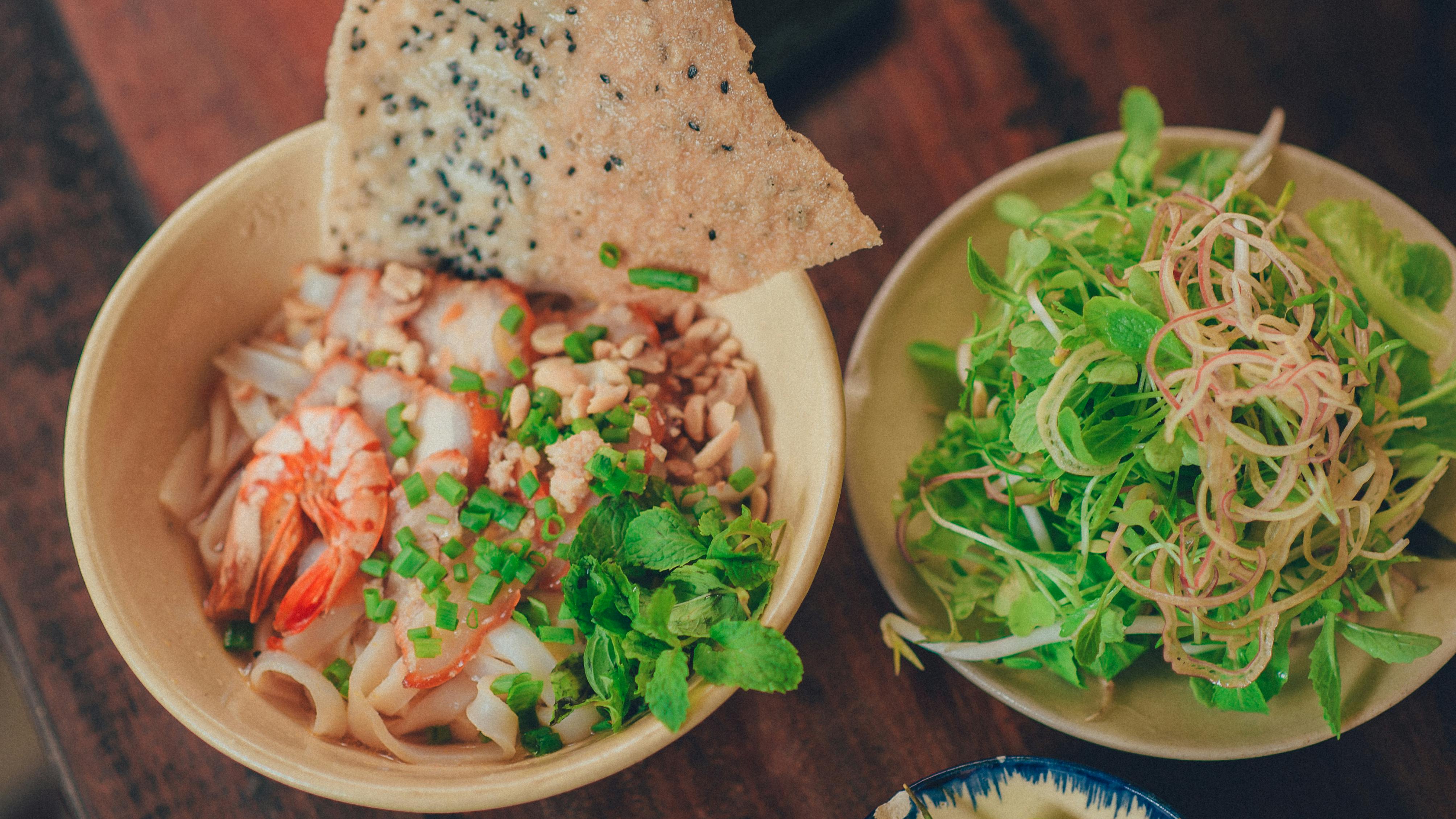
Common Ingredients
- cao lau noodles
- pork
- bean sprouts
- lettuce
- mint
- rice crackers
- soy sauce
- garlic
- fish sauce
Specific recipes may vary.
Incompatible with 7 of 11 diets
Diet Ratings
Cao Lau is fundamentally incompatible with a ketogenic diet. The dish is built around cao lau noodles, which are thick rice-based noodles with a very high net carb content — a standard serving easily contributes 40-60g of net carbs on its own, exceeding or hitting the entire daily keto limit. Rice crackers add additional starch and carbohydrates on top of that. The remaining ingredients (pork, bean sprouts, lettuce, mint, garlic, fish sauce, soy sauce) are individually more keto-friendly, but they cannot offset the dominant grain-based components. The dish's identity is inseparable from its noodles and crackers, making meaningful modification equivalent to creating an entirely different dish.
Cao Lau contains multiple animal-derived ingredients that make it entirely incompatible with a vegan diet. Pork is the primary protein — a clear animal product. Fish sauce, a staple seasoning in this dish, is derived from fermented fish and is a direct animal product. These two ingredients alone disqualify it. There are no vegan versions of traditional Cao Lau, as both pork and fish sauce are definitional to the dish's flavor profile.
Cao Lau is fundamentally incompatible with the paleo diet. The dish's defining ingredient is cao lau noodles, which are made from rice flour — a grain that is clearly excluded from paleo. Rice crackers are an additional grain-based component. Soy sauce contains both wheat (a grain) and soy (a legume), making it doubly non-paleo. Bean sprouts, while less problematic in some interpretations, come from mung beans — a legume. The remaining ingredients (pork, lettuce, mint, garlic, fish sauce) are paleo-compatible, but the core structural components of this dish — noodles, crackers, and soy sauce — are all clear paleo violations. This is not a dish that can be easily modified; removing the noodles and crackers would fundamentally change the dish into something else entirely.
Cao Lau is a Vietnamese noodle dish centered on pork as the primary protein, which is a red meat limited to only a few times per month in the Mediterranean diet. The cao lau noodles are a refined, specialty noodle made from rice flour — not a whole grain — and rice crackers add further refined carbohydrates. The dish lacks olive oil entirely, relying instead on soy sauce and fish sauce for flavor, which are high in sodium and not part of the Mediterranean framework. On the positive side, the dish does include some Mediterranean-friendly elements: bean sprouts, lettuce, mint, and garlic add vegetables and fresh herbs, and fish sauce at least brings umami depth with minimal caloric impact. However, the combination of red meat as the dominant protein, refined grain noodles, no olive oil, and no legumes or whole grains makes this dish poorly aligned with Mediterranean principles overall.
Some Mediterranean diet interpreters take a flexible, whole-foods-forward view, noting that Cao Lau contains fresh vegetables, herbs, and garlic, and that the pork portion is relatively modest in traditional servings. Under this interpretation, occasional moderate consumption of a dish with these plant accompaniments could be acceptable, similar to how some Mediterranean cultures occasionally include cured or small amounts of pork in otherwise vegetable-rich meals.
Cao Lau is fundamentally incompatible with the carnivore diet. The dish is built around cao lau noodles (a plant-based grain product), and is heavily loaded with additional plant foods: bean sprouts, lettuce, mint, rice crackers, soy sauce (fermented soy/wheat), and garlic. Fish sauce is the only ingredient that is animal-derived and carnivore-compatible. Even the pork, while carnivore-approved, is entirely overshadowed by the plant-based foundation of this dish. This is essentially a noodle and herb bowl with pork as a minor component — the opposite of what carnivore requires.
Cao Lau contains multiple excluded ingredients that make it incompatible with Whole30. The cao lau noodles are made from rice flour (a grain product), placing them in the excluded grains category. Soy sauce contains soy (a legume) and wheat (a grain), both of which are explicitly excluded. Rice crackers are also a grain-based product and additionally fall under the 'no recreating junk food/chips' rule. These are not edge cases — grains and soy are core exclusions of the Whole30 program. Fish sauce is generally compliant (check for added sugar), and the vegetables, herbs, and pork are all fine, but the foundational ingredients of this dish are non-compliant.
Cao Lau contains multiple high-FODMAP ingredients that make it unsuitable during the elimination phase. Garlic is a significant source of fructans and is high-FODMAP at any amount. Cao lau noodles are traditionally made from a specific local rice with lye water (ash water), but their exact FODMAP composition is uncertain — if they contain any wheat, that adds fructans. Soy sauce in standard (non-tamari) form typically contains wheat and is high-FODMAP. Fish sauce in small amounts can be low-FODMAP, but the combination of garlic and likely wheat-based soy sauce already disqualifies this dish. Bean sprouts and pork are low-FODMAP, as are the fresh herbs (mint, lettuce) and rice crackers, but the critical problematic ingredients — garlic and soy sauce — are present in quantities typical for cooking and cannot be offset by the safe components.
Cao Lau presents a mixed DASH profile. On the positive side, it includes vegetables (bean sprouts, lettuce), fresh herbs (mint), and some lean protein. However, the dish has significant DASH concerns: soy sauce and fish sauce are both high-sodium condiments — a typical serving of Cao Lau can easily contribute 1,000–1,500mg of sodium from these two ingredients alone, approaching or exceeding the low-sodium DASH daily limit in a single dish. Pork, while leaner than red meat, can include fattier cuts depending on preparation. The noodles (cao lau) are a refined starch rather than a whole grain. Rice crackers add additional sodium and refined carbohydrates. The dish does offer some DASH-positive elements (fresh vegetables, herbs, moderate protein), but the sodium burden from the condiments is the dominant concern and pushes this into caution territory for a DASH dieter.
NIH DASH guidelines explicitly limit high-sodium condiments like soy sauce and fish sauce, making a standard Cao Lau preparation problematic. However, some DASH-oriented clinicians note that if low-sodium soy sauce is substituted, fish sauce is used minimally, and portion sizes are controlled, the vegetable-forward elements and lean protein could make this dish acceptable in moderation — though the refined noodles and crackers would still not be emphasized.
Cao Lau is a traditional Vietnamese dish from Hoi An that presents a mixed Zone Diet profile. The dish has several Zone-friendly elements: the pork provides lean protein (though the cut matters — char siu-style roasted pork can be moderately fatty), bean sprouts and lettuce are excellent low-glycemic Zone-favorable vegetables, and fresh herbs like mint add polyphenols with negligible caloric impact. However, the dish is carbohydrate-heavy by design, centered around thick cao lau noodles made from rice flour (similar to thick rice noodles or udon) with added rice crackers — both are high-glycemic, refined carbohydrate sources that are 'unfavorable' in Zone terminology. The noodle-to-protein ratio in a typical serving skews well above the 40/30/30 target, making the dish carb-dominant. Fish sauce and soy sauce add sodium but minimal macro disruption. To Zone-ify this dish, one would need to significantly reduce the noodle and cracker portions, increase the vegetable components (bean sprouts, lettuce), and ensure the pork portion is approximately 3 oz (25g protein). With such modifications, it can fit within a Zone meal, but as traditionally served, the carbohydrate load from refined noodles and rice crackers makes this a challenging fit requiring careful block management.
Some Zone practitioners using the 'unfavorable carb' framework would note that rice noodles, while higher glycemic, are still a whole food source and can be portioned into carb blocks. A small serving (~1/3 cup cooked noodles) counts as roughly 1 carb block, so a disciplined Zone dieter could include a reduced portion of cao lau noodles alongside a protein-heavy serving of pork and extra vegetables to approximate the 40/30/30 ratio. Sears' later works also emphasize polyphenols, and the fresh herb components (mint, lettuce) contribute favorably to the anti-inflammatory goal.
Cao Lau is a traditional Vietnamese dish from Hội An with a mixed anti-inflammatory profile. On the positive side, it includes fresh herbs (mint), bean sprouts, and lettuce — all antioxidant-rich vegetables. Garlic is a well-established anti-inflammatory ingredient. Fish sauce, while high in sodium, is a minimally processed fermented condiment without significant pro-inflammatory concerns at culinary doses. Soy sauce similarly adds sodium but not meaningful inflammatory burden in typical amounts. The fresh herb and vegetable components align well with anti-inflammatory principles. However, the primary protein is pork, which falls in the 'limit' category due to its saturated fat content — particularly if the cut used is fatty (as is traditional, often using char siu-style roasted pork). The cao lau noodles themselves are a refined starch with limited fiber or nutritional benefit. Rice crackers add more refined carbohydrate. The dish lacks omega-3-rich ingredients, significant polyphenol sources, or other strongly anti-inflammatory components. Sodium load from fish sauce and soy sauce combined is a consideration for those with inflammatory conditions. Overall, Cao Lau is a moderately processed, pork-centric noodle dish — not strongly pro-inflammatory, but not robustly anti-inflammatory either.
Some anti-inflammatory practitioners would rate this more favorably, emphasizing the abundance of fresh herbs, sprouts, and vegetables relative to many Western dishes, and noting that fermented condiments like fish sauce provide beneficial micronutrients. Others following stricter anti-inflammatory protocols (particularly AIP or those targeting autoimmune conditions) would rate it lower due to the refined noodles, pork fat content, and soy sauce (soy being excluded in some protocols).
Cao Lau is a nuanced dish for GLP-1 patients. On the positive side, it includes fresh vegetables (lettuce, bean sprouts, mint) that contribute fiber and water content, and the broth-based preparation with soy sauce and fish sauce keeps added fat low. The fresh herbs and greens support digestibility and hydration. However, several factors warrant caution. The primary protein is pork — the cut matters enormously, and traditional Cao Lau uses char siu-style roasted pork belly or sliced fatty pork, which is higher in saturated fat and harder to digest on a slowed GLP-1 stomach. Cao Lau noodles are made from rice flour and ash water, giving them a denser, chewier texture than typical rice noodles; they are moderate on the glycemic index but lower in protein than wheat-based noodles and offer minimal fiber. The rice crackers add refined carbohydrates and are low in nutritional value per calorie. Overall protein delivery per serving is moderate at best — likely 15–20g depending on pork portion size — and may fall short of the 15–30g per meal protein target unless pork portions are generous and lean. The dish is not fried and is not heavily spiced, which are positives for GLP-1 tolerability. Portion control is feasible given the dish is served in a bowl format. Scored at 5: acceptable in moderation, but protein quality and fat content of the pork cut are the pivotal variables.
Some GLP-1-focused dietitians may rate this more favorably if lean pork loin is substituted for fatty cuts, arguing the vegetable volume, broth base, and moderate carbohydrate load make it a reasonable complete meal. Others would flag that the low fiber content of rice noodles and the rice crackers represent empty-calorie displacement in a reduced-appetite context, pushing for a lower rating until the dish is modified.
*See how scores were generated at our methodology page.
Nutritional profile
Six traits that cut across every diet.
Fiber & Plants
How much whole-plant food and fiber it delivers.
Healthy Fats
The quality of its fats (unsaturated, omega-3).
Whole / Unprocessed
How close it is to its natural, unprocessed form.
Gut Gentle
How easy it is on digestion (low FODMAP, few irritants).
Low Glycemic
How little it spikes your blood sugar.
Protein Density
How much protein it packs per calorie.
Controversy Index
Higher controversy = more disagreement between diets.
Diet-Specific Tips
 DASH — 4/10
View tips
- High sodium from soy sauce and fish sauce — likely 1,000–1,500mg+ per serving
- Pork can be a moderate-fat protein depending on cut used
- Cao lau noodles are refined starch, not whole grain
- Bean sprouts, lettuce, and mint are DASH-positive vegetables and herbs
- Rice crackers add refined carbs and additional sodium
- Low-sodium soy sauce substitution would improve DASH compatibility significantly
- No significant source of calcium or dairy; moderate fiber from vegetables only
 Zone — 5/10
View tips
- Cao lau noodles are high-glycemic refined rice-flour noodles — Zone 'unfavorable' carb source
- Rice crackers add additional high-glycemic refined carbohydrate load
- Dish is carbohydrate-dominant by traditional preparation, skewing well above 40% carb target
- Pork is a moderate Zone protein — acceptable if lean cuts used, but fattier cuts increase saturated fat
- Bean sprouts and lettuce are Zone-favorable low-glycemic vegetables that support the dish
- Fresh mint contributes polyphenols aligned with Sears' anti-inflammatory focus
- Significant portion control required to achieve Zone-compliant macronutrient ratios
- Fish sauce and soy sauce are Zone-neutral condiments with negligible macro impact
 Anti-Inflammatory — 5/10
View tips
- Pork as primary protein — moderate saturated fat, falls in 'limit' category for anti-inflammatory diets
- Fresh herbs (mint) and garlic provide anti-inflammatory polyphenols and allicin
- Bean sprouts and lettuce add antioxidants and fiber
- Cao lau noodles and rice crackers are refined carbohydrates with low nutritional density
- High combined sodium from fish sauce and soy sauce — relevant for inflammation in sensitive individuals
- No omega-3 sources, no significant polyphenol-dense ingredients beyond herbs and garlic
- Fermented condiments (fish sauce, soy sauce) are minimally inflammatory at culinary doses
 GLP-1 Friendly — 5/10
View tips
- Pork cut is the critical variable — fatty pork belly or char siu-style preparation significantly increases saturated fat and worsens GLP-1 GI tolerability
- Cao Lau noodles are low in fiber and protein, contributing primarily refined carbohydrate calories
- Rice crackers add low-nutrient refined carbs that displace more valuable calories in a reduced-appetite state
- Fresh vegetables (lettuce, bean sprouts, mint) positively contribute fiber, water content, and digestibility
- Soy sauce and fish sauce are high in sodium — relevant for patients with hypertension or fluid retention
- Protein per serving likely 15–20g — adequate if pork portions are generous and lean, insufficient if fatty cuts are used in small quantities
- Not fried, not heavily spiced — good for GLP-1 GI tolerability
- Dish is portion-controllable in bowl format, compatible with small meal approach