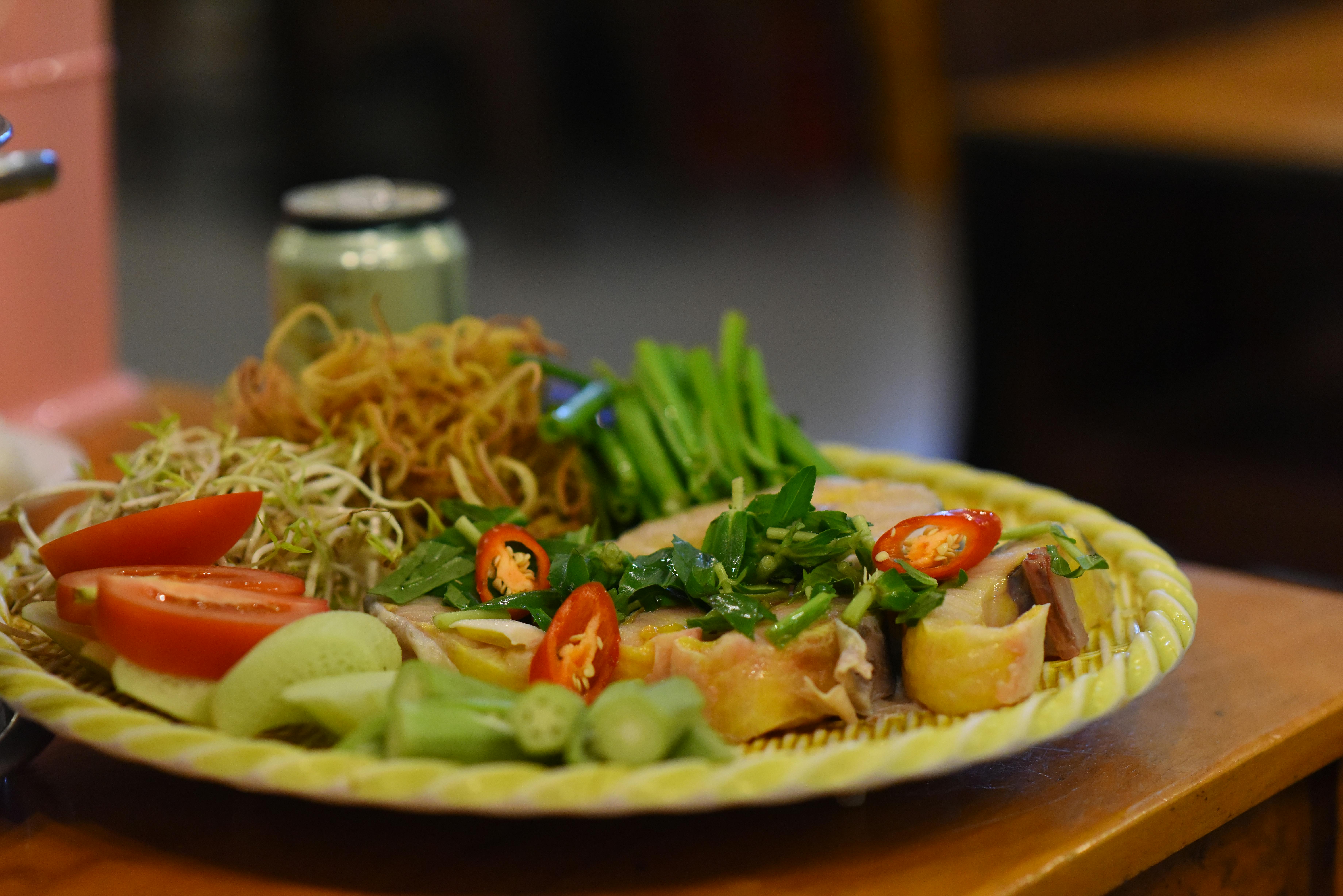
Photo: Sóc Năng Động / Pexels
The diets react (see scores below)
Common Ingredients
- white fish
- turmeric
- dill
- scallions
- galangal
- rice vermicelli
- peanuts
- fish sauce
- shrimp paste
Specific recipes may vary.
Incompatible with 6 of 11 diets
Diet Ratings
Cha Ca is fundamentally incompatible with ketogenic eating in its traditional form due to the rice vermicelli noodles, which are a high-carb grain-based ingredient delivering roughly 40-50g of net carbs per standard serving alone — well exceeding the daily keto limit in a single dish. The base proteins and aromatics (white fish, turmeric, dill, scallions, galangal, fish sauce) are keto-friendly or acceptable in small amounts, and dill and healthy fats from peanuts are fine in moderation. However, the rice vermicelli is a core, structural component of the dish, not a garnish. Peanuts also add moderate carbs. The dish as traditionally served cannot fit into ketosis without a fundamental reconstruction that would make it a different dish entirely.
Cha Ca is a Vietnamese turmeric-marinated fish dish that contains multiple animal-derived ingredients. White fish is a direct animal product, fish sauce is derived from fermented fish (anchovies), and shrimp paste is made from fermented crustaceans. These three ingredients alone make this dish categorically incompatible with a vegan diet. There is no ambiguity here — this dish is built around seafood as its primary protein and uses additional animal-derived condiments throughout.
Cha Ca contains multiple non-paleo ingredients that disqualify it. Rice vermicelli is a grain-based noodle and is strictly excluded from the paleo diet. Peanuts are legumes, also clearly excluded. Shrimp paste is a heavily processed, fermented condiment typically containing added salt and preservatives. Fish sauce, while derived from fish, is almost universally a processed product with added salt. The base protein (white fish) and aromatics (turmeric, dill, scallions, galangal) are paleo-compliant, but the dish as traditionally prepared cannot be considered paleo due to the rice noodles, peanuts, and processed condiments.
Cha Ca is a Vietnamese turmeric-marinated fish dish with many Mediterranean-compatible elements: white fish as the primary protein is strongly encouraged (2-3x weekly), turmeric and dill are healthful spices, scallions and galangal are plant-based aromatics, and peanuts provide beneficial fats. However, several factors temper full approval. Rice vermicelli is a refined grain with no fiber benefit, contrasting with the Mediterranean preference for whole grains. Fish sauce and shrimp paste are highly processed, high-sodium condiments not part of the Mediterranean tradition — while fermented foods have some precedent, these are far saltier and more processed than, say, anchovies or olives. The dish is not cooked in olive oil and lacks the olive oil foundation central to the Mediterranean diet. Overall it is a reasonably healthy, fish-forward dish but requires some adaptation to align well with Mediterranean principles.
Some integrative Mediterranean diet practitioners accept global fish-based dishes as broadly compatible, arguing that the spirit of the diet — emphasizing fish, plant foods, and anti-inflammatory spices like turmeric — is well-represented here. From this perspective, the sodium-rich condiments and refined noodles are minor concerns easily offset by the dish's overall nutrient profile.
Cha Ca is fundamentally incompatible with the carnivore diet. While the white fish is a legitimate carnivore food and fish sauce/shrimp paste are animal-derived condiments, the dish is built around multiple plant-based ingredients that are strictly excluded. Rice vermicelli is a grain-based noodle — a direct carbohydrate source completely off-limits. Turmeric, dill, galangal, and scallions are all plant-derived spices/aromatics excluded on carnivore. Peanuts are legumes, one of the most clearly avoided food categories. The dish cannot be meaningfully adapted while retaining its identity — the plant components are not incidental but structural to the dish.
Cha Ca contains two excluded ingredients that make it non-compliant with Whole30. First, rice vermicelli is a grain-based noodle (rice is an excluded grain), which is explicitly off-limits. Second, peanuts are legumes, which are categorically excluded from the Whole30 program. Additionally, shrimp paste often contains added sugar or other non-compliant additives and would require careful label-reading. The remaining ingredients — white fish, turmeric, dill, scallions, galangal, and fish sauce (if no added sugar) — are generally Whole30-compliant, but the rice vermicelli and peanuts are dealbreakers. Even setting aside the rule violations, noodle dishes fall under the 'no recreating pasta/noodles' prohibition in Rule 4.
Cha Ca contains several low-FODMAP ingredients (white fish, turmeric, dill, rice vermicelli, fish sauce) but is problematic due to three notable ingredients: scallions, peanuts, and shrimp paste. Scallions (green onions) are low-FODMAP only in their green tops — the white bulb portions are high in fructans. In Cha Ca, scallions are a signature ingredient used in generous, cooked quantities, and it is difficult to guarantee only green tops are used. Peanuts are low-FODMAP at a small serve (28g/32 peanuts per Monash) but are typically served as a topping in moderate-to-large quantities in this dish, which could push into moderate FODMAP territory. Shrimp paste (mắm tôm or shrimp paste) is a more significant concern — while fish sauce itself is low-FODMAP, fermented shrimp pastes have not been well-tested by Monash and may contain added high-FODMAP ingredients or fermentation byproducts. Galangal is generally considered low-FODMAP in culinary amounts. The combination of uncertain shrimp paste, quantity-dependent peanuts, and likely whole scallions makes this dish risky during the elimination phase without modification.
Monash University has not specifically tested shrimp paste (mắm tôm), and some clinical FODMAP practitioners advise avoiding all fermented seafood pastes during elimination due to unknown FODMAP content; additionally, if the dish is prepared using only green scallion tops and a small peanut portion, many practitioners would consider a modified version potentially safe.
Cha Ca is a Vietnamese turmeric-marinated fish dish with several DASH-friendly elements: white fish is an excellent lean protein source encouraged by DASH guidelines, turmeric and dill are anti-inflammatory herbs with no sodium concerns, scallions and galangal are DASH-compatible aromatics, and rice vermicelli provides a moderate carbohydrate base. However, the dish is significantly compromised by two high-sodium condiments: fish sauce and shrimp paste. Fish sauce typically contains 1,200–1,500mg sodium per tablespoon, and shrimp paste adds additional sodium load, making the combined sodium content potentially problematic even for the standard DASH threshold of 2,300mg/day — and especially concerning for the low-sodium DASH variant at 1,500mg/day. Peanuts are generally DASH-acceptable in moderation (unsalted) as a source of healthy fats and magnesium, but salted peanuts would add further sodium. The dish has strong DASH-positive bones (fish, herbs, vegetables) but routine preparation with fish sauce and shrimp paste pushes it into caution territory.
NIH DASH guidelines explicitly limit high-sodium condiments, placing this dish in caution. However, updated clinical interpretations note that in the context of an otherwise low-sodium diet, small amounts of high-flavor fermented condiments like fish sauce may be acceptable — some DASH-oriented dietitians suggest using reduced-sodium fish sauce or limiting quantities to 1 teaspoon rather than eliminating entirely, which could raise this dish's score toward approval.
Cha Ca is a Vietnamese turmeric-marinated fish dish that has several Zone-favorable elements but requires careful portioning to balance properly. The white fish is an excellent lean protein source, ideal for Zone meals. Turmeric, dill, scallions, and galangal are anti-inflammatory, polyphenol-rich aromatics that Sears would enthusiastically endorse. Fish sauce adds sodium but negligible macronutrient impact. The problematic elements are the rice vermicelli (high-glycemic refined carbohydrate, unfavorable in Zone terminology) and peanuts (higher in omega-6 fat and not the preferred monounsaturated fat source like almonds or macadamia nuts). Shrimp paste is a minor condiment concern for sodium but not macronutrient-significant. To make this Zone-compliant, a practitioner would need to reduce the rice vermicelli serving substantially (or substitute with shirataki noodles or increase vegetable volume), portion the peanuts carefully, and ensure the fish portion is approximately 3 oz (one block). As traditionally served with generous noodles and peanuts, the carb-to-protein ratio skews unfavorable. With deliberate portioning, this dish can be brought into Zone balance.
Some Zone practitioners following Sears' later anti-inflammatory framework (Toxic Fat, The Anti-Inflammation Zone) would score this higher, noting that the fish provides excellent omega-3s, turmeric is a potent polyphenol, and the overall dish is far less processed than most Western meals. They might argue the rice vermicelli can be portioned into a single carb block and the dish overall represents a culturally authentic, relatively clean meal. Others would keep it at caution, noting that vermicelli is explicitly an 'unfavorable' carb in core Zone texts, and peanuts are omega-6-heavy compared to preferred Zone fat sources.
Cha Ca is a Vietnamese dish with a strongly anti-inflammatory ingredient profile. White fish (typically snakehead, catfish, or cod) provides lean protein and, depending on the species, meaningful omega-3 fatty acids. Turmeric is one of the most well-researched anti-inflammatory spices, with curcumin shown to reduce CRP and IL-6. Dill contains flavonoids and antioxidants. Galangal, related to ginger, carries similar anti-inflammatory gingerol-like compounds. Scallions provide quercetin and organosulfur compounds. Rice vermicelli is a refined carbohydrate but consumed in moderate portions relative to the other ingredients. Peanuts add some healthy fats and resveratrol, though they carry a mild omega-6 load. Fish sauce and shrimp paste are fermented condiments — high in sodium but used in small amounts as flavor agents; fermented foods may offer modest gut health benefits. The main caution is the sodium content from fish sauce and shrimp paste, and the peanuts add some omega-6, but neither rises to a significant concern at typical dish quantities. The refined rice noodles are the weakest element from an anti-inflammatory standpoint but are not disqualifying. Overall, this is a flavorful, whole-food-forward dish dominated by strong anti-inflammatory ingredients.
Most anti-inflammatory frameworks would approve this dish, but AIP (Autoimmune Protocol) adherents would flag peanuts (a legume with lectins) and potentially shrimp paste as concerns for those with autoimmune conditions. Additionally, some practitioners caution that high-sodium fermented condiments like fish sauce may promote inflammatory responses in sodium-sensitive individuals, though mainstream anti-inflammatory nutrition does not restrict fermented fish-based condiments at culinary doses.
Cha Ca is a Vietnamese turmeric-marinated white fish dish served with dill, scallions, and rice vermicelli, typically finished with peanuts and fermented shrimp paste. The white fish base is an excellent lean protein source — high protein density, low saturated fat, and easy to digest, all strongly aligned with GLP-1 dietary priorities. Turmeric, dill, galangal, and scallions are anti-inflammatory, low-calorie aromatics that pose no GLP-1 concerns. Fish sauce adds sodium but in typical condiment quantities is not problematic. However, two ingredients introduce meaningful caution: peanuts add moderate fat per serving (though unsaturated), and shrimp paste is fermented and pungent with high sodium, which some GLP-1 patients find worsens nausea or GI discomfort. The rice vermicelli is a refined carbohydrate with low fiber and protein density — it contributes empty-ish calories relative to GLP-1 nutritional priorities, and portion sensitivity is important here. The dish as traditionally served can be high in sodium overall. Eaten in a smaller, protein-forward portion — generous fish, modest vermicelli, limited peanuts — this dish is a reasonable GLP-1-compatible meal. Full traditional portions with heavy peanut garnish and large vermicelli servings push it toward the lower end of caution.
Some GLP-1-focused dietitians would rate this dish more favorably, emphasizing the lean fish protein and anti-inflammatory spice profile as close to ideal. Others flag fermented, pungent ingredients like shrimp paste as commonly triggering nausea in GLP-1 patients with already-slowed gastric emptying, and would advise omitting or reducing it — making individual tolerance the primary variable here rather than any single nutrient concern.
*See how scores were generated at our methodology page.
Nutritional profile
Six traits that cut across every diet.
Fiber & Plants
How much whole-plant food and fiber it delivers.
Healthy Fats
The quality of its fats (unsaturated, omega-3).
Whole / Unprocessed
How close it is to its natural, unprocessed form.
Gut Gentle
How easy it is on digestion (low FODMAP, few irritants).
Low Glycemic
How little it spikes your blood sugar.
Protein Density
How much protein it packs per calorie.
Controversy Index
Higher controversy = more disagreement between diets.
Diet-Specific Tips
 Mediterranean — 6/10
View tips
- White fish is a core Mediterranean protein source, strongly encouraged 2-3x weekly
- Turmeric, dill, scallions, and galangal are anti-inflammatory, plant-based ingredients
- Peanuts contribute beneficial unsaturated fats consistent with nut consumption
- Rice vermicelli is a refined grain, not aligned with whole grain preference
- Fish sauce and shrimp paste are highly processed, very high-sodium condiments outside Mediterranean tradition
- Dish is not prepared with olive oil, missing the primary fat of the Mediterranean diet
 DASH — 5/10
View tips
- White fish is a DASH-approved lean protein, rich in omega-3 fatty acids
- Fish sauce is very high in sodium (~1,200–1,500mg per tablespoon), the primary concern
- Shrimp paste adds additional significant sodium load
- Peanuts are DASH-acceptable if unsalted; salted peanuts compound sodium issues
- Herbs (turmeric, dill, galangal, scallions) are fully DASH-compatible and add flavor without sodium
- Rice vermicelli is a refined carbohydrate — acceptable in moderation but not a DASH priority grain
- Dish could be DASH-improved by substituting low-sodium fish sauce and omitting or minimizing shrimp paste
 Zone — 6/10
View tips
- White fish is an excellent lean protein — ideal Zone protein block
- Turmeric, dill, galangal, and scallions are anti-inflammatory polyphenol-rich ingredients Sears endorses
- Rice vermicelli is a high-glycemic refined carbohydrate, classified 'unfavorable' in Zone terminology
- Peanuts are higher in omega-6 fats compared to preferred Zone monounsaturated fats (almonds, macadamia, avocado)
- As traditionally served, carbohydrate load from noodles likely exceeds Zone block targets
- Fish sauce and shrimp paste are high in sodium but do not meaningfully disrupt macro ratios
- Dish can be Zone-balanced with portion reduction of noodles and peanuts, emphasizing fish and aromatics
 Anti-Inflammatory — 8/10
View tips
- Turmeric: potent anti-inflammatory spice with well-documented curcumin activity (reduces CRP, IL-6)
- White fish: lean protein with moderate omega-3s depending on species
- Galangal: anti-inflammatory compounds similar to ginger (gingerols, galangin)
- Dill: flavonoids and antioxidant activity
- Scallions: quercetin and organosulfur compounds support anti-inflammatory response
- Rice vermicelli: refined carbohydrate, mildly pro-inflammatory element but consumed in moderate amounts
- Peanuts: add some omega-6 and lectin load; caution for AIP protocols
- Fish sauce and shrimp paste: high sodium; fermented but not a significant anti-inflammatory concern at typical culinary doses
 GLP-1 Friendly — 6/10
View tips
- White fish is a high-quality lean protein — strong GLP-1 alignment
- Turmeric, dill, galangal, and scallions are GLP-1-safe anti-inflammatory aromatics
- Rice vermicelli is a refined carbohydrate with low fiber and protein — portion sensitivity required
- Peanuts add healthy unsaturated fat but increase caloric density and fat per serving
- Shrimp paste is fermented and high-sodium — may worsen nausea or GI discomfort in sensitive GLP-1 patients
- Fish sauce contributes additional sodium — relevant for overall meal sodium load
- Dish is highly portion-dependent: protein-forward plating improves the rating significantly
- No fried components, no high-sugar ingredients, no carbonated elements — no major GLP-1 red flags