Photo: Nguyen Tran / Pexels
The diets react (see scores below)
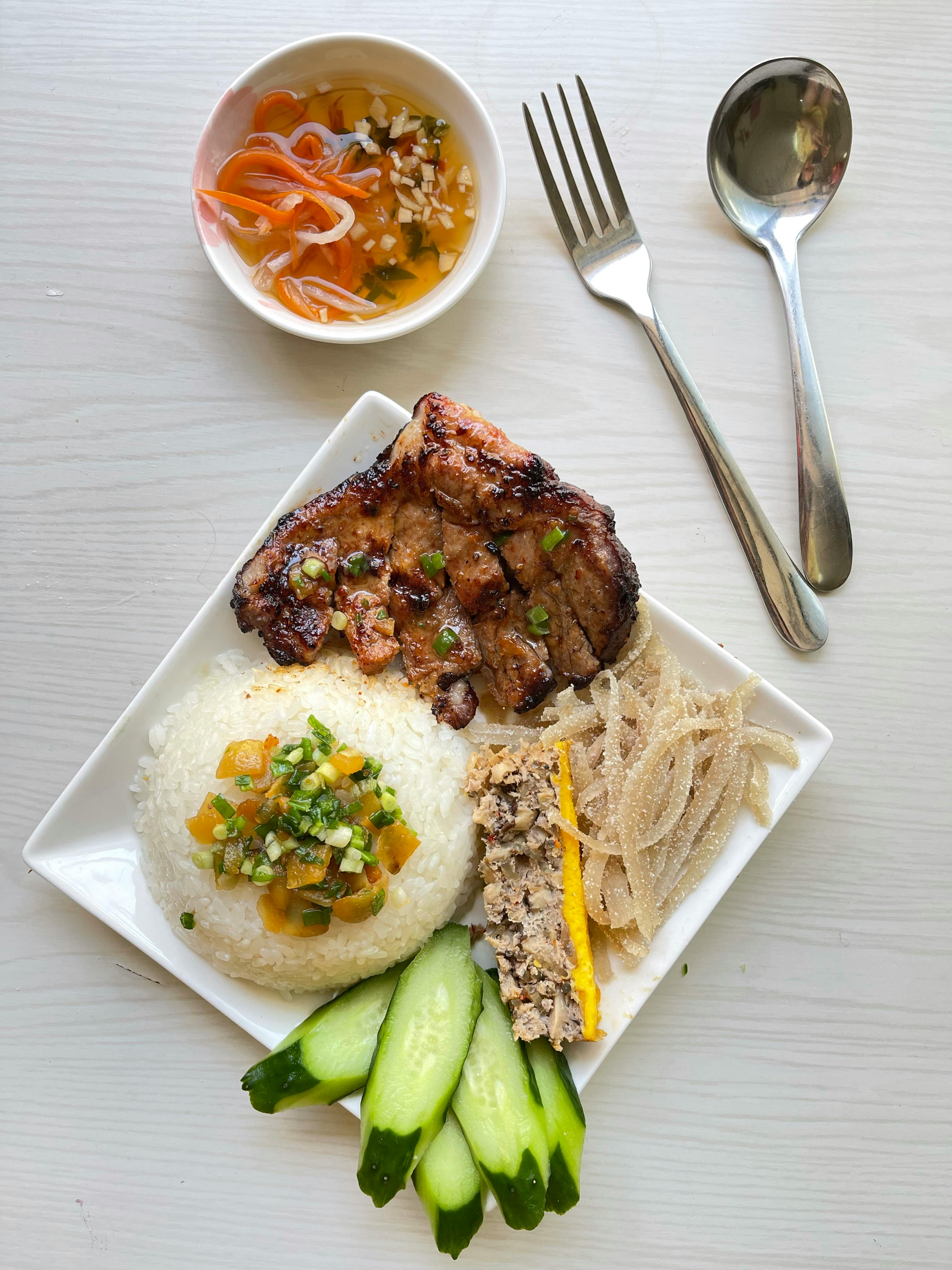
Common Ingredients
- broken rice
- pork chop
- lemongrass
- fish sauce
- egg
- scallion oil
- pickled vegetables
- cucumber
- sugar
Specific recipes may vary.
Incompatible with 7 of 11 diets
Diet Ratings
Com Tam is built around broken rice, which is simply fragmented jasmine rice — a high-glycemic grain with approximately 45g of net carbs per cup cooked. A standard serving alone blows past the entire daily keto carb limit. The dish also contains added sugar in the marinade and pickled vegetables, compounding the carb load. While individual components like pork chop, egg, fish sauce, lemongrass, cucumber, and scallion oil are keto-compatible, the foundational ingredient (broken rice) makes the dish entirely incompatible with ketosis. There is no meaningful portion adjustment that would make a rice-based main dish fit within keto macros.
Com Tam contains multiple animal products that are strictly excluded from a vegan diet. The dish features pork chop (meat), fish sauce (fish-derived), and egg — all clear animal-derived ingredients. There is no ambiguity here; this dish is fundamentally incompatible with veganism in its traditional form.
Com Tam is fundamentally built around broken rice, which is simply fragmented jasmine rice — still a grain and clearly excluded from the paleo diet. Regardless of its broken form, rice is a grain and not permitted under paleo principles. Beyond the rice, the dish contains added sugar (used in the marinade and dipping sauce) and fish sauce, which typically contains added salt and sometimes sugar — both non-paleo. The pickled vegetables may also contain added sugar and salt. While several ingredients are paleo-compliant — pork chop, egg, lemongrass, cucumber, and scallion oil — the core structural component (broken rice) is an irreconcilable paleo violation, making this dish firmly in the avoid category.
Com Tam presents several conflicts with Mediterranean diet principles. The primary protein is pork chop (red meat), which is limited to a few times per month in the Mediterranean pattern. Broken rice is a refined grain, less preferred than whole grains. The dish also contains added sugar in the marinade. On the positive side, it includes vegetables (cucumber, pickled vegetables, scallion), aromatic herbs (lemongrass), and fish sauce which provides umami depth. The egg is an acceptable moderate ingredient. However, the combination of red meat as the centerpiece plus refined grain as the base, with added sugar, pushes this into 'avoid' territory overall.
Some Mediterranean diet interpreters applying a flexible 'dietary pattern' lens might rate this as 'caution' rather than 'avoid,' noting that portion sizes of pork can be small in Vietnamese cuisine and the dish is rich in vegetables and fermented foods (pickled vegetables, fish sauce) that align with Mediterranean fermentation traditions. The overall vegetable-to-meat ratio and cooking method (grilling) could be seen as compatible if consumed occasionally.
Com Tam is fundamentally incompatible with the carnivore diet. The dish is built on broken rice (a grain, explicitly excluded from carnivore), and includes numerous plant-based ingredients: lemongrass, scallion oil, pickled vegetables, cucumber, and sugar. While it does contain carnivore-compatible components — pork chop, egg, and fish sauce — these are overwhelmed by the plant-based foundation of the dish. Even setting aside the non-meat ingredients, sugar is a direct violation of carnivore principles. The dish as a whole cannot be adapted to carnivore without fundamentally deconstructing it into a completely different meal.
Com Tam is a Vietnamese broken rice dish, and rice (including broken rice) is explicitly excluded on the Whole30 as a grain. Additionally, the dish includes sugar, which is an excluded added sugar. Fish sauce is generally compliant (check labels for added sugar), and other ingredients like pork chop, lemongrass, egg, scallion oil, cucumber, and pickled vegetables are compliant or potentially compliant. However, the two core disqualifying ingredients — broken rice (a grain) and sugar — make this dish non-compliant regardless of the other components.
Com Tam (Vietnamese broken rice with pork chop) is largely low-FODMAP in its core components, but several ingredients introduce meaningful concerns during the strict elimination phase. Broken rice is simply fragmented jasmine rice — low-FODMAP and safe. Pork chop (plain) is low-FODMAP. Egg is low-FODMAP. Cucumber is low-FODMAP. Fish sauce in typical condiment quantities is low-FODMAP (it is a fermented liquid with negligible FODMAPs at standard use). However, the problematic ingredients are: (1) Lemongrass — Monash has tested lemongrass and rates it as low-FODMAP at 1 stalk (about 1 tablespoon chopped), but it is commonly used as a marinade ingredient in larger quantities; (2) Scallion oil — the green tops of scallions/spring onions are low-FODMAP and the infused oil itself is safe, but if the green tops are served whole as a garnish (as is traditional), this is fine; if white bulb portions are included, this becomes high-FODMAP; (3) Pickled vegetables — Vietnamese pickled vegetables (do chua) typically use daikon and carrots, both low-FODMAP in standard portions, but the pickling process and serving size vary; (4) Sugar — low-FODMAP in small amounts but often added to marinades in quantities that could accumulate excess fructose. The dish is frequently prepared with garlic in the marinade (not listed here but common in practice), which would make it high-FODMAP. As listed, without hidden garlic or onion, the dish is borderline — safe if prepared carefully with attention to portion sizes and green scallion tops only.
Monash University rates the individual components here as mostly low-FODMAP, but clinical FODMAP practitioners often flag Com Tam as risky during elimination because restaurant and home preparations almost universally include garlic and/or shallots in the pork marinade — neither listed in this ingredient set but extremely common in the dish. Even without those, the combination of lemongrass, sugar, and pickled vegetables at typical Vietnamese restaurant serving sizes may push borderline individuals over FODMAP thresholds.
Com Tam (Vietnamese broken rice with grilled pork chop) presents a mixed DASH profile. The broken rice is a refined grain rather than a whole grain, which DASH de-emphasizes. The pork chop, while a lean protein source, is typically marinated in fish sauce and sugar, contributing significant sodium (fish sauce is very high in sodium, often 1,000–1,500mg per tablespoon) and added sugar. The pickled vegetables also add sodium. On the positive side, the dish includes cucumber (a vegetable), egg (moderate protein), and aromatic herbs like lemongrass and scallions. The overall sodium load from fish sauce and pickling brine is the primary concern for DASH compliance — a single serving can approach or exceed the daily sodium target. The added sugar in the marinade and potentially the pickled vegetables further reduces its DASH compatibility. The pork chop itself may have moderate saturated fat depending on the cut. This dish can be consumed occasionally with modifications (reduced fish sauce, no added sugar, swapping to brown rice), but as commonly prepared it is borderline for DASH adherence.
NIH DASH guidelines flag high-sodium condiments like fish sauce as problematic and recommend limiting red/fatty meats and refined grains. However, some DASH-oriented clinicians note that pork tenderloin or lean pork cuts are acceptable lean proteins, and that the dish's vegetable components and moderate portion size may fit within a DASH framework if sodium-containing condiments are significantly reduced — the key variable is preparation, not the dish category itself.
Com Tam presents a mixed Zone Diet picture. The protein component — grilled pork chop — is a reasonable lean protein source that fits Zone blocks well, and supportive ingredients like lemongrass, fish sauce, scallions, pickled vegetables, and cucumber are low-glycemic and Zone-friendly. However, broken rice is the central issue: it is a high-glycemic refined carbohydrate that Sears explicitly classifies as an 'unfavorable' carb, similar to white rice, causing rapid insulin spikes that disrupt the hormonal balance the Zone targets. The egg adds protein and some fat, which helps, but the dish's carbohydrate base is dominated by broken rice, making the 40/30/30 ratio very difficult to achieve without dramatically reducing the rice portion. The sugar in the marinade adds a small but meaningful glycemic burden. As traditionally served, the rice-to-protein ratio is heavily skewed toward carbohydrates, and those carbs are high-glycemic rather than the low-glycemic vegetables and fruits the Zone favors. To make this Zone-compatible, one would need to use a very small portion of rice (1 block ≈ roughly 1/3 cup cooked), double the vegetable sides, and ensure the pork chop portion is appropriately sized (~3 oz). This requires significant modification from the traditional preparation.
Com Tam is a mixed dish from an anti-inflammatory standpoint. On the positive side, it features several genuinely beneficial ingredients: lemongrass has known anti-inflammatory polyphenols, fish sauce (fermented) contributes umami and trace nutrients without significant inflammatory load, cucumber and pickled vegetables provide antioxidants and probiotics, scallion oil adds quercetin-rich alliums, and eggs offer choline and selenium. However, the dish has notable concerns. The pork chop (grilled or pan-fried) is red/processed-adjacent meat and a source of saturated fat — red meat is in the 'limit' category. Sugar appears in the marinade and likely in the dipping sauce (nước chấm), adding refined sugar load. Broken rice, while a whole grain in origin, is a refined white rice variant with a high glycemic index, offering little fiber and potentially spiking blood sugar, which can promote inflammatory signaling. The preparation method matters: grilling can produce advanced glycation end products (AGEs) in the pork, especially if charred. The dish is not inherently harmful and includes genuine anti-inflammatory elements (lemongrass, fermented ingredients, fresh vegetables), but the combination of refined white rice, red meat, saturated fat, and added sugar places it firmly in the 'caution' zone rather than approval.
Some anti-inflammatory researchers, including those aligned with traditional food systems, would argue that fermented, herb-forward dishes like Com Tam — eaten in moderate portions within a broader vegetable-rich Vietnamese diet — are contextually anti-inflammatory despite individual ingredient concerns. Conversely, stricter protocols (e.g., AIP or low-glycemic anti-inflammatory frameworks) would flag the white rice glycemic load and pork more aggressively, potentially pushing this toward 'avoid.'
Com Tam (Vietnamese broken rice with grilled pork chop and egg) is a mixed dish for GLP-1 patients. The grilled pork chop and fried egg provide meaningful protein (roughly 25-35g per typical serving), which supports the #1 priority. The pickled vegetables and cucumber add fiber and hydration, and lemongrass and fish sauce are low-calorie flavor enhancers. However, the dish has notable drawbacks: broken rice is a refined grain with moderate glycemic load and limited fiber, contributing mostly empty carbohydrate calories in a context where every bite must count nutritionally. The pork chop, depending on the cut, carries moderate-to-high saturated fat, which can worsen GLP-1 side effects like nausea and bloating. Scallion oil adds additional fat. The sugar in the marinade or dipping sauce (nuoc cham) adds refined sugar. The overall fat content of the dish — between the pork, egg yolk, and scallion oil — may slow digestion further on top of already-slowed gastric emptying from the medication, increasing GI discomfort risk. Portion sensitivity is high: a full restaurant serving is typically too large for GLP-1 patients. A modified version (smaller rice portion, leaner pork loin cut, light on scallion oil, skip added sugar in sauce) would score closer to a 6-7.
Some GLP-1-focused dietitians would rate this more favorably, noting that the egg and pork together deliver a solid protein hit and that the dish is less processed than many Western alternatives, with vegetables providing some fiber and digestive support. Others flag the refined rice base and saturated fat from pork as meaningful concerns that compound GLP-1 GI side effects, particularly in the first months of treatment when tolerance is lowest — making this highly individual-tolerance-dependent.
*See how scores were generated at our methodology page.
Nutritional profile
Six traits that cut across every diet.
Fiber & Plants
How much whole-plant food and fiber it delivers.
Healthy Fats
The quality of its fats (unsaturated, omega-3).
Whole / Unprocessed
How close it is to its natural, unprocessed form.
Gut Gentle
How easy it is on digestion (low FODMAP, few irritants).
Low Glycemic
How little it spikes your blood sugar.
Protein Density
How much protein it packs per calorie.
Controversy Index
Higher controversy = more disagreement between diets.
Diet-Specific Tips
 DASH — 4/10
View tips
- High sodium from fish sauce (potentially 1,000–1,500mg+ per serving)
- Additional sodium from pickled vegetables
- Refined grain (broken rice) rather than DASH-preferred whole grain
- Added sugar in marinade and possibly pickled vegetables
- Pork chop has moderate saturated fat depending on cut
- Positive: includes cucumber and scallions (vegetables)
- Positive: egg adds lean protein
- Preparation-dependent — low-sodium versions score significantly higher
 Zone — 4/10
View tips
- Broken rice is a high-glycemic refined carbohydrate — classified 'unfavorable' in Zone terminology
- Grilled pork chop is a solid Zone protein source fitting lean protein block requirements
- Egg contributes additional protein and fat, improving macro balance
- Pickled vegetables and cucumber are low-glycemic Zone-favorable carb sources
- Traditional serving portions are rice-heavy, skewing macros far from 40/30/30
- Sugar in marinade adds modest glycemic load
- Dish is salvageable in Zone with significant rice portion reduction and increased vegetable volume
 Anti-Inflammatory — 5/10
View tips
- Broken rice is refined white rice — high glycemic index, low fiber, may promote blood sugar spikes linked to inflammation
- Pork chop is red meat — falls in the 'limit' category due to saturated fat content
- Added sugar in marinade and likely dipping sauce increases inflammatory load
- Lemongrass is a beneficial anti-inflammatory herb with flavonoids and citral
- Fish sauce (fermented) is low-inflammation and provides beneficial micronutrients
- Egg adds choline and selenium — moderate anti-inflammatory contribution
- Pickled vegetables provide probiotics and antioxidants, supporting gut health
- Scallion oil contributes quercetin from alliums — anti-inflammatory
- Grilling method may produce AGEs in pork, a pro-inflammatory concern
- Overall dish profile is mixed — beneficial herbs and vegetables offset by refined starch, red meat, and sugar
 GLP-1 Friendly — 5/10
View tips
- Moderate-to-good protein from pork chop and egg (~25-35g per serving, meeting per-meal protein target)
- Refined broken rice provides low fiber, moderate glycemic load — not ideal for nutrient density per calorie
- Pork chop fat content (cut-dependent) may worsen nausea, bloating, and reflux on GLP-1s
- Scallion oil and egg yolk add additional fat load per serving
- Pickled vegetables and cucumber provide hydration and minor fiber benefit
- Added sugar in marinade or dipping sauce is a drawback
- Full restaurant portion is too large; portion control is essential
- Lemongrass and fish sauce are GLP-1-friendly flavor enhancers — low calorie, no GI concern at typical amounts