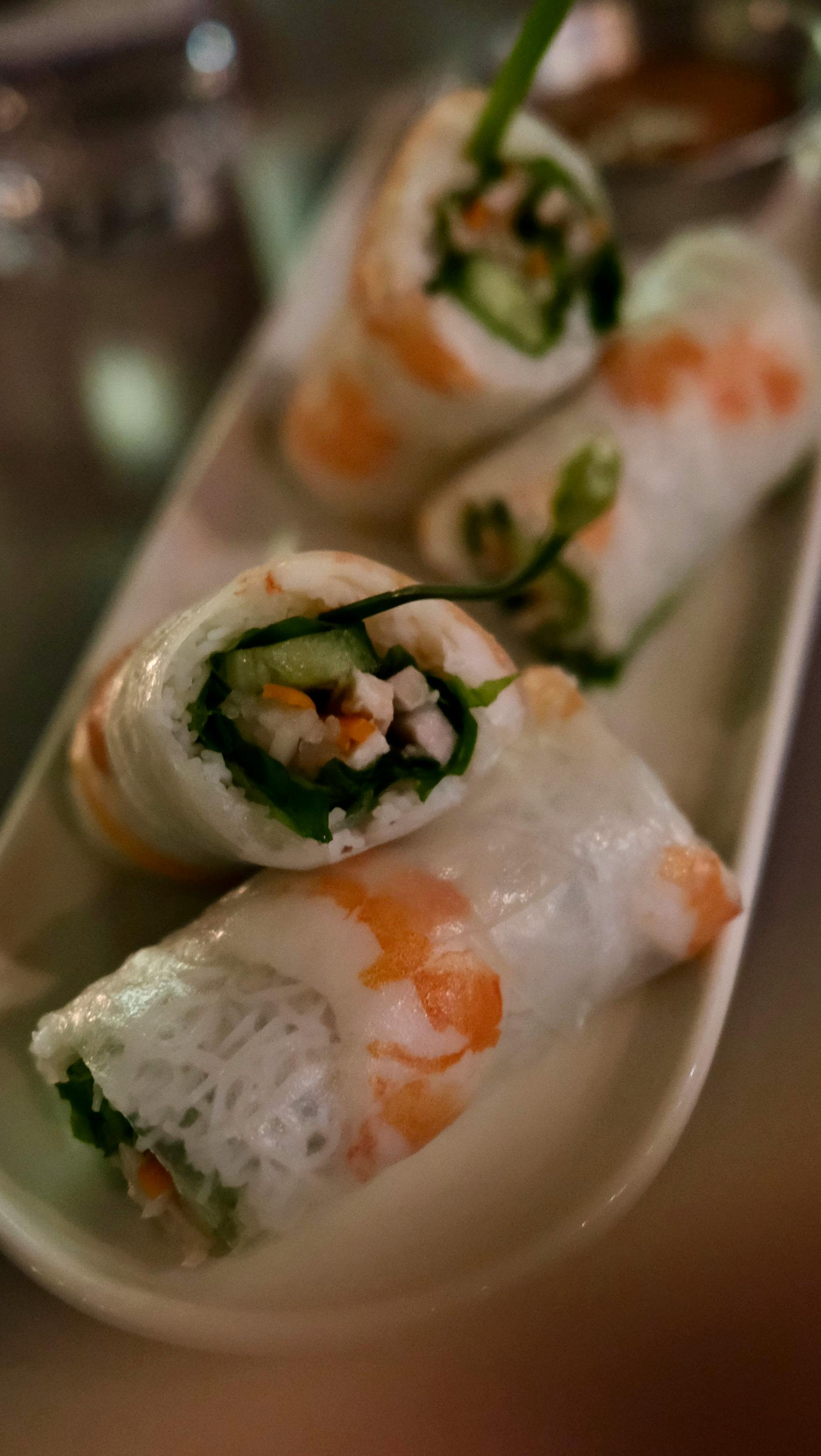
The diets react (see scores below)
Common Ingredients
- rice paper
- shrimp
- pork
- rice vermicelli
- lettuce
- mint
- chives
- hoisin sauce
- peanuts
Specific recipes may vary.
Incompatible with 5 of 11 diets
Diet Ratings
Goi Cuon (Vietnamese fresh spring rolls) is fundamentally incompatible with ketogenic eating. The dish contains multiple high-carb ingredients that collectively push net carbs far beyond keto limits even in a single roll. Rice paper wrappers are made from refined rice starch (~8-10g net carbs per sheet), rice vermicelli noodles are essentially pure starch (~20g+ net carbs per serving), and hoisin sauce contains significant added sugar. A single roll easily contains 15-20g net carbs, and typical servings are 2-4 rolls, which alone could exceed or blow the entire daily keto carb budget. The protein sources (shrimp, pork) and vegetables (lettuce, mint, chives) are keto-friendly, but they are minor components overwhelmed by the carb-heavy structural ingredients.
Goi Cuon (Vietnamese fresh spring rolls) as described contains two clear animal products: shrimp and pork. Both are animal flesh and are unambiguously excluded from a vegan diet. The remaining ingredients — rice paper, rice vermicelli, lettuce, mint, chives, hoisin sauce, and peanuts — are plant-based, but the presence of shrimp and pork makes the dish wholly incompatible with veganism. A vegan version of Goi Cuon could be made by substituting tofu or extra vegetables for the shrimp and pork, and ensuring the hoisin sauce contains no animal derivatives.
Goi Cuon (Vietnamese fresh spring rolls) contains multiple non-paleo ingredients that make it incompatible with the paleo diet. Rice paper is made from rice flour — a grain-based wrapper that is strictly excluded. Rice vermicelli is another grain product (rice noodles), adding a second grain violation. Hoisin sauce is a processed condiment typically containing soy, sugar, and other additives — violating legume, refined sugar, and processed food rules. Peanuts are legumes, not true nuts, and are excluded from paleo. The shrimp, pork, lettuce, mint, and chives are all paleo-compliant, but the structural and foundational ingredients of this dish are overwhelmingly non-paleo. This is not a dish that can be lightly modified — the rice paper wrapper and vermicelli noodles are core to its identity, and removing them would fundamentally change the dish entirely.
Goi Cuon (Vietnamese fresh spring rolls) has several Mediterranean-compatible elements but also notable deviations. On the positive side, it features shrimp (an excellent Mediterranean protein), fresh vegetables (lettuce, mint, chives), and peanuts (a legume/nut source). However, the dish also includes pork (a red/processed meat that should be limited), rice vermicelli and rice paper (refined grains with minimal fiber), and hoisin sauce (a processed condiment with added sugar). The combination of shrimp and pork together, alongside refined grain wrappers and a sugary sauce, pulls the dish into cautious territory. It is a relatively light, fresh preparation overall, but it is not a Mediterranean staple and contains ingredients that conflict with core principles.
Some Mediterranean diet interpreters would score this more favorably, noting that the dish is unfried, low in saturated fat, and rich in fresh herbs and vegetables — qualities aligned with plant-forward Mediterranean eating. The pork portion is typically small, and white rice products appear in traditional Mediterranean coastal cuisines (e.g., Greek rice dishes), so moderate consumption could be acceptable within a broader dietary pattern.
Goi Cuon (Vietnamese fresh spring rolls) is almost entirely incompatible with the carnivore diet. The dish is dominated by plant-based and grain-based ingredients: rice paper (grain-derived starch wrapper), rice vermicelli (grain), lettuce (vegetable), mint (herb/plant), chives (plant), hoisin sauce (fermented soybean-based condiment with sugar), and peanuts (legume). While shrimp and pork are carnivore-approved animal proteins, they are a minor component surrounded by a framework of excluded foods. There is no version of this dish that could be adapted to carnivore without fundamentally deconstructing it into something unrecognizable — at which point it simply becomes shrimp and pork, not Goi Cuon.
Goi Cuon (Vietnamese fresh spring rolls) contains multiple Whole30-excluded ingredients. Rice paper is made from rice flour, which is a grain and therefore excluded. Rice vermicelli is also a grain-based noodle, explicitly excluded. Hoisin sauce typically contains sugar and often soy, both excluded. Peanuts are legumes, explicitly excluded on Whole30. These are not edge cases or label-reading issues — these are core, structural ingredients of the dish that cannot be swapped out without fundamentally changing what the dish is.
Goi Cuon (Vietnamese fresh spring rolls) contains several low-FODMAP-friendly ingredients — rice paper, shrimp, pork, rice vermicelli, and lettuce are all safe during elimination. Mint is also low-FODMAP. However, two ingredients raise significant concerns: (1) Hoisin sauce is high-FODMAP due to garlic and often wheat/soy — even small amounts used as a dipping sauce can push the dish over threshold. (2) Chives (Allium schoenoprasum) contain fructans at larger portions; green parts are generally considered lower-FODMAP than the bulb, but chives used as a filling ingredient (rather than a garnish) may accumulate to a problematic amount. Peanuts are low-FODMAP at ~32 small peanuts (28g) per Monash, but are often served as crushed peanuts on top in moderate amounts — this is likely fine. The hoisin dipping sauce is the primary concern, as it is almost always served alongside and is an integral part of the dish experience.
Monash University rates hoisin sauce as high-FODMAP even in small servings due to garlic content, but some clinical FODMAP practitioners allow a very small amount (1 tsp) if the overall FODMAP load is managed. Green chives are sometimes considered acceptable in small quantities by practitioners, though Monash data on chives specifically is limited, creating ambiguity.
Goi Cuon (Vietnamese fresh spring rolls) is a relatively healthy dish with several DASH-friendly components: fresh vegetables (lettuce, mint, chives), lean shrimp, and herbs provide potassium, fiber, and lean protein. Rice paper and rice vermicelli are low in fat and sodium. However, two ingredients create DASH concerns: (1) pork adds saturated fat, and the cut used (often pork belly or shoulder) can be high in saturated fat, which DASH limits; (2) hoisin sauce is high in sodium (typically 250-350mg per tablespoon) and added sugar, which DASH restricts. Peanuts are DASH-acceptable (nuts/seeds group) but add caloric density. The dish is not explicitly addressed by NIH/NHLBI DASH guidelines as a composite dish, so the rating reflects the balance of its components. As commonly consumed with a hoisin-peanut dipping sauce, sodium intake can increase substantially. Without the dipping sauce or with a low-sodium substitute, this dish would score higher (7-8).
NIH DASH guidelines do not specifically address mixed dishes like Goi Cuon, requiring component-level analysis. Some DASH-oriented clinicians would approve this dish given its predominantly fresh, whole-food ingredients and lean protein, arguing the hoisin sauce portion is small and the overall sodium load is moderate compared to other snack options — while conservative DASH practitioners would flag the pork fat content and hoisin sodium as disqualifying for the approve tier.
Goi Cuon (Vietnamese fresh spring rolls) is a relatively clean, whole-food dish that has both Zone-favorable and Zone-unfavorable elements. On the positive side, shrimp and pork provide lean protein, lettuce and fresh herbs (mint, chives) are excellent low-glycemic Zone carb sources, and the dish is fresh rather than fried. However, there are meaningful challenges: rice paper and rice vermicelli are high-glycemic refined carbohydrates that count as 'unfavorable' carbs in Zone terminology, and a single roll can easily skew the carb block ratio too high relative to protein. Hoisin sauce adds sugar, further elevating the glycemic load. Peanuts provide some monounsaturated fat but are omega-6-heavy and calorically dense. The protein quantity per roll is modest (shrimp and pork combined may only be 10-15g), making it difficult to hit a full Zone protein block without eating multiple rolls — which then overshoots on carbs. As a snack (half-block context), one roll with limited vermicelli and light hoisin is workable, but the default preparation is carb-heavy relative to Zone targets. Portion control and minimizing the vermicelli and hoisin are essential to bring this into Zone balance.
Some Zone practitioners view Goi Cuon favorably because it is unfried, whole-food, and vegetable-forward compared to most snack options. Dr. Sears' later work emphasizes polyphenols and anti-inflammatory eating, and the fresh herbs, shrimp (omega-3 source), and vegetables align well with that philosophy. A Zone-adapted version with reduced vermicelli and a smaller amount of hoisin could reasonably score a 6-7 in that framework.
Goi Cuon (Vietnamese fresh spring rolls) is one of the lighter, more wholesome dishes in Southeast Asian cuisine, with a generally favorable anti-inflammatory profile overall — but a few ingredients introduce meaningful concerns. On the positive side: shrimp provides lean protein and some omega-3s; fresh herbs like mint and chives contribute polyphenols and antioxidants; lettuce adds fiber and micronutrients; and rice paper/rice vermicelli are refined but relatively benign — low in saturated fat and free of trans fats or additives. The fresh, uncooked preparation also preserves heat-sensitive phytonutrients. On the cautionary side: pork (especially belly or shoulder cuts typically used) adds saturated fat and is a processed/red meat adjacent ingredient that anti-inflammatory frameworks recommend limiting; hoisin sauce is high in added sugars and sodium, and may contain artificial additives depending on the brand; and peanuts, while containing some beneficial monounsaturated fats and resveratrol, are a legume with a relatively high omega-6 content and are not emphasized in anti-inflammatory protocols the way walnuts or flaxseed are. The dish is far from inflammatory by processed food standards — no trans fats, no seed oils in the dish itself, minimal refined ingredients — but the pork and hoisin sauce prevent a clean approval. As an occasional snack it fits comfortably within an anti-inflammatory diet; as a frequent staple, the pork and hoisin components would ideally be reduced or swapped.
Some anti-inflammatory practitioners, particularly those following Dr. Weil's pyramid, would view this dish more favorably given its emphasis on fresh vegetables, herbs, and lean protein — potentially rating it closer to approve, especially if shrimp-only versions are used. Conversely, stricter AIP-adjacent protocols might flag the peanuts (technically a legume with lectin content) and high-glycemic rice vermicelli as additional concerns beyond the pork.
Goi Cuon (Vietnamese fresh spring rolls) is a relatively GLP-1-friendly snack with some meaningful caveats. On the positive side, the dish is fresh (not fried), light, and easy to digest — well-suited to GLP-1's slowed gastric emptying. Shrimp provides lean, high-quality protein, and the fresh vegetables (lettuce, mint, chives) contribute fiber, micronutrients, and water content. The overall fat content is low. However, the protein yield per roll is modest — typically 5-8g per roll — meaning patients need 2-3 rolls to hit a meaningful protein target for a snack, which may be difficult given reduced appetite. Rice vermicelli and rice paper are refined carbohydrates with low fiber density, reducing the dish's nutrient density per calorie. Pork belly (the traditional cut used) adds saturated fat, though the quantity per roll is small. Hoisin dipping sauce adds sugar and sodium. Peanuts add healthy unsaturated fat but also calories. Overall this is a moderately good GLP-1 option — far better than fried alternatives — but falls short of 'approve' due to low protein density per serving and refined carbohydrate base.
Some GLP-1-focused RDs would rate this higher, emphasizing that the fresh, unfried preparation and vegetable content make it one of the better snack options available in Vietnamese cuisine, and that small portions of pork and peanuts are acceptable given their micronutrient contributions. Others would flag the refined carbohydrate load from rice paper and vermicelli as meaningfully counterproductive for patients whose limited caloric intake requires high nutrient-per-calorie efficiency.
*See how scores were generated at our methodology page.
Nutritional profile
Six traits that cut across every diet.
Fiber & Plants
How much whole-plant food and fiber it delivers.
Healthy Fats
The quality of its fats (unsaturated, omega-3).
Whole / Unprocessed
How close it is to its natural, unprocessed form.
Gut Gentle
How easy it is on digestion (low FODMAP, few irritants).
Low Glycemic
How little it spikes your blood sugar.
Protein Density
How much protein it packs per calorie.
Controversy Index
Higher controversy = more disagreement between diets.
Diet-Specific Tips
 Mediterranean — 5/10
View tips
- Shrimp is an approved Mediterranean protein (seafood 2-3x/week)
- Pork is a red/processed meat to be limited to a few times per month
- Rice paper and vermicelli are refined grains, not whole grains
- Fresh herbs and lettuce are positive plant-based components
- Hoisin sauce contains added sugar, conflicting with Mediterranean principles
- Peanuts add a beneficial nut/legume component
- Overall dish is light and unfried, partially mitigating concerns
 Low-FODMAP — 4/10
View tips
- Hoisin dipping sauce is high-FODMAP due to garlic and wheat — primary red flag
- Rice paper is low-FODMAP (made from rice flour)
- Shrimp and pork are FODMAP-free proteins
- Rice vermicelli is low-FODMAP
- Chives contain fructans — amount used as filling ingredient may accumulate
- Peanuts are low-FODMAP at standard serving (~28g)
- Lettuce and mint are low-FODMAP
- Dish is otherwise well-suited for low-FODMAP if hoisin is substituted with tamari-based sauce
 DASH — 6/10
View tips
- Lean shrimp is an excellent DASH protein source
- Fresh vegetables and herbs (lettuce, mint, chives) are core DASH foods
- Hoisin sauce is high in sodium and added sugar — a key DASH concern
- Pork may contain significant saturated fat depending on cut (often belly or shoulder)
- Rice paper and vermicelli are refined carbs but low in sodium and fat
- Peanuts align with DASH nuts/seeds allowance
- Dipping sauce (hoisin-peanut) can significantly increase sodium load
- Low-sodium hoisin sauce or nuoc cham (fish sauce-based, used sparingly) could modify the rating
 Zone — 5/10
View tips
- Rice paper and rice vermicelli are high-glycemic 'unfavorable' Zone carbohydrates
- Shrimp and pork offer lean, Zone-favorable protein but quantity per roll is low
- Hoisin sauce adds sugar, elevating glycemic load
- Fresh lettuce and herbs are excellent Zone carb sources that partially offset the refined starches
- Peanuts provide fat but are omega-6-heavy, not ideal monounsaturated Zone fat
- As a snack, macro imbalance (carb-heavy) makes achieving 40/30/30 ratio difficult without careful modification
 Anti-Inflammatory — 6/10
View tips
- Shrimp provides lean protein with modest omega-3 content — a positive
- Fresh mint and chives contribute anti-inflammatory polyphenols and antioxidants
- Pork adds saturated fat and is a red/processed meat adjacent ingredient — anti-inflammatory frameworks recommend limiting
- Hoisin sauce is high in added sugars and sodium, mildly pro-inflammatory
- Peanuts have a higher omega-6 ratio and are not a top anti-inflammatory nut, though not harmful in moderation
- Rice vermicelli and rice paper are refined carbohydrates but relatively neutral — no trans fats or additives
- Fresh, minimally processed preparation method preserves beneficial phytonutrients
- No cooking oils used — avoids seed oil concerns entirely
 GLP-1 Friendly — 6/10
View tips
- Fresh, unfried preparation supports easy digestibility — well-suited to GLP-1 slowed gastric emptying
- Shrimp is a lean, high-quality protein source
- Low protein density per roll (5-8g) requires multiple rolls to meet snack-level protein targets
- Rice vermicelli and rice paper are refined carbohydrates with minimal fiber — low nutrient density per calorie
- Traditional pork belly adds saturated fat, though quantity per roll is small
- Hoisin dipping sauce contributes added sugar and sodium — use sparingly
- Peanuts provide unsaturated fat and small protein contribution but add caloric density
- Fresh herbs and lettuce provide micronutrients, hydration, and modest fiber
- Portion-sensitive: benefits depend on eating 2-3 rolls and limiting hoisin sauce