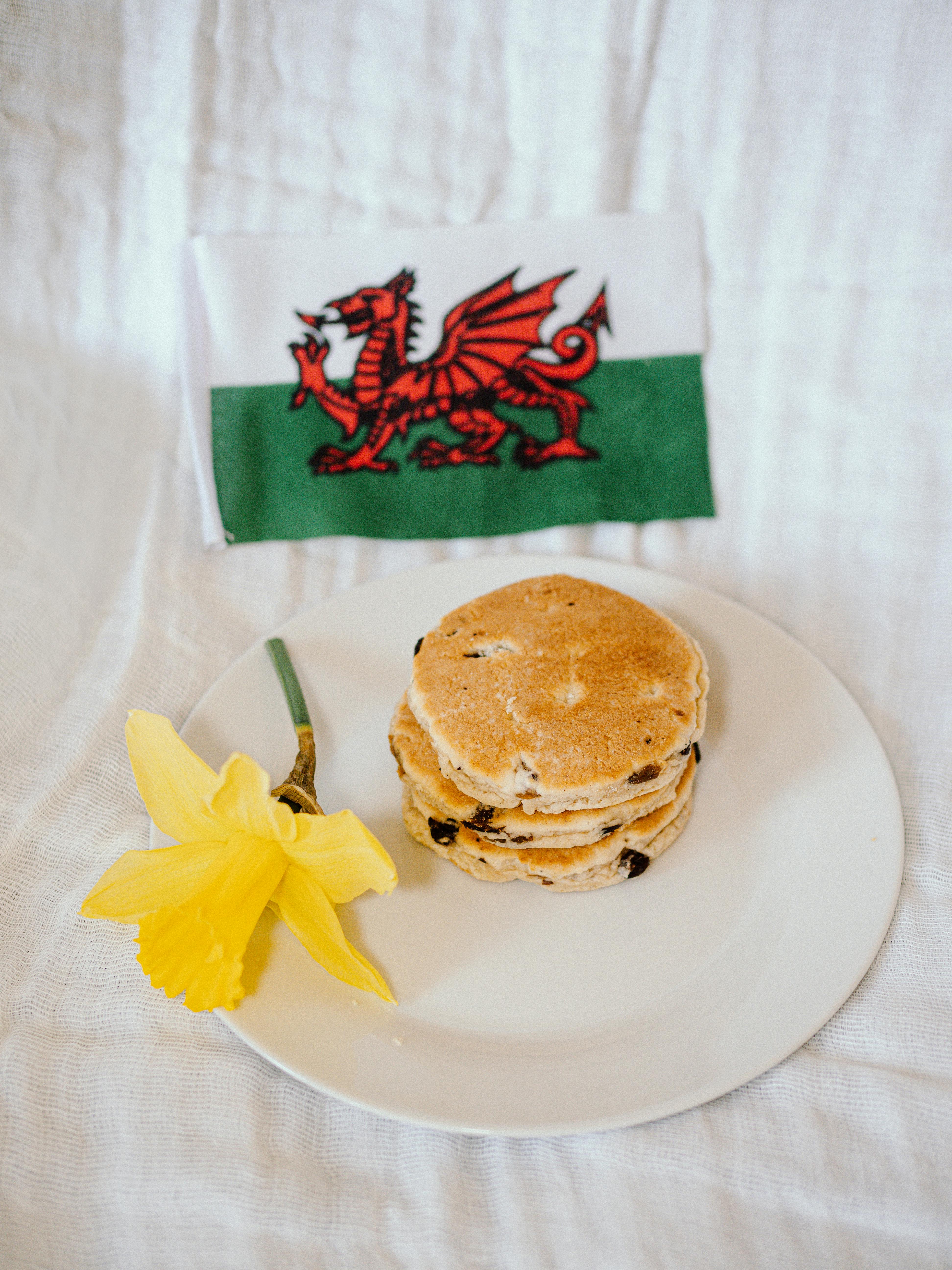
Photo: Lisa from Pexels / Pexels
The diets react (see scores below)
Common Ingredients
- flour
- butter
- sugar
- eggs
- currants
- cinnamon
- nutmeg
- baking powder
- salt
Specific recipes may vary.
Incompatible with 11 of 11 diets
Diet Ratings
Welsh Cakes are fundamentally incompatible with ketogenic dieting. The primary ingredient is wheat flour, a high-carb grain that alone provides enough net carbs to exceed or nearly exhaust the entire daily keto limit in a single serving. Added sugar and currants (a dried fruit high in sugar and carbs) compound the problem significantly. A single Welsh Cake can easily contain 20-30g of net carbs, making even one cake potentially ketosis-breaking. There are no meaningful redeeming keto-friendly qualities — while butter and eggs are keto-approved, they are minor contributors to this recipe's macronutrient profile compared to the dominant carb sources.
Welsh Cakes contain two clear animal-derived ingredients: butter (a dairy product) and eggs. Both are explicitly excluded under vegan dietary rules. The remaining ingredients — flour, sugar, currants, cinnamon, nutmeg, baking powder, and salt — are all plant-based, meaning a vegan adaptation is possible by substituting plant-based butter (e.g., vegan margarine) and a flax or chia egg, but the traditional recipe as listed is not vegan-compliant.
Welsh Cakes are fundamentally incompatible with the Paleolithic diet. The primary ingredient is flour (wheat), a grain explicitly excluded from paleo eating. Butter is a dairy product, also excluded. Sugar is refined and prohibited. Baking powder is a processed additive, and salt is excluded. Currants are technically paleo-friendly dried fruit, and cinnamon and nutmeg are approved spices, but these minor ingredients cannot redeem a dish whose foundational components — flour, butter, sugar, baking powder, and salt — are all non-paleo. This is a classic grain-and-dairy-based baked good with no viable paleo interpretation in its traditional form.
Welsh Cakes are a traditional British griddle cake that conflicts with core Mediterranean diet principles on multiple fronts. The primary fat is butter (saturated fat), not olive oil. The main structure is refined white flour, a refined grain with minimal nutritional value. Added sugar is a central ingredient. While eggs and currants provide minor nutritional value, the overall profile — refined grains, saturated fat, added sugar — places this firmly in the 'avoid' category. This is a processed baked good with no meaningful plant-forward, whole-food qualities aligned with the Mediterranean pattern.
Welsh Cakes are fundamentally incompatible with the carnivore diet. The dish is almost entirely plant-based and processed: flour (grain), sugar (processed plant-derived sweetener), currants (fruit), cinnamon and nutmeg (plant spices), and baking powder (plant-derived leavening agent) make up the majority of the recipe. While butter and eggs are carnivore-compatible ingredients, they are minor components in a dish whose entire structure and character is built around excluded foods. There is no meaningful animal protein present, and the carbohydrate load from flour, sugar, and dried fruit directly contradicts carnivore principles. This is a classic baked good with no path to carnivore approval.
Welsh Cakes are excluded on multiple grounds. They contain flour (a grain, excluded), butter (dairy, excluded), and sugar (added sugar, excluded). Furthermore, Welsh Cakes are a baked good — exactly the type of item Whole30 explicitly prohibits even when made with compliant ingredients (Rule 4 forbids recreating baked goods, breads, and snack-type items). This dish fails both the ingredient test and the spirit-of-the-program test simultaneously.
Welsh Cakes are made with regular wheat flour as their primary ingredient, which is high in fructans — a key FODMAP. Wheat flour is a well-established high-FODMAP ingredient per Monash University and must be avoided during the elimination phase. Currants are also high-FODMAP due to excess fructose and polyols when eaten in typical serving amounts (dried fruits concentrate FODMAPs significantly). The remaining ingredients — butter, eggs, sugar, cinnamon, nutmeg, baking powder, and salt — are individually low-FODMAP. However, the combination of wheat flour and currants makes a standard Welsh Cake clearly unsuitable during FODMAP elimination. There is no realistic portion size at which a Welsh Cake made with standard wheat flour becomes low-FODMAP.
Welsh Cakes are a traditional British griddle cake made primarily from refined white flour, butter, and sugar — ingredients that DASH explicitly limits or discourages. Butter is high in saturated fat, which DASH restricts to protect cardiovascular health. The refined flour provides minimal fiber compared to the whole grains DASH emphasizes. Added sugar from the currants plus granulated sugar contributes to caloric density without DASH-beneficial nutrients. Salt is added directly. The combination of saturated fat, refined carbohydrates, and added sugar makes this a poor fit for the DASH eating plan. This is essentially a sweet baked good/pastry category, which DASH limits to 5 or fewer servings per week of sweets generally, and even then recommends low-fat options. Occasional consumption of one small Welsh Cake is not catastrophic, but the food profile runs counter to core DASH principles.
Welsh Cakes are essentially small griddle scones made from refined white flour, butter, and sugar — a trifecta of Zone-unfavorable ingredients. The macronutrient profile is dominated by high-glycemic carbohydrates (refined flour + sugar) and saturated fat (butter), with virtually no lean protein and no monounsaturated fat. This combination creates a rapid blood sugar spike followed by an eicosanoid-disrupting insulin surge, directly opposing the Zone's core goal of hormonal balance. Currants add additional sugar load. There is no lean protein component whatsoever, making it impossible to construct a Zone-balanced 40/30/30 ratio from this food alone. Even as a snack component, the refined carb and saturated fat combination with zero protein makes balancing extremely difficult. Cinnamon and nutmeg are the only Zone-positive elements (polyphenols, mild insulin-sensitizing effects), but they are nutritionally negligible in this context. This is not a food Dr. Sears would classify as 'favorable' in any of his published works — it falls squarely in the 'unfavorable' high-glycemic category.
Welsh cakes are a traditional British griddle cake built on a foundation of refined white flour, butter, and sugar — three ingredients that anti-inflammatory nutrition guidelines consistently flag as problematic. Refined flour drives rapid glucose spikes and lacks fiber, butter contributes saturated fat, and added sugar directly promotes inflammatory signaling (elevated CRP, IL-6). Currants offer some antioxidant value, and cinnamon and nutmeg carry modest anti-inflammatory compounds, but these are present in small amounts that cannot meaningfully offset the pro-inflammatory base. Eggs contribute some neutral-to-modest benefit. Overall, this is a refined-carbohydrate, saturated-fat, added-sugar snack with negligible fiber, no omega-3s, and no meaningful antioxidant density — a profile that anti-inflammatory frameworks consistently place in the 'limit or avoid' category. Occasional consumption is unlikely to cause harm, but as a regular snack it conflicts with anti-inflammatory principles.
Welsh cakes are a poor fit for GLP-1 patients. They are made primarily from refined white flour, butter, and sugar — offering almost no protein, minimal fiber, and a significant hit of saturated fat and simple carbohydrates per small serving. The butter content means high saturated fat, which worsens GLP-1 side effects including nausea, bloating, and reflux. The refined flour and sugar provide empty calories with rapid blood sugar impact and no satiety benefit — a critical concern when total caloric intake is already severely reduced. Eggs contribute a small amount of protein but not enough to meaningfully offset the nutritional profile. Currants add a trace of natural sugar and negligible fiber. There is essentially no nutrient density per calorie here. Even a single cake occupies limited stomach capacity (already reduced by GLP-1 medication) without delivering meaningful protein, fiber, or micronutrients. This is precisely the category of food GLP-1 patients should avoid — not because it is fried or heavily processed, but because every calorie must count, and these do not.
*See how scores were generated at our methodology page.
Nutritional profile
Six traits that cut across every diet.
Fiber & Plants
How much whole-plant food and fiber it delivers.
Healthy Fats
The quality of its fats (unsaturated, omega-3).
Whole / Unprocessed
How close it is to its natural, unprocessed form.
Gut Gentle
How easy it is on digestion (low FODMAP, few irritants).
Low Glycemic
How little it spikes your blood sugar.
Protein Density
How much protein it packs per calorie.
Controversy Index
Higher controversy = more disagreement between diets.