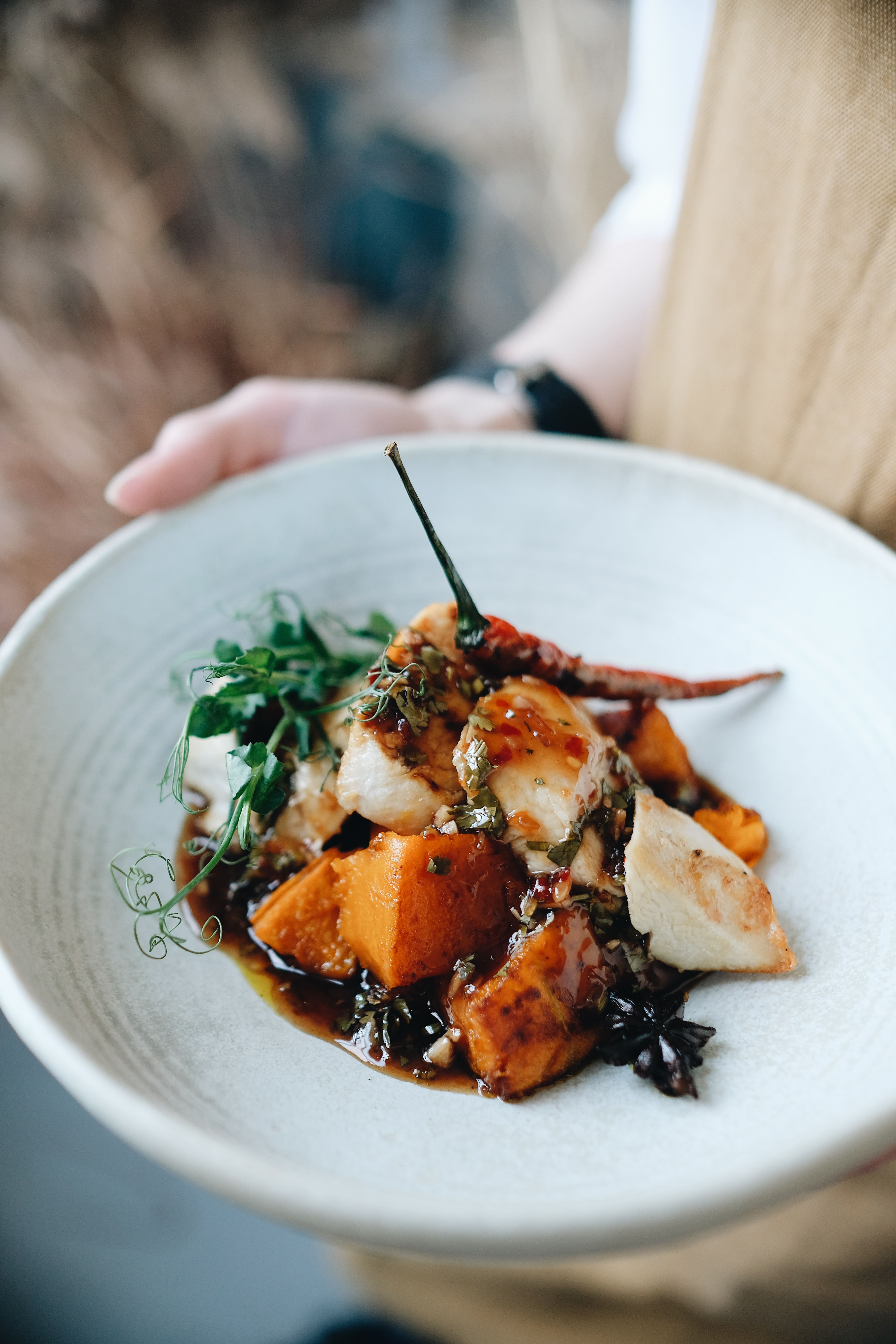
Photo: Nadezhda Moryak / Pexels
Chinese
Big Plate Chicken
The diets react (see scores below)
Common Ingredients
- chicken
- potatoes
- bell peppers
- dried chiles
- sichuan peppercorns
- garlic
- ginger
- wide noodles
Specific recipes may vary.
Incompatible with 6 of 11 diets
Diet Ratings
Big Plate Chicken is fundamentally incompatible with ketogenic eating due to two major high-carb components: potatoes and wide noodles. Potatoes are a starchy vegetable with roughly 15-17g net carbs per 100g, and wide noodles (typically wheat-based) add another heavy carb load — together they would easily push a single serving well past the entire daily 20-50g net carb limit. The chicken, dried chiles, Sichuan peppercorns, garlic, and ginger are all keto-friendly, but they are overwhelmed by the dish's structural carbohydrate components. This dish cannot be made keto-compliant without removing its two defining ingredients, which would make it an entirely different dish.
Big Plate Chicken (大盘鸡) is a meat-centered dish with chicken as its primary and defining ingredient. Chicken is an animal product and is unambiguously excluded from a vegan diet. There is no plant-based ambiguity here — the dish cannot be made vegan without fundamentally changing its identity and removing its primary protein source. The remaining ingredients (potatoes, bell peppers, dried chiles, Sichuan peppercorns, garlic, ginger, wide noodles) are all plant-based, but the chicken alone disqualifies the dish entirely.
Big Plate Chicken is disqualified primarily by the wide noodles, which are a grain-based product (typically wheat) and strictly off-limits in any paleo framework. Potatoes add a secondary debated element, but the noodles alone are a hard disqualifier. The remaining ingredients — chicken, bell peppers, dried chiles, Sichuan peppercorns, garlic, and ginger — are all paleo-approved, but the dish as traditionally prepared cannot be considered paleo-compatible.
Big Plate Chicken contains several Mediterranean-compatible ingredients — chicken (acceptable in moderation), potatoes, bell peppers, garlic, and ginger are all whole, plant-based foods consistent with the diet. However, the dish diverges from Mediterranean principles in a few ways: the wide noodles are likely refined wheat noodles rather than whole grain, and the cooking method typically involves a significant amount of oil (often vegetable oil, not olive oil) and sometimes soy sauce-based braising liquid. Chicken as the primary protein earns a 'caution' rating under Mediterranean guidelines — it's acceptable but not a staple. The vegetable content is a positive factor, partially offsetting concerns about the refined noodles and non-Mediterranean fat sources.
Some Mediterranean diet interpreters would view this dish more favorably, arguing that its abundance of whole vegetables, lean poultry protein, and aromatic spices aligns well with the diet's core plant-forward philosophy. If prepared with olive oil and whole-grain or legume-based noodles, it could approach a stronger approval.
Big Plate Chicken is fundamentally incompatible with the carnivore diet. While chicken itself is an acceptable animal protein, the dish is built around multiple plant-based ingredients that are strictly excluded: potatoes (starchy tuber), bell peppers (vegetable), dried chiles (plant), Sichuan peppercorns (plant spice), garlic (plant), ginger (plant), and wide noodles (grain-based). The plant ingredients are not minor seasonings but structural, load-bearing components of the dish — potatoes and noodles constitute a significant portion of the meal's bulk and calories. This is essentially a plant-heavy stew with chicken added, not an animal-based dish.
Big Plate Chicken (大盘鸡) contains wide noodles, which are a grain-based pasta product explicitly excluded on Whole30. Noodles/pasta are on the official list of prohibited 'junk food recreations' and fall squarely in the grains category. The rest of the dish — chicken, potatoes, bell peppers, dried chiles, Sichuan peppercorns, garlic, and ginger — is fully Whole30 compliant. However, the noodles are a dealbreaker and cannot simply be 'eaten around,' as they are a core component of the dish as described.
Big Plate Chicken (大盘鸡) contains multiple high-FODMAP ingredients that make it unsuitable during the elimination phase. Garlic is a major fructan source and is used in significant quantities in this dish — it is high-FODMAP at any culinary amount. The wide noodles are almost certainly wheat-based (as is traditional), making them high in fructans. Dried chiles in larger amounts can also contribute FODMAPs. While chicken, potatoes, bell peppers, Sichuan peppercorns, and ginger are all low-FODMAP, the combination of garlic and wheat noodles alone is enough to classify this dish as high-FODMAP overall. This dish cannot be made low-FODMAP without significant substitutions (garlic-infused oil instead of garlic, gluten-free/rice noodles instead of wheat noodles).
Big Plate Chicken (Da Pan Ji) contains several DASH-friendly ingredients — chicken (lean protein), potatoes (potassium-rich), bell peppers (vitamins, fiber), garlic, ginger, and noodles (carbohydrates) — but the dish as commonly prepared in restaurants or home cooking raises moderate concerns. The primary issues are sodium load from the braising sauce (typically heavy soy sauce, sometimes oyster sauce or bean paste), oil used for frying the chicken and aromatics, and potential use of bone-in skin-on chicken pieces which add saturated fat. The core ingredients themselves are DASH-compatible, but the preparation method and condiments shift this into caution territory. The wide noodles add refined carbohydrates with limited fiber. On the positive side, the vegetable content (potatoes, bell peppers) contributes meaningful potassium and fiber, and chicken is a DASH-approved lean protein. If prepared at home with reduced-sodium soy sauce, skinless chicken, minimal oil, and whole-grain noodles, this dish could approach DASH-approved status.
NIH DASH guidelines don't specifically address Chinese braised chicken dishes, but would flag the high sodium content typical of soy-sauce-based preparations. Some DASH-oriented clinicians note that the dish's high vegetable and lean protein content aligns well with DASH principles, and argue that home-prepared versions with low-sodium soy sauce and skinless chicken could reasonably be approved — the verdict is preparation-dependent rather than categorically cautionary.
Big Plate Chicken (大盘鸡) presents significant Zone Diet challenges due to its carbohydrate profile. The two primary carb sources — potatoes and wide noodles — are both high-glycemic and explicitly 'unfavorable' in Zone terminology. Potatoes are listed by Sears as a food to avoid due to their high glycemic index, and wide wheat noodles (similar to pasta but higher GI) create a heavy starch load. Together, these two ingredients make it very difficult to achieve a Zone-balanced 40/30/30 ratio without radical portion reduction of the carb components. On the positive side, chicken is an ideal Zone protein source (lean, approximately 7g protein per ounce), and bell peppers are a favorable low-glycemic carbohydrate that Sears would approve. The aromatics (garlic, ginger, dried chiles, Sichuan peppercorns) also align with Sears' anti-inflammatory, polyphenol-rich food philosophy. The dish as traditionally served, however, is carb-heavy and would spike insulin. A Zone-modified version would need to dramatically reduce or eliminate the noodles, minimize the potatoes, increase bell peppers, and ensure the chicken portion is the dominant macronutrient. The fat content depends on cooking oil used — if seed oils are used, that adds omega-6 concerns. The dish earns a caution at 4: theoretically adaptable, but requires substantial modification from its traditional form.
Big Plate Chicken (Da Pan Ji) has a genuinely mixed anti-inflammatory profile. On the positive side, it contains several strongly anti-inflammatory ingredients: garlic and ginger are well-established anti-inflammatory spices with documented effects on CRP and NF-κB pathways; dried chiles and Sichuan peppercorns contribute capsaicin and polyphenols with anti-inflammatory properties; bell peppers are rich in vitamin C and carotenoids. Chicken as the primary protein is in the 'moderate' category — lean poultry is acceptable on anti-inflammatory frameworks. Potatoes are nutritionally neutral to mildly positive (resistant starch, potassium, vitamin C), though they are nightshades. The wide noodles (likely wheat-based) are the most problematic element — refined carbohydrates can spike blood glucose and contribute to inflammatory signaling, though whole-grain or higher-fiber noodle options could upgrade this. The dish is typically cooked in a significant amount of oil, which depending on the type (neutral seed oil vs. a small amount of sesame or peanut oil) could be a concern given omega-6 load. The overall spice profile is genuinely anti-inflammatory and sets this dish apart from many Chinese-American dishes heavy in sugar or seed oil. This is a solid moderate-tier dish that could be nudged toward 'approve' with whole-grain noodles and a careful choice of cooking oil.
Some anti-inflammatory practitioners following Autoimmune Protocol (AIP) or nightshade-sensitive frameworks would flag both the bell peppers and potatoes (solanine, lectins) and the dried chiles (capsaicin as an irritant), effectively rating this dish lower. Conversely, those who emphasize the cumulative anti-inflammatory power of garlic, ginger, chiles, and Sichuan peppercorns — as Dr. Weil's framework does — would argue this dish's spice profile makes it a standout positive example within Chinese cuisine.
Big Plate Chicken (Da Pan Ji) is a hearty Sichuan-style braise featuring bone-in chicken, potatoes, and wide noodles in a bold spiced sauce. It has genuine nutritional strengths — chicken is a solid lean protein source, bell peppers and garlic add micronutrients and some fiber, and the dish is braised rather than deep-fried, making it more digestible than fried Chinese dishes. However, several factors complicate its GLP-1 compatibility. The dried chiles and Sichuan peppercorns create significant spice and numbing heat that can worsen GLP-1-related nausea, reflux, and GI irritation — this is the primary concern. The wide noodles and potatoes together create a high-carbohydrate, lower-fiber starch load that displaces nutrient-dense calories in an already reduced-appetite context. Restaurant portions are typically very large, though the dish is naturally shareable. Protein content depends heavily on chicken-to-noodle ratio in the serving. The braising liquid is often oil-heavy in restaurant preparation, adding hidden fat. As a home-cooked dish with the spice level significantly reduced, more vegetables added, and noodle portion controlled, this dish could approach a moderate GLP-1-friendly meal. As typically served in a restaurant, the spice level alone warrants caution.
Some GLP-1-focused dietitians would rate this dish more favorably if the patient tolerates spice well, noting that chicken-forward portions with vegetables represent real protein and micronutrient value in a satisfying format. Others would rate it more strictly, emphasizing that the combined spice load, starchy carbohydrates, and likely oil-heavy sauce make it a poor choice for patients in the early phases of GLP-1 therapy when GI sensitivity is highest.
*See how scores were generated at our methodology page.
Nutritional profile
Six traits that cut across every diet.
Fiber & Plants
How much whole-plant food and fiber it delivers.
Healthy Fats
The quality of its fats (unsaturated, omega-3).
Whole / Unprocessed
How close it is to its natural, unprocessed form.
Gut Gentle
How easy it is on digestion (low FODMAP, few irritants).
Low Glycemic
How little it spikes your blood sugar.
Protein Density
How much protein it packs per calorie.
Controversy Index
Higher controversy = more disagreement between diets.
Diet-Specific Tips
 Mediterranean — 5/10
View tips
- Chicken is an acceptable but moderate protein — not a Mediterranean staple
- Bell peppers, garlic, ginger, and potatoes are whole, plant-based ingredients consistent with the diet
- Wide noodles are likely refined grains, which Mediterranean guidelines discourage
- Traditional preparation uses vegetable oil, not extra virgin olive oil
- No red meat, added sugars, or heavily processed components
- Sichuan spice profile (dried chiles, Sichuan peppercorns) is non-traditional but not problematic
 DASH — 5/10
View tips
- High sodium likely from soy sauce and other Chinese condiments used in braising
- Bone-in skin-on chicken common in this dish adds saturated fat — skinless preparation is more DASH-compatible
- Bell peppers and potatoes contribute DASH-valued potassium, fiber, and vitamins
- Wide noodles are typically refined carbohydrates with limited fiber content
- Cooking oil quantity for frying aromatics and chicken can add significant total fat
- Lean chicken protein aligns with DASH guidelines
- Low-sodium soy sauce substitution would meaningfully improve DASH compatibility
 Zone — 4/10
View tips
- Potatoes are explicitly 'unfavorable' high-glycemic carbs in Zone methodology and should be avoided or minimized
- Wide noodles are a high-glycemic starch that disrupts Zone ratios when served in traditional portions
- Chicken is an ideal Zone protein source — lean and easily portioned into blocks
- Bell peppers are favorable Zone carbohydrates — low-glycemic and polyphenol-rich
- Garlic, ginger, and chiles support the anti-inflammatory focus of the Zone Diet
- As traditionally served, the dish is carbohydrate-dominant, making Zone ratios difficult to achieve
- Could be made Zone-compliant by eliminating noodles, reducing potatoes, and increasing non-starchy vegetables
 Anti-Inflammatory — 6/10
View tips
- Garlic and ginger: well-documented anti-inflammatory spices (NF-κB inhibition, CRP reduction)
- Dried chiles and Sichuan peppercorns: capsaicin and polyphenols with anti-inflammatory activity
- Bell peppers: high vitamin C and carotenoids, antioxidant-rich
- Chicken (lean poultry): acceptable in moderation on anti-inflammatory frameworks
- Wide wheat noodles: likely refined carbohydrates — pro-inflammatory at scale
- Potatoes: nightshade concern for autoimmune-sensitive individuals; otherwise nutritionally neutral
- Cooking oil type unknown — seed oils high in omega-6 would be a concern if used in large quantity
- No added sugars, artificial additives, or processed ingredients noted
 GLP-1 Friendly — 5/10
View tips
- Dried chiles and Sichuan peppercorns may significantly worsen GLP-1-related nausea, reflux, and GI irritation
- Braised rather than fried — more digestible than comparable Chinese meat dishes
- Chicken provides meaningful protein but portion ratio versus noodles is critical
- Wide noodles plus potatoes create a high-carbohydrate starch load with limited fiber
- Restaurant preparation typically uses significant oil in the braising liquid
- Very large standard portion size requires mindful serving control
- Bell peppers and aromatics add micronutrient value
- Home-cooked version with reduced spice and adjusted ratios significantly improves GLP-1 compatibility