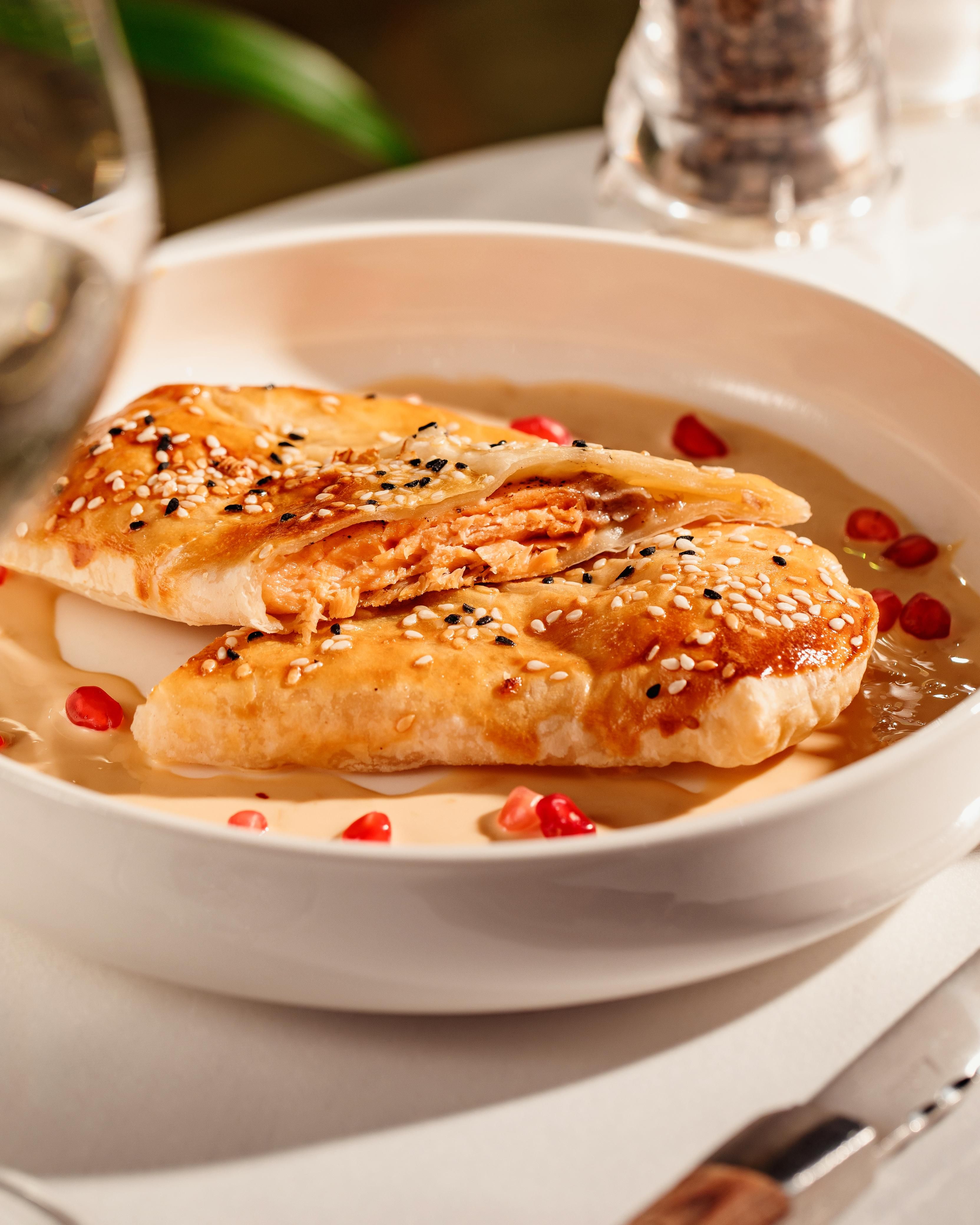
Photo: Nahid Alimemmedov / Pexels
The diets react (see scores below)
Common Ingredients
- flour
- lamb
- onion
- cumin
- black pepper
- salt
- vegetable oil
Specific recipes may vary.
Incompatible with 8 of 11 diets
Diet Ratings
Goshnan is a Central Asian/Chinese (Uyghur) flatbread stuffed with spiced lamb. The primary issue is the flour-based dough wrapper, which is made from wheat flour — a grain that is fundamentally incompatible with ketogenic diets. Wheat flour is almost entirely high-glycemic carbohydrates, with a single serving of this bread-based snack easily delivering 30-50g+ of net carbs, which alone can exceed or consume the entire daily keto carb allowance. While the lamb filling with cumin, black pepper, and onion is relatively keto-friendly (lamb is a high-fat, quality protein), the flour dough is the dominant structural component and cannot be avoided or portioned around without fundamentally changing the dish. Vegetable oil used in cooking is neutral. The onion adds minor carbs but is not the disqualifying factor — the flour is.
Goshnan is a Uyghur flatbread stuffed with lamb, which is a direct animal product. Lamb is meat from a young sheep and is unambiguously excluded from a vegan diet. There is no plant-based substitution in this traditional preparation, and the primary protein is explicitly listed as lamb. The remaining ingredients (flour, onion, cumin, black pepper, salt, vegetable oil) are all plant-based, but the inclusion of lamb makes this dish entirely incompatible with veganism.
Goshnan is a Chinese (Uyghur) flatbread stuffed with spiced lamb. Despite lamb being an excellent paleo protein, the dish is fundamentally built around flour (wheat), which is a grain and strictly excluded from the paleo diet. Additionally, vegetable oil (a seed oil) and added salt are both non-paleo. These are not minor or debated ingredients — they are core structural components of the dish, making it incompatible with paleo principles regardless of the quality of the lamb filling.
Goshnan is a lamb-filled flatbread from Chinese (Uyghur) cuisine. Its primary protein is lamb, which is red meat — limited to a few times per month in the Mediterranean diet. The base is refined wheat flour, a refined grain that Mediterranean guidelines discourage. Vegetable oil (likely not olive oil) is used rather than the preferred extra virgin olive oil. While onion and spices like cumin and black pepper are Mediterranean-friendly, the overall composition — red meat filling in a refined flour bread — contradicts core Mediterranean principles on multiple fronts. This is not a dish that fits the Mediterranean dietary pattern.
Goshnan is a Uyghur-style stuffed flatbread that is fundamentally incompatible with the carnivore diet. While lamb is an excellent ruminant protein fully approved on carnivore, the dish is built around a flour-based dough wrapper, making it primarily a grain-based food. Additional plant-based ingredients include onion (vegetable), cumin (plant spice), black pepper (plant spice), and vegetable oil (plant-derived fat). The flour alone is a hard disqualifier — grains are among the most strictly excluded foods on any tier of the carnivore diet. The vegetable oil further compounds the violation, as plant oils are inflammatory and explicitly excluded. Only the lamb and salt are carnivore-compliant; the majority of the dish by structure and ingredient count is plant-derived.
Goshnan is a Uyghur/Chinese flatbread stuffed with spiced lamb. The primary structural component is wheat flour, which is a grain and explicitly excluded on the Whole30. Beyond the grain issue, this dish is a filled flatbread — a category of food (bread, wraps, flatbreads) that is explicitly prohibited under Whole30's 'no recreating baked goods' rule, even if one were to attempt a grain-free version. The lamb, onion, cumin, black pepper, salt, and vegetable oil are all individually compliant, but the flour makes this dish non-compliant regardless.
Goshnan (a Uyghur/Chinese stuffed flatbread) contains two major high-FODMAP ingredients: wheat flour and onion. Wheat flour is high in fructans and is a primary FODMAP trigger during the elimination phase. Onion is one of the highest-FODMAP foods tested by Monash University, also due to fructans, and is problematic even in small quantities. Together, these two ingredients make this dish unsuitable for the elimination phase of the low-FODMAP diet regardless of portion size. Lamb itself is low-FODMAP, cumin is low-FODMAP in typical culinary amounts (up to 1 tsp), black pepper and salt are safe, and vegetable oil is fine. However, the flour and onion are non-negotiable high-FODMAP components that cannot be avoided in this dish as traditionally prepared.
Goshnan is a Central Asian/Chinese (Xinjiang) flatbread stuffed with spiced lamb, similar to a meat-filled pastry. While it contains some DASH-friendly elements (onion, cumin, whole-grain potential), several factors make it a 'caution' food. Lamb is a red meat with moderate-to-high saturated fat content, which DASH guidelines advise limiting. The dish is fried or pan-cooked in vegetable oil, adding fat calories. Salt is a direct ingredient and, as a street snack, sodium content is likely moderate-to-high. The refined white flour base offers little fiber. On the positive side, portions are typically small, cumin and onion add beneficial phytochemicals, and vegetable oil is preferable to tropical oils or lard. As an occasional snack in small portions, it is not categorically excluded from DASH, but it does not align with DASH core food groups and requires strict portion control.
NIH DASH guidelines explicitly list red meat (including lamb) as a food to limit due to saturated fat content, favoring poultry and fish instead. However, some updated DASH-oriented clinicians note that lean cuts of red meat in small portions (as in a single stuffed flatbread snack) may be acceptable within overall dietary patterns, particularly when total saturated fat remains within the daily limit.
Goshnan is a Chinese (Uyghur) lamb-stuffed flatbread. The Zone analysis reveals several challenges: (1) The flour-based flatbread wrapper is a refined carbohydrate, which Zone classifies as 'unfavorable' — high-glycemic and carb-dense with minimal fiber to offset glycemic impact. (2) Lamb is higher in saturated fat than Zone's preferred lean proteins (chicken breast, fish), making it an 'unfavorable' protein source, though it does provide complete protein. (3) Vegetable oil is likely a seed oil (e.g., canola or soybean), which Zone discourages due to omega-6 content and pro-inflammatory potential. (4) Onion and cumin are Zone-friendly in small amounts, but they are minor components here. The overall macro ratio skews toward carbohydrates from flour and saturated fat from lamb, with the protein content being moderate but not lean. As a snack, it would be difficult to portion into Zone blocks without significantly overcounting carbs relative to protein and fat. A small portion could technically be incorporated into a Zone meal with careful sizing, but the food as typically prepared does not lend itself to easy Zone balancing.
Some Zone practitioners following Dr. Sears' later anti-inflammatory writings (Toxic Fat, The Mediterranean Zone) would note that lamb contains some beneficial omega-3 fatty acids relative to grain-fed beef, and that moderate saturated fat is acceptable in context. Additionally, if the flatbread is thin and the portion is small, the carb block count could be managed. These practitioners might rate this a 5-6 rather than 4, treating it as an occasional Zone-unfavorable snack that can fit with strict portion control.
Goshnan is a Central Asian-influenced flatbread stuffed with spiced lamb, popular in Xinjiang cuisine. Its anti-inflammatory profile is mixed. On the positive side, cumin and black pepper are anti-inflammatory spices with meaningful antioxidant properties, and onion provides quercetin and other polyphenols. However, lamb is a red meat with moderate-to-high saturated fat content, placing it in the 'limit' category under anti-inflammatory principles — it is pro-inflammatory relative to fatty fish or poultry. The flour-based flatbread is a refined carbohydrate with little fiber or nutritional benefit from an anti-inflammatory standpoint. The vegetable oil used for cooking (likely a high-omega-6 refined oil) is also a concern, as regular use of such oils is cautioned against. The dish is not inherently disqualifying — the spices offer meaningful benefit and lamb is not in the same tier as processed meats — but as a combination of red meat, refined starch, and likely refined seed oil, it is best treated as an occasional food rather than a staple in an anti-inflammatory diet.
Some anti-inflammatory frameworks, including Dr. Weil's pyramid, do not strictly exclude red meat but recommend limiting it to a few times per month and favoring grass-fed sources; grass-fed lamb in particular has a more favorable omega-3 to omega-6 ratio than grain-fed beef, which some practitioners consider adequately acceptable. However, stricter anti-inflammatory and AIP-adjacent protocols would flag the refined flour and the omega-6-heavy cooking oil as additional concerns beyond the lamb itself.
Goshnan is a Uyghur-style stuffed flatbread (common in Xinjiang Chinese cuisine) made with a wheat flour dough encasing a filling of lamb and onion, then pan-fried or baked in oil. The combination of refined flour dough, fatty lamb, and frying in vegetable oil creates a high-fat, low-fiber, calorie-dense snack that is poorly suited for GLP-1 patients. Lamb is one of the fattier red meats, and the dough wrapper adds refined carbohydrates with minimal nutritional value. Pan-frying adds significant additional fat. Gastric emptying is already slowed by GLP-1 medications, and a greasy, doughy, fat-heavy snack like this is likely to worsen nausea, bloating, and reflux. Protein content exists from the lamb but is diluted by the dough and fat load, and does not compensate for the overall poor nutritional profile for this patient population. As a snack category item, portion size is typically small, but even a small serving delivers a poor protein-to-fat ratio and near-zero fiber.
Some GLP-1-focused dietitians may note that if Goshnan is baked rather than pan-fried and made with a leaner lamb trim, the fat load is meaningfully reduced, and the lamb does contribute real protein — making it borderline caution rather than avoid. However, the typical street-food preparation involves frying and standard fatty lamb mince, so the standard version warrants an avoid rating; individual tolerance to fatty red meat and doughy foods on GLP-1s also varies considerably.
*See how scores were generated at our methodology page.
Nutritional profile
Six traits that cut across every diet.
Fiber & Plants
How much whole-plant food and fiber it delivers.
Healthy Fats
The quality of its fats (unsaturated, omega-3).
Whole / Unprocessed
How close it is to its natural, unprocessed form.
Gut Gentle
How easy it is on digestion (low FODMAP, few irritants).
Low Glycemic
How little it spikes your blood sugar.
Protein Density
How much protein it packs per calorie.
Controversy Index
Higher controversy = more disagreement between diets.
Diet-Specific Tips
 DASH — 4/10
View tips
- Lamb is a red meat with moderate saturated fat — DASH advises limiting red meat
- Refined white flour base lacks fiber compared to DASH-preferred whole grains
- Salt added during preparation contributes to sodium load, a key DASH concern
- Fried/pan-cooked preparation adds fat calories from vegetable oil
- Positive: onion and cumin provide phytochemicals; vegetable oil preferred over saturated fats
- Typical snack portion size partially mitigates concerns if consumed occasionally
- No DASH core foods (fruits, vegetables, low-fat dairy, legumes) featured prominently
 Zone — 4/10
View tips
- Refined flour flatbread is a high-glycemic 'unfavorable' carbohydrate in Zone terminology
- Lamb is higher in saturated fat than Zone's preferred lean proteins, making it an unfavorable protein choice
- Vegetable oil likely contributes pro-inflammatory omega-6 fatty acids, counter to Zone's anti-inflammatory emphasis
- Macro ratio skews carb-heavy from flour, making 40/30/30 balance difficult without very small portions
- Onion is a Zone-favorable low-glycemic carbohydrate but is a minor ingredient
- Cumin and black pepper are Zone-neutral spices with potential anti-inflammatory polyphenol benefits
- As a snack, difficult to portion correctly for Zone block targets without significant carb overage
 Anti-Inflammatory — 4/10
View tips
- Lamb is a red meat — limited in anti-inflammatory diets due to saturated fat and arachidonic acid content
- Refined white flour flatbread offers little fiber and spikes blood sugar — mildly pro-inflammatory
- Cumin and black pepper are anti-inflammatory spices that partially offset the dish's inflammatory load
- Onion provides quercetin and polyphenols — a positive contribution
- Vegetable oil (likely high-omega-6 refined oil) is cautioned against in most anti-inflammatory protocols
- Overall dish is high in refined carbs + red meat + potentially inflammatory cooking oil — acceptable occasionally but not as a regular staple