Photo: Polina Tankilevitch / Pexels
Chinese
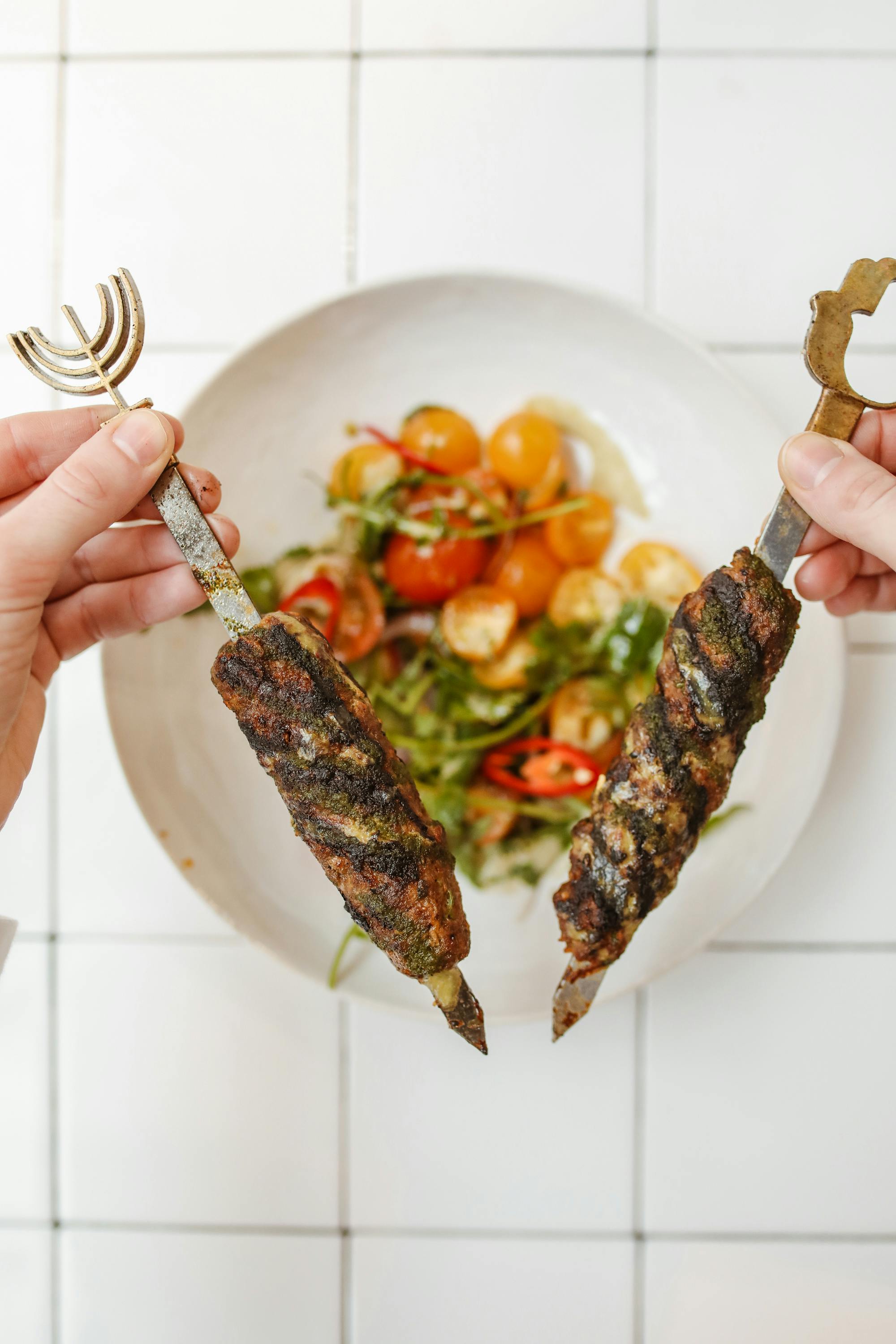
Lamb Kebab
The diets react (see scores below)
Common Ingredients
- lamb
- cumin
- chile flakes
- salt
- garlic
- onion
- vegetable oil
Specific recipes may vary.
Incompatible with 5 of 11 diets
Diet Ratings
Chinese lamb kebabs (yangrou chuan) are an excellent keto food. Lamb is a fatty, high-quality protein with zero carbs. The spice blend of cumin, chile flakes, salt, and garlic contributes negligible net carbs in typical seasoning quantities. Onion used as a minor ingredient adds minimal carbs per skewer. Vegetable oil, while not the ideal fat source compared to animal fats, does not impact ketosis. The overall macronutrient profile — high fat, moderate protein, very low net carbs — aligns well with ketogenic requirements.
Lamb Kebab contains lamb as its primary protein, which is the meat of a sheep — a direct animal product. This is unambiguously incompatible with a vegan diet under all definitions of veganism. The remaining ingredients (cumin, chile flakes, salt, garlic, onion, vegetable oil) are all plant-based, but the presence of lamb alone is sufficient to classify this dish as non-vegan.
This Chinese lamb kebab contains two clear paleo violations: added salt and vegetable oil. Salt is explicitly excluded from strict paleo as an added/processed ingredient, and vegetable oil is a seed oil that is categorically avoided on the paleo diet due to its high omega-6 content and industrial processing. The core ingredients — lamb, cumin, chile flakes, garlic, and onion — are all paleo-approved. If the salt were omitted and the vegetable oil replaced with a paleo-friendly fat (tallow, coconut oil, or avocado oil), this dish would rate highly.
Lamb is a red meat, which the Mediterranean diet restricts to a few times per month. As a primary protein in a snack dish, this conflicts with core Mediterranean principles. The spices (cumin, chile flakes, garlic) are acceptable, and onion is a beneficial vegetable, but the use of generic vegetable oil instead of extra virgin olive oil further distances this dish from Mediterranean standards. The overall protein-forward, red-meat-centric nature of this dish makes it a poor fit for regular consumption within the Mediterranean diet framework.
Some Mediterranean diet practitioners note that lamb is actually consumed in traditional Greek and Middle Eastern Mediterranean cuisines (e.g., Greek Easter lamb), and occasional lean lamb dishes with aromatic spices could be considered compatible when eaten sparingly — perhaps a few times per month — rather than as a regular snack.
While lamb is one of the most carnivore-approved meats (a ruminant, fatty, and nutrient-dense), this kebab preparation is heavily compromised by multiple plant-derived ingredients. Cumin and chile flakes are plant-based spices explicitly excluded from the carnivore diet. Garlic and onion are plant foods (alliums) and strictly off-limits. Vegetable oil is a plant-derived industrial seed or plant oil, which is one of the most universally rejected ingredients across all carnivore tiers due to its high omega-6 polyunsaturated fat content and processing. Only the lamb and salt are carnivore-compliant. The dish as described cannot be considered carnivore-compatible in any tier.
Lamb kebab with cumin, chile flakes, salt, garlic, onion, and vegetable oil is fully Whole30 compliant. All ingredients are whole, unprocessed foods explicitly allowed on the program: lamb is a compliant protein, cumin and chile flakes are compliant spices, salt is explicitly allowed, garlic and onion are vegetables, and vegetable oil (such as olive, avocado, or coconut oil) is a natural fat. This dish is a straightforward preparation of meat and seasonings with no excluded ingredients.
This lamb kebab contains two high-FODMAP ingredients that are dealbreakers during the elimination phase: garlic and onion. Both are among the highest-fructan foods in the Monash database and are problematic even in small amounts. Garlic contains significant fructans per clove, and onion is high-FODMAP at virtually any culinary serving size. The remaining ingredients — lamb, cumin, chile flakes, salt, and vegetable oil — are all low-FODMAP and safe during elimination. However, garlic and onion are core seasoning components of this dish and cannot be considered trace amounts; they are foundational to the kebab's flavor profile. Substitutions (e.g., garlic-infused oil, green onion tops only, asafoetida) would be required to make this dish elimination-phase compatible.
Lamb kebab sits in a gray zone for DASH. Lamb is a red meat that DASH guidelines recommend limiting due to its higher saturated fat content compared to poultry or fish. However, when grilled on skewers (as kebabs typically are), excess fat renders off, reducing the overall saturated fat load. The spice blend — cumin, chile flakes, garlic — is sodium-free and DASH-friendly, but added salt during preparation is a concern, as street-style Chinese lamb kebabs (yangrou chuan) are typically salted generously. Vegetable oil is acceptable. Garlic and onion are DASH-positive ingredients. The dish is not heavily processed and contains no added sugar. Occasional consumption in modest portions is acceptable within DASH, but it should not be a dietary staple due to lamb's saturated fat profile and the sodium added during seasoning.
NIH DASH guidelines categorize red meat (including lamb) as a food to limit due to saturated fat and recommend lean poultry and fish as preferred proteins. However, updated clinical interpretations note that lean cuts of lamb (e.g., leg or loin) have a saturated fat content comparable to some poultry cuts, and some DASH-aligned practitioners consider modest red meat consumption acceptable within an otherwise compliant dietary pattern.
Chinese-style lamb kebab (羊肉串) is a protein-forward snack that fits partially into Zone principles but requires adjustment. Lamb is a moderate-fat red meat — not as lean as skinless chicken or fish, but far from the worst protein choice. It provides good protein density and contains some beneficial omega-3 fatty acids (especially grass-fed lamb), but also carries a meaningful saturated fat load. The spice blend (cumin, chile flakes, garlic) is Zone-friendly and anti-inflammatory. The main concern is the use of vegetable oil, which is typically a high omega-6 seed oil (soybean or canola oil in Chinese cooking) — Sears specifically discourages omega-6-heavy oils as pro-inflammatory. As a snack, this dish is almost entirely protein and fat with negligible carbohydrates, making it macro-imbalanced for the Zone's 40/30/30 target — it would need to be paired with low-glycemic vegetables or fruit to achieve Zone balance. The fat content from lamb plus vegetable oil may exceed Zone fat block targets for a snack. With careful portioning of a leaner lamb cut (like leg) and pairing with vegetables, this can work in a Zone meal plan, but as a standalone snack it skews heavily protein/fat.
Some Zone practitioners and Sears' later writings (Toxic Fat, The Mediterranean Zone) place more emphasis on the overall anti-inflammatory context rather than strict macro ratios at each eating occasion. In that framework, lamb kebab with cumin and garlic offers polyphenols and protein that support Zone goals, and the saturated fat in lamb is less concerning than omega-6 vegetable oils. Strict early-Zone adherents would flag both the saturated fat from lamb and the vegetable oil as unfavorable, while later Sears methodology would focus criticism primarily on the omega-6 oil.
Chinese-style lamb kebabs (羊肉串) present a mixed anti-inflammatory profile. On the positive side, cumin, chile flakes, and garlic are all well-regarded anti-inflammatory spices with meaningful antioxidant and bioactive compound content (thymoquinone in cumin, capsaicin in chile, allicin in garlic). Onion contributes quercetin, a notable anti-inflammatory flavonoid. These spice components are genuinely beneficial. However, lamb is red meat, which anti-inflammatory frameworks consistently place in the 'limit' category due to its saturated fat content and potential to raise arachidonic acid and CRP levels, particularly with regular consumption. The use of generic 'vegetable oil' (likely a refined high-omega-6 oil such as sunflower or soybean oil in Chinese cooking contexts) is a concern — most anti-inflammatory protocols flag these oils for their pro-inflammatory omega-6 to omega-3 ratio and oxidation potential, especially at grilling temperatures. The grilling method itself may produce heterocyclic amines (HCAs) and polycyclic aromatic hydrocarbons (PAHs), which are associated with increased inflammatory markers. Occasional consumption as a snack is acceptable within the anti-inflammatory framework given the beneficial spice profile, but the red meat base and likely seed oil use prevent a favorable rating.
Some anti-inflammatory researchers note that lamb, particularly from grass-fed sources, has a more favorable omega-6 to omega-3 ratio than grain-fed beef, and the rich spice blend (cumin, chile, garlic) may partially offset meat-associated inflammatory effects — Dr. Weil's framework does not categorically ban red meat, only recommends limiting it. Conversely, stricter anti-inflammatory and AIP protocols would view the combination of red meat, high-omega-6 vegetable oil, and high-heat cooking as a triple pro-inflammatory concern warranting an 'avoid' rating.
Chinese-style lamb kebabs (yangrou chuan) are grilled skewers seasoned with cumin, chile flakes, garlic, and onion — a popular street food. Lamb provides meaningful protein (roughly 20-25g per 100g), but it is a fatty red meat with significant saturated fat content, which conflicts with GLP-1 dietary priorities. The addition of vegetable oil increases fat load further. The spice profile — chile flakes plus cumin — is moderate to aggressive and may worsen reflux or nausea in GLP-1 patients who are already prone to GI side effects. On the positive side, the grilling method avoids added breading or deep frying, and the small skewer format is naturally portion-friendly. Garlic and onion add minor fiber and micronutrients. Overall, this is an acceptable occasional protein source in small quantities, but the saturated fat content, spice intensity, and red meat category push it firmly into caution territory rather than approve.
Some GLP-1-focused dietitians accept lean cuts of lamb in moderation as a quality protein source, particularly when grilled, noting that protein quality and portion control matter more than meat category. Others apply a stricter limit on all red meats due to saturated fat worsening nausea and slowed gastric emptying under GLP-1 medications, and flag chile-heavy spice blends as a meaningful GI risk for a significant subset of patients.
*See how scores were generated at our methodology page.
Nutritional profile
Six traits that cut across every diet.
Fiber & Plants
How much whole-plant food and fiber it delivers.
Healthy Fats
The quality of its fats (unsaturated, omega-3).
Whole / Unprocessed
How close it is to its natural, unprocessed form.
Gut Gentle
How easy it is on digestion (low FODMAP, few irritants).
Low Glycemic
How little it spikes your blood sugar.
Protein Density
How much protein it packs per calorie.
Controversy Index
Higher controversy = more disagreement between diets.
Diet-Specific Tips
 Keto — 9/10
View tips
- Lamb is naturally high in fat and protein with zero carbohydrates
- Spices (cumin, chile flakes, garlic) contribute negligible net carbs at seasoning quantities
- Onion is present but in small enough amounts per skewer to remain keto-compatible
- No grains, sugars, or high-carb sauces in the ingredient list
- Whole, minimally processed ingredients align with keto food quality standards
- Vegetable oil is the only minor concern but does not affect ketosis
 Whole30 — 9/10
View tips
- Lamb is a compliant Whole30 protein
- Cumin and chile flakes are compliant spices
- Salt is explicitly allowed on Whole30
- Garlic and onion are compliant vegetables
- Vegetable oil (e.g., olive, avocado) is a compliant natural fat — label-read to confirm no additives
- No grains, legumes, dairy, or added sugars present
- Simple preparation consistent with Whole30 whole-food philosophy
 DASH — 4/10
View tips
- Lamb is a red meat — DASH guidelines advise limiting red meat in favor of poultry and fish
- Saturated fat in lamb is a concern, though grilling reduces fat content
- Added salt during preparation raises sodium content, conflicting with DASH sodium limits
- Spices (cumin, chile flakes, garlic) are sodium-free and DASH-compatible
- Vegetable oil is an acceptable fat source under DASH
- No added sugars or heavily processed ingredients
- Portion size is critical — a small skewer serving is more acceptable than a large portion
 Zone — 5/10
View tips
- Lamb is a moderate-fat red meat with some saturated fat — Zone classifies it as 'unfavorable' protein compared to lean poultry or fish, but usable in controlled portions
- Vegetable oil is likely a high omega-6 seed oil (soybean/canola), which Sears explicitly discourages due to pro-inflammatory arachidonic acid cascade
- As a standalone snack, this dish is nearly carbohydrate-free — incompatible with Zone's 40/30/30 ratio without pairing with low-glycemic vegetables or fruit
- Spices (cumin, chile flakes, garlic) are Zone-favorable — anti-inflammatory and polyphenol-rich
- Fat content from lamb fat plus cooking oil may exceed the 1.5g/block fat target for a Zone snack
- Onion and garlic contribute minimal but favorable low-GI carbohydrates
 Anti-Inflammatory — 4/10
View tips
- Lamb is red meat — anti-inflammatory frameworks recommend limiting, not avoiding, but it is not a favorable protein choice
- Cumin, chile flakes, and garlic are strong anti-inflammatory spices with capsaicin, thymoquinone, and allicin
- Onion provides quercetin, an anti-inflammatory flavonoid
- Generic 'vegetable oil' likely high in omega-6 fatty acids (sunflower, soybean) — a concern in anti-inflammatory diets
- High-heat grilling can generate HCAs and PAHs, which are linked to increased inflammation
- Occasional snack consumption is more acceptable than regular intake
- Grass-fed lamb would have a more favorable fatty acid profile than the assumed conventional lamb
 GLP-1 Friendly — 4/10
View tips
- Lamb is a fatty red meat with moderate-to-high saturated fat — conflicts with low-fat GLP-1 priority
- Grilled preparation is better than fried, preserving some protein quality without added breading
- Protein content is solid (~20-25g per 100g) but fat content offsets the benefit
- Chile flakes may worsen GLP-1-associated nausea, reflux, or GI discomfort
- Added vegetable oil increases total fat load
- Small skewer format supports portion-friendly eating
- No fiber-rich ingredients beyond minor contributions from garlic and onion
- Red meat category is generally cautioned or limited in GLP-1 dietary guidance