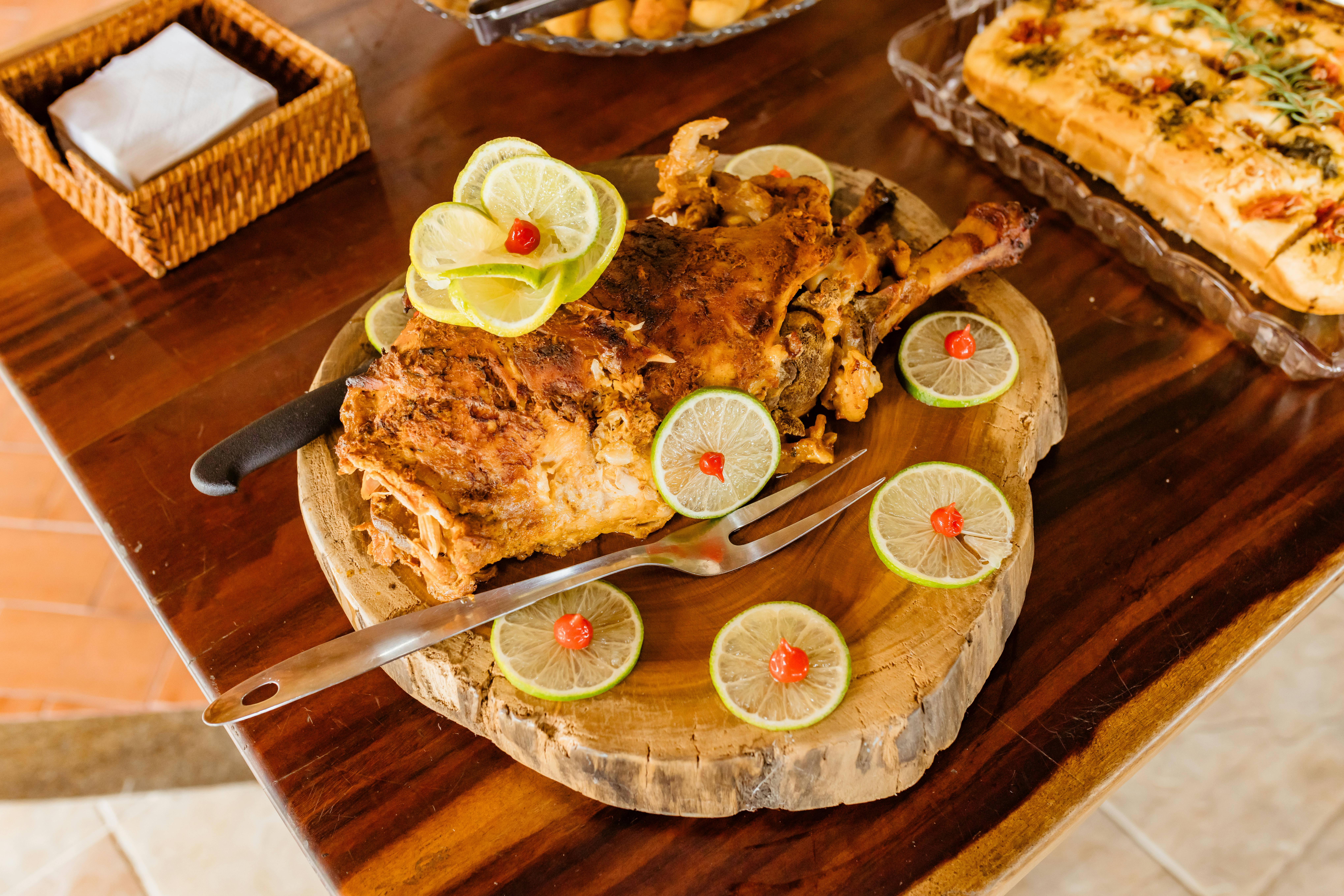
Photo: Jonathan Borba / Pexels
Chinese
Roast Whole Lamb
The diets react (see scores below)
Common Ingredients
- whole lamb
- cumin
- salt
- chile flakes
- garlic
- onion
- egg
- flour
Specific recipes may vary.
Incompatible with 8 of 11 diets
Diet Ratings
Roast Whole Lamb is primarily an excellent keto protein and fat source — lamb is high in fat and contains zero carbs, and the spices (cumin, salt, chile flakes, garlic, onion) are used in small amounts and contribute negligible net carbs. The critical concern is the inclusion of flour and egg, which are typically used as a binder or coating in this preparation. Flour is a grain-based ingredient that is incompatible with keto — even a thin coating on a whole lamb can add meaningful carbs depending on quantity used. If the flour is used only as a minimal rub binder or in a marinade paste in very small amounts across a large portion, the per-serving impact may be manageable. However, because flour is a non-negotiable keto-incompatible ingredient, this dish cannot be fully approved without modification. Removing or substituting the flour (e.g., with almond flour) would make this dish solidly keto-friendly.
Strict keto practitioners would categorically reject any dish containing wheat flour regardless of quantity, arguing that even trace amounts of gluten-containing grains have no place in a keto protocol and that acceptable substitutes always exist. More flexible 'lazy keto' adherents might approve this dish if the flour is used in such small quantities across a large whole lamb that per-serving net carbs remain under threshold.
Roast Whole Lamb is unambiguously non-vegan. The primary ingredient is a whole lamb, which is an animal product, and egg is also listed among the ingredients — another animal-derived product. Both are categorically excluded under every definition of veganism. The spices, flour, and aromatics (cumin, salt, chile flakes, garlic, onion) are plant-based, but they are entirely subordinate to the core animal ingredients. There is no vegan version of this dish; it is defined by the roasting of a whole animal.
Roast Whole Lamb is fundamentally non-paleo due to two clear violations: flour (a grain product) and added salt. Whole lamb, cumin, chile flakes, garlic, and onion are all paleo-approved ingredients. The egg is also paleo-compliant. However, flour is a grain-derived processed ingredient explicitly excluded from the paleo diet, and added salt is also discouraged under strict paleo guidelines. These two ingredients disqualify the dish as prepared. Without the flour and salt, this dish would score highly as a simple roasted meat with herbs and spices.
Roast whole lamb is a red meat dish and directly contradicts core Mediterranean diet principles. Red meat is explicitly limited to a few times per month, and a whole roasted lamb as a main course represents a significant red meat-centric meal. While the spices (cumin, garlic, chile flakes) and aromatics (onion) are Mediterranean-compatible, the dish is fundamentally built around a large quantity of red meat. The inclusion of flour and egg (likely as a binder or coating) adds refined grain elements. This dish is not plant-forward, does not feature fish or legumes, and positions red meat as the centerpiece rather than an occasional accent, making it a poor fit for Mediterranean dietary patterns.
While the core protein — whole lamb — is one of the most prized foods on the carnivore diet (ruminant meat, excellent fat profile), this dish is disqualified by multiple plant-based and non-carnivore ingredients. Cumin and chile flakes are plant-derived spices excluded on strict carnivore. Garlic and onion are plant foods entirely off-limits. Most critically, flour is a grain-based ingredient that is a direct violation of carnivore principles. The egg in the ingredient list may serve as a binder alongside the flour, suggesting a coating or stuffing preparation. The combination of spice rub, aromatic vegetables, and a flour-based component makes this dish incompatible with the carnivore diet despite its excellent protein base.
This dish contains flour, which is a grain-based ingredient explicitly excluded from the Whole30 program. Wheat flour falls squarely under the grains prohibition. All other ingredients — whole lamb, cumin, salt, chile flakes, garlic, onion, and egg — are fully Whole30-compliant. However, the presence of flour makes the dish non-compliant as written. If flour were omitted, this dish would be an excellent Whole30 meal.
This dish contains multiple high-FODMAP ingredients that make it unsuitable during the elimination phase. Garlic and onion are two of the highest-FODMAP foods in the Monash system — both are rich in fructans and must be strictly avoided during elimination. Flour (wheat-based) is also high in fructans and adds another FODMAP load. The lamb itself is low-FODMAP, as is cumin, salt, and chile flakes, but the presence of garlic, onion, and wheat flour makes this dish a clear avoid. These ingredients are typically used in non-trivial quantities in a whole roast lamb preparation, not merely as trace seasonings.
Roast whole lamb is problematic for the DASH diet for several key reasons. Lamb is classified as red meat, which DASH explicitly limits due to its high saturated fat and cholesterol content. A whole roasted lamb includes fatty cuts (leg, shoulder, belly, shank) with significant saturated fat per serving — far exceeding DASH's emphasis on lean proteins. The salt used in preparation (especially for a whole roast) contributes substantially to sodium intake. While spices like cumin, garlic, and chile flakes are DASH-friendly, they don't offset the core issues. The NIH/NHLBI DASH plan recommends limiting red meat to no more than 1-2 servings per week and emphasizes lean cuts; a whole-lamb preparation inherently includes high-fat cuts and is not a portion-controlled format. This dish falls squarely in the 'avoid' category as a primary DASH meal.
Roast whole lamb presents a mixed Zone Diet profile. The primary concern is the fat content: whole lamb (including skin and fatty cuts) is significantly higher in saturated fat than the lean proteins Dr. Sears favors. A whole roasted lamb includes fatty leg, shoulder, belly, and ribs, making it impossible to control fat intake to the Zone-ideal monounsaturated fat profile. The protein content is excellent — lamb is a complete protein — but the accompanying fat is predominantly saturated rather than monounsaturated. The spice mix (cumin, chile flakes, garlic, onion) is Zone-favorable and anti-inflammatory, adding polyphenols. The egg and flour coating introduces a modest amount of refined carbohydrate, which adds glycemic load without nutritional benefit, though in small amounts it's not catastrophic. The dish lacks the Zone-required carbohydrate component (low-GI vegetables) entirely, meaning it cannot stand alone as a balanced Zone meal — it would require significant pairing with favorable carbohydrates. In controlled portions (leaner cuts like leg), lamb can fit into Zone blocks, but a 'roast whole lamb' presentation makes portion control and fat management extremely difficult.
Some Zone practitioners and Sears' later anti-inflammatory writings (notably 'The Anti-Inflammation Zone' and 'Toxic Fat') take a somewhat more relaxed view of saturated fat from whole animal sources, particularly when the animal is grass-fed. Grass-fed lamb has a more favorable omega-6 to omega-3 ratio than grain-fed alternatives, which aligns with Sears' anti-inflammatory emphasis. A Zone-aware diner could select leaner cuts from the roast (leg meat, trimmed) and pair with vegetables to construct a compliant 3-block meal. In that context, some practitioners would rate this as a usable protein source rather than a problematic one.
Roast whole lamb presents a mixed anti-inflammatory profile. On the negative side, lamb is red meat with significant saturated fat content, particularly in a whole-roast preparation where fat is not trimmed. Red meat is consistently flagged in anti-inflammatory frameworks as a food to limit due to its arachidonic acid content, saturated fat, and association with elevated inflammatory markers (CRP, IL-6) at higher consumption levels. The egg and flour binder adds minimal concern but neither contributes positively. On the positive side, the spice profile is genuinely anti-inflammatory: cumin contains apigenin and luteolin with documented anti-inflammatory activity, garlic provides allicin and quercetin, chile flakes contain capsaicin (a known anti-inflammatory compound), and onion provides quercetin. These are meaningful ingredients, not just garnishes. Lamb does offer some redeeming nutritional qualities compared to other red meats — it contains conjugated linoleic acid (CLA) and zinc, and grass-fed lamb has a more favorable omega-3 to omega-6 ratio than grain-fed beef. The preparation method (roasting whole) renders out fat, which somewhat reduces but doesn't eliminate the saturated fat concern. Overall, this is a dish that anti-inflammatory guidelines would place in the 'limit' category — acceptable occasionally, especially given the strong spice profile, but not a dietary staple.
Dr. Weil's framework explicitly categorizes red meat (including lamb) as a food to eat sparingly, and most mainstream anti-inflammatory protocols agree on limiting it due to saturated fat and arachidonic acid. However, some researchers, including those in the Paleo and ancestral health camps, argue that pasture-raised lamb is nutritionally dense and that its CLA content and better omega-3 profile make it less inflammatory than conventionally raised meats — and that the anti-inflammatory spice load in this dish meaningfully offsets the red meat concern.
Roast whole lamb is a high-fat preparation that poses multiple challenges for GLP-1 patients. Whole lamb includes fatty cuts (shoulder, belly, ribs) with significant saturated fat content — far exceeding the low-fat guideline. Roasting a whole animal means fat from skin and marbling bastes the meat throughout cooking, making it difficult to separate lean from fatty portions. Chile flakes and cumin in meaningful quantities may worsen reflux and nausea, which are already common GLP-1 side effects. The egg-and-flour coating component adds refined carbohydrates with low nutritional value. Portions are also difficult to control in a whole-roast serving context. While lamb does provide protein, the fat load per serving is likely to trigger or significantly worsen GI side effects including nausea, bloating, and reflux. The combination of high saturated fat, potential spice irritants, and poor portion controllability makes this dish a poor fit for GLP-1 patients.
Some GLP-1-focused dietitians note that lamb's protein content is substantial and that patients who have advanced past the early high-side-effect phase may tolerate lean lamb cuts in small portions — however, whole roast lamb does not allow reliable selection of lean cuts, and most clinicians would still caution against it due to the unpredictable fat load per serving.
*See how scores were generated at our methodology page.
Nutritional profile
Six traits that cut across every diet.
Fiber & Plants
How much whole-plant food and fiber it delivers.
Healthy Fats
The quality of its fats (unsaturated, omega-3).
Whole / Unprocessed
How close it is to its natural, unprocessed form.
Gut Gentle
How easy it is on digestion (low FODMAP, few irritants).
Low Glycemic
How little it spikes your blood sugar.
Protein Density
How much protein it packs per calorie.
Controversy Index
Higher controversy = more disagreement between diets.
Diet-Specific Tips
 Keto — 5/10
View tips
- Lamb is an excellent high-fat, zero-carb keto protein
- Flour is a grain-based ingredient incompatible with strict keto
- Egg used as binder adds negligible carbs and is keto-friendly
- Spices and aromatics (cumin, garlic, onion, chile flakes) contribute minimal net carbs in typical quantities
- Per-serving flour impact depends heavily on preparation method and portion size
- Dish is easily made keto-compliant by replacing flour with almond flour or omitting it
 Zone — 4/10
View tips
- Whole lamb includes high-fat cuts (belly, ribs, shoulder) with significant saturated fat — not Zone-ideal lean protein
- No Zone-favorable carbohydrate component present; dish lacks vegetables entirely
- Flour and egg coating adds refined carbohydrates with high glycemic index
- Spices (cumin, chile, garlic) are Zone-positive: anti-inflammatory and polyphenol-rich
- Lamb protein itself is high quality and complete, usable in Zone blocks if lean cuts are selected
- Portion control is very difficult in a whole-roast presentation
- Grass-fed lamb would improve omega-3 to omega-6 ratio, aligning better with Sears' anti-inflammatory framework
- Requires substantial pairing with low-GI vegetables and monounsaturated fat to achieve 40/30/30 balance
 Anti-Inflammatory — 4/10
View tips
- Lamb is red meat — flagged for limiting in anti-inflammatory frameworks due to saturated fat and arachidonic acid
- Strong anti-inflammatory spice profile: cumin, garlic, chile flakes, onion all contain documented anti-inflammatory phytochemicals
- Whole roast preparation renders out some fat but the dish remains high in saturated fat overall
- Grass-fed lamb has a more favorable fatty acid profile than many other red meats (higher CLA, better omega-3:omega-6 ratio)
- Egg and flour binder are nutritionally neutral in this context
- Acceptable occasionally but inconsistent with regular anti-inflammatory eating patterns