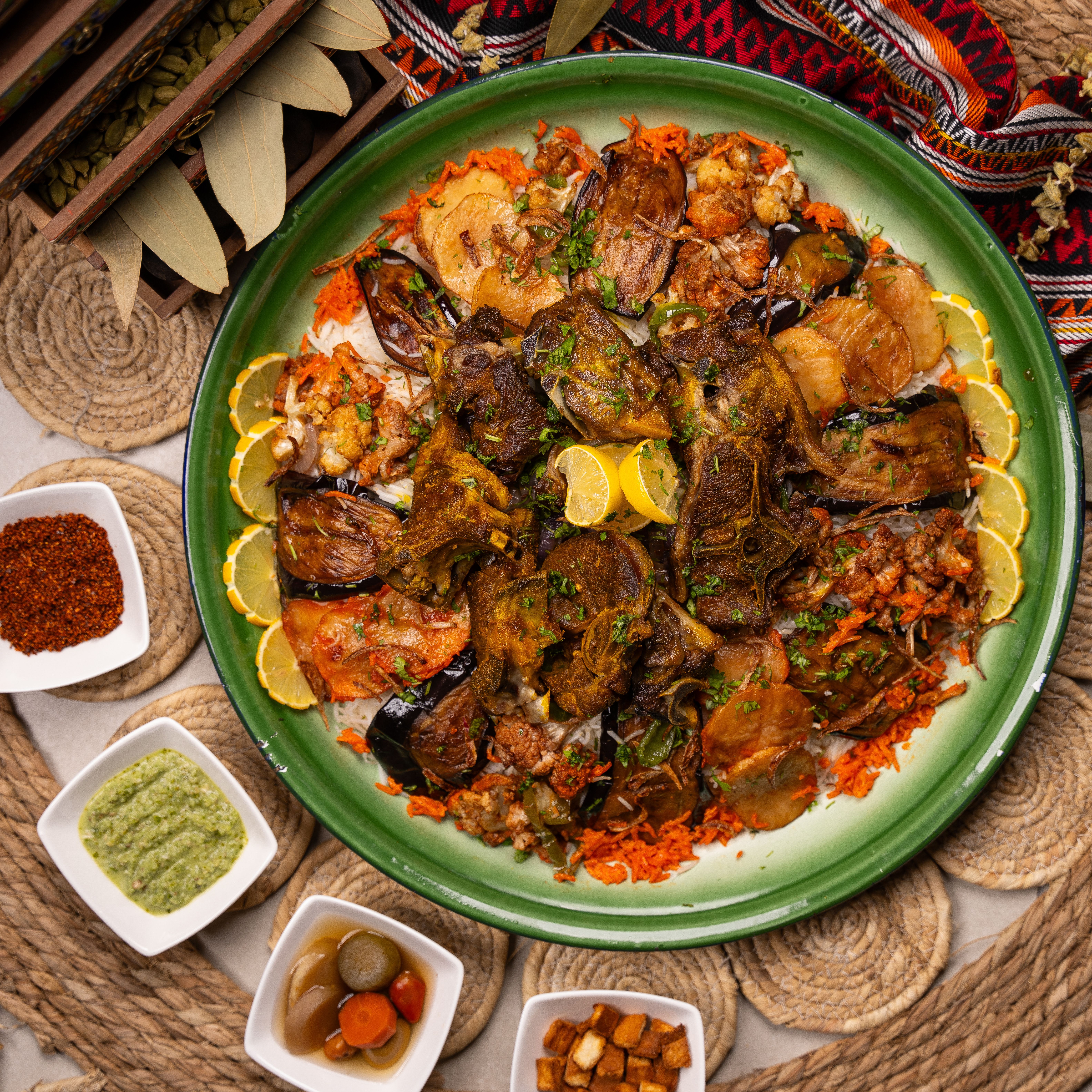
Photo: Ali Dashti / Pexels
The diets react (see scores below)
Common Ingredients
- lamb
- hilbeh
- tomatoes
- onion
- garlic
- zhug
- cumin
- fenugreek
Specific recipes may vary.
Incompatible with 4 of 11 diets
Diet Ratings
Fahsa is a Yemeni lamb stew featuring mostly keto-friendly ingredients: lamb provides high-quality protein and fat, while garlic, cumin, and zhug (a chili-herb sauce) contribute negligible carbs. The main concerns are tomatoes and onion, which add moderate net carbs, and fenugreek/hilbeh (fenugreek froth), which has a notable carb content — fenugreek seeds contain roughly 6g net carbs per tablespoon. In typical Fahsa portions, the cumulative carbs from tomatoes, onion, and fenugreek could push a serving toward or past the lower keto threshold (20g net carbs), depending on quantities used. With portion control and reduced tomato/onion amounts, it can fit into a keto framework, especially for those following a more flexible 50g net carb ceiling. Traditionally, Fahsa is served with Yemeni flatbread (lahoh), which must be omitted entirely on keto.
Stricter keto practitioners may flag fenugreek/hilbeh as problematic due to its carbohydrate content and potential blood sugar effects, arguing the dish should be avoided unless fenugreek is drastically minimized; others following lazy keto with a 50g ceiling may freely approve it given lamb's dominant macronutrient profile.
Fahsa is a traditional Yemeni lamb stew, with lamb as the primary and defining ingredient. Lamb is an animal product and is strictly excluded from a vegan diet. There is no ambiguity here — no version of authentic Fahsa can be considered vegan while retaining its primary protein. The remaining ingredients (hilbeh/fenugreek paste, tomatoes, onion, garlic, zhug, cumin, fenugreek) are all plant-based, but the presence of lamb makes this dish entirely incompatible with vegan dietary standards.
Fahsa is a Yemeni lamb stew that is largely paleo-friendly, but contains two debated ingredients that warrant caution. Lamb, tomatoes, onion, garlic, cumin, and zhug (a herb-based hot sauce of chili peppers, garlic, coriander, and spices) are all clearly paleo-approved. The two problematic ingredients are hilbeh and fenugreek. Hilbeh is a fenugreek-based condiment — fenugreek seeds come from a leguminous plant (Trigonella foenum-graecum), and legumes are excluded from strict paleo. While fenugreek is commonly treated as a spice rather than a legume in culinary contexts, its botanical classification as a legume seed places it in a gray zone within the paleo community. Zhug itself is typically compliant, but commercial versions may include added salt or preservatives. Overall, the dish is close to paleo but the fenugreek/hilbeh legume question creates enough ambiguity to land it in the caution zone.
Some paleo practitioners treat fenugreek purely as a spice — used in small amounts — and do not apply the legume exclusion rule to it, as the anti-nutrient load at spice-level quantities is negligible. In this view, Fahsa would be considered fully paleo-approved.
Fahsa is a traditional Yemeni lamb stew where lamb is the primary and dominant protein. Red meat, particularly lamb, is explicitly limited in Mediterranean diet guidelines to a few times per month at most. While several ingredients — tomatoes, onion, garlic, cumin, and fenugreek (hilbeh) — are plant-based and align well with Mediterranean principles, the dish is fundamentally centered on a substantial serving of lamb, which disqualifies it from regular consumption under Mediterranean diet norms. The spice blend and vegetable components are positive, but they cannot offset the central role of red meat in this dish.
Fahsa is a traditional Yemeni lamb stew that, while built on an approved carnivore protein (lamb), is heavily loaded with plant-based ingredients that disqualify it from the carnivore diet. Hilbeh is a fenugreek paste — a legume-derived ingredient. Zhug is a spicy herb sauce made from cilantro, parsley, and other plant matter. Tomatoes, onion, and garlic are all plant foods explicitly excluded. Cumin and fenugreek are plant-derived spices. The lamb itself is carnivore-compliant, but it constitutes only one component of a dish that is fundamentally defined by its plant-based seasonings and additions. There is no version of authentic Fahsa that is carnivore-compatible without stripping it of its identity entirely.
Fahsa is a traditional Yemeni lamb stew whose core ingredients — lamb, tomatoes, onion, garlic, cumin, and fenugreek — are all Whole30-compliant. Zhug (a Yemeni hot sauce made from chilies, herbs, garlic, and spices) is also compliant in its traditional form. The key ingredient to examine is hilbeh, a fenugreek-seed foam/paste that is the dish's signature element. Hilbeh is made by soaking and whipping fenugreek seeds with water (and sometimes lemon juice or zhug), all of which are compliant. Fenugreek itself is an allowed legume-adjacent seed/spice, and its preparation here does not involve any excluded ingredients. No grains, dairy, sugar, or other excluded ingredients are present in the traditional recipe. The dish is a whole-food, protein-and-vegetable-forward stew that aligns well with Whole30 principles.
Fenugreek seeds are technically from the legume family (Fabaceae), which raises a theoretical concern analogous to other legumes excluded on Whole30. However, fenugreek is explicitly recognized as a spice/seed on Whole30 (like other culinary seeds such as cumin) and is not listed among excluded legumes; community debate is minimal but worth noting if consuming it in large quantities as hilbeh rather than as a trace spice.
Fahsa contains multiple high-FODMAP ingredients that make it unsuitable during the elimination phase. Onion and garlic are among the highest fructan-containing foods and are the most common triggers for IBS symptoms — both are definitively high-FODMAP at any culinary quantity. Hilbeh is a fenugreek paste/gel that is a core component of this dish; fenugreek seeds are high in GOS (galacto-oligosaccharides) and fructans, making hilbeh a significant FODMAP concern. Zhug (a spicy herb sauce) typically contains garlic and onion as base ingredients, compounding the fructan load. While lamb, tomatoes (at standard servings), and cumin are low-FODMAP, the combination of onion, garlic, hilbeh, and zhug creates an unavoidably high-FODMAP dish. There is no realistic way to modify traditional Fahsa to be low-FODMAP while maintaining its authentic character, as onion, garlic, and hilbeh are structurally essential to the dish.
Fahsa is a Yemeni lamb stew featuring several DASH-friendly ingredients — tomatoes, onion, garlic, fenugreek (hilbeh), and zhug (herb-chili paste) all contribute potassium, fiber, magnesium, and anti-inflammatory compounds. However, lamb is classified as red meat, which DASH explicitly limits due to its saturated fat content. The cut matters significantly: lean lamb leg or shoulder trimmed of fat is more acceptable than fatty cuts like ribs or neck. Fenugreek (hilbeh) is a DASH-positive ingredient with cholesterol-lowering properties. Cumin and garlic support cardiovascular health. The main concerns are the red meat base and potentially moderate-to-high sodium depending on preparation. As traditionally served in a communal clay pot, portion size tends to be generous, which compounds the saturated fat load. This dish is acceptable occasionally in DASH if lean lamb cuts are used, portions are controlled (3 oz lean meat), and sodium is not added excessively.
NIH DASH guidelines categorize all red meat (including lamb) as a food to limit due to saturated fat, recommending no more than a few small servings per week. However, updated clinical interpretations note that lean lamb is nutritionally comparable to lean beef and can fit into a heart-healthy diet in moderation; some DASH-oriented dietitians allow lean red meat 1-2 times per week without meaningfully impacting cardiovascular outcomes when overall dietary pattern is DASH-compliant.
Fahsa is a traditional Yemeni lamb stew featuring slow-cooked lamb as the primary protein, combined with hilbeh (fenugreek paste), tomatoes, onion, garlic, zhug (spicy herb sauce), cumin, and fenugreek. From a Zone perspective, this dish has both strengths and weaknesses. On the positive side, tomatoes, onion, and garlic are favorable low-glycemic carbohydrates, and fenugreek/hilbeh offers anti-inflammatory polyphenol benefits that align well with Sears' later omega-3/polyphenol emphasis. Zhug (a green herb-based sauce) is similarly Zone-friendly. The primary concern is the lamb protein source — lamb is a complete protein but carries higher saturated fat than lean Zone-preferred proteins like skinless chicken, fish, or egg whites. The fat profile will depend significantly on the cut used and preparation method. If fatty cuts like shoulder are used with little trimming, saturated fat content will be high relative to Zone targets. However, if lean lamb leg is used in moderate portions (~3 oz cooked), it can fit within a Zone block framework. The dish lacks a meaningful carbohydrate block beyond the vegetables, which actually helps keep it Zone-compatible if served without bread (lahoh or flatbread traditionally accompanies it, which would push it toward avoid territory). Overall, Fahsa can be incorporated into a Zone meal with careful protein portioning and lean cut selection, but the inherent saturated fat in lamb and traditional serving style with bread make it a caution.
Some Zone practitioners following Sears' later anti-inflammatory writings (Toxic Fat, The Zone Diet) might rate this more favorably, noting that fenugreek has documented blood sugar-modulating properties and that the polyphenol-rich herb and spice profile (zhug, garlic, cumin) is exactly what Sears advocates. Additionally, lamb in Mediterranean and Middle Eastern dietary contexts has been associated with health benefits, and Sears' later work softened the strict anti-saturated-fat stance somewhat. A progressive Zone interpreter might score this a 6-7 if lean lamb is used without accompanying bread.
Fahsa is a Yemeni lamb stew with a genuinely mixed anti-inflammatory profile. On the positive side, the dish is rich in potent anti-inflammatory spices and ingredients: zhug (a green chili-herb paste containing cilantro, garlic, and chili peppers) provides polyphenols and capsaicin; garlic and cumin offer well-documented anti-inflammatory compounds; tomatoes and onions contribute quercetin, lycopene, and antioxidants. Hilbeh — a fenugreek-based frothy condiment — is a standout ingredient, as fenugreek contains saponins and flavonoids with demonstrated anti-inflammatory and antioxidant activity in research. The spice profile overall aligns well with anti-inflammatory principles. However, lamb is red meat, which is a significant concern. Anti-inflammatory frameworks consistently recommend limiting red meat due to its saturated fat content and the pro-inflammatory arachidonic acid it contains. Lamb in particular tends to be higher in saturated fat than lean poultry or fish. As a lamb-forward stew (not a garnish), the portion of red meat is substantial. The overall dish lands in 'caution' territory: exceptional spice and vegetable components partially offset by the pro-inflammatory primary protein. Consumed occasionally and in moderate portions, it is acceptable; as a regular staple it conflicts with anti-inflammatory principles.
Some anti-inflammatory researchers, including those aligned with Mediterranean and Middle Eastern dietary traditions, argue that traditionally prepared lamb (grass-fed, bone-in, slow-cooked in vegetable-rich broths) has a more favorable fatty acid profile and should not be treated the same as processed or grain-fed red meat. Dr. Weil's framework allows red meat occasionally, and the dense anti-inflammatory spice load in Fahsa — particularly fenugreek and zhug — may functionally offset some of the inflammatory burden of the lamb, a nuance not captured in strict red-meat avoidance rules.
Fahsa is a traditional Yemeni lamb stew served in a stone bowl, typically made with slow-cooked lamb (often fatty cuts such as shoulder or shank), hilbeh (fenugreek paste), tomatoes, onion, garlic, zhug, and spices. It has meaningful nutritional strengths — lamb is a complete protein source, hilbeh and fenugreek are high in soluble fiber and have documented blood sugar-stabilizing properties, and tomatoes and onions add micronutrients and water content. However, several factors make this a caution rather than an approve for GLP-1 patients. First, lamb as traditionally prepared in fahsa uses fatty cuts with significant saturated fat content, which can worsen GLP-1 side effects including nausea, bloating, and reflux due to slowed gastric emptying. Second, zhug is a spicy chili-herb condiment that may trigger or worsen reflux and nausea in GLP-1 patients sensitive to spice. Third, the fenugreek in hilbeh, while fiber-rich and beneficial in many respects, can cause GI bloating and gas — a concern when GLP-1 medications are already slowing gastric motility. The dish can be made more GLP-1-friendly by requesting leaner cuts, reducing zhug, and eating in a small portion. It is not a dish to avoid outright, but it requires modification and individual tolerance awareness.
Some GLP-1-focused dietitians would rate lamb-based stews more favorably, noting that the high protein content, fiber from fenugreek and vegetables, and absence of refined carbohydrates make it nutritionally dense per calorie — and that saturated fat concerns may be overstated if portion size is controlled. Others maintain that fatty red meat should be consistently limited for GLP-1 patients due to the compounding effect of slowed gastric emptying and high fat content increasing nausea risk, and that spicy condiments like zhug make this dish a poor choice during the medication adjustment period.
*See how scores were generated at our methodology page.
Nutritional profile
Six traits that cut across every diet.
Fiber & Plants
How much whole-plant food and fiber it delivers.
Healthy Fats
The quality of its fats (unsaturated, omega-3).
Whole / Unprocessed
How close it is to its natural, unprocessed form.
Gut Gentle
How easy it is on digestion (low FODMAP, few irritants).
Low Glycemic
How little it spikes your blood sugar.
Protein Density
How much protein it packs per calorie.
Controversy Index
Higher controversy = more disagreement between diets.
Diet-Specific Tips
 Keto — 5/10
View tips
- Lamb is an excellent keto protein and fat source
- Fenugreek (hilbeh) adds notable net carbs — must be used sparingly
- Tomatoes and onion contribute moderate net carbs that accumulate
- Zhug, cumin, and garlic are keto-safe in typical cooking amounts
- Traditional accompaniment (flatbread) must be strictly omitted
- Portion size is critical — large servings may breach 20g net carb limit
 Paleo — 5/10
View tips
- Lamb is a fully paleo-approved protein
- Fenugreek is botanically a legume seed, which is excluded from strict paleo
- Hilbeh is a fenugreek paste/foam — the primary condiment in this dish — compounding the fenugreek concern
- Tomatoes, onion, garlic, cumin, and chili peppers in zhug are all paleo-compliant
- Commercial zhug or hilbeh may contain added salt or preservatives, which are not paleo
- At spice-level quantities, fenugreek's anti-nutrient impact is debated within the paleo community
 Whole30 — 8/10
View tips
- Lamb is fully Whole30-compliant as the primary protein
- Hilbeh (whipped fenugreek paste) is made from compliant ingredients: fenugreek seeds and water
- Fenugreek is used as a spice/seed on Whole30, not classified among excluded legumes
- Zhug is compliant in traditional form (chilies, cilantro, garlic, spices)
- Tomatoes, onion, garlic, and cumin are all approved Whole30 ingredients
- No grains, dairy, added sugar, or other excluded ingredients in the traditional recipe
- Label-reading advised if using store-bought zhug, which may contain non-compliant additives
 DASH — 4/10
View tips
- Lamb is red meat — DASH explicitly limits red meat due to saturated fat content
- Lean cuts of lamb (e.g., leg) have lower saturated fat and are more DASH-compatible than fatty cuts
- Fenugreek (hilbeh) has evidence for cholesterol-lowering and blood sugar regulation — a DASH-positive ingredient
- Tomatoes, onion, and garlic provide potassium, fiber, and cardiovascular-protective compounds
- Zhug (herb-chili paste) is generally low-sodium and DASH-friendly unless salt is added heavily
- Cumin and fenugreek are anti-inflammatory spices consistent with DASH principles
- Sodium level depends heavily on preparation — traditional versions may not be excessively salty
- Portion control is essential — a 3 oz lean lamb serving fits DASH better than a large serving
 Zone — 5/10
View tips
- Lamb is a higher saturated fat protein vs. Zone-preferred lean proteins (chicken, fish, egg whites)
- Tomatoes, onion, garlic are favorable low-glycemic Zone carbohydrates
- Hilbeh (fenugreek paste) has anti-inflammatory and blood sugar benefits aligned with Zone principles
- Zhug (herb sauce) is polyphenol-rich, consistent with Sears' anti-inflammatory emphasis
- Traditional serving with flatbread would significantly increase glycemic load and disrupt Zone ratios
- Lean lamb cuts in controlled portions (~3 oz) can fit Zone protein blocks
- Dish is vegetable-forward in carb profile, which is Zone-positive
- No added sugars or high-glycemic fillers in the ingredient list
 Anti-Inflammatory — 5/10
View tips
- Lamb (red meat) is the primary protein — high in saturated fat and arachidonic acid, pro-inflammatory when consumed regularly
- Fenugreek (hilbeh) contains saponins and flavonoids with anti-inflammatory properties supported by research
- Zhug provides garlic, chili peppers, and fresh herbs — strong anti-inflammatory spice base
- Garlic contains allicin and organosulfur compounds with demonstrated anti-inflammatory effects
- Tomatoes and onions contribute lycopene, quercetin, and antioxidants
- Cumin offers antioxidant and anti-inflammatory phytochemicals
- No trans fats, refined carbohydrates, added sugars, or processed additives
- Acceptable occasionally per anti-inflammatory guidelines; not recommended as a dietary staple
 GLP-1 Friendly — 4/10
View tips
- Lamb is typically a fatty cut in this dish (shoulder/shank), raising saturated fat concerns
- High fat content may worsen nausea, bloating, and reflux due to GLP-1 slowed gastric emptying
- Zhug is a spicy condiment that may exacerbate GLP-1 GI side effects including reflux
- Hilbeh (fenugreek paste) provides soluble fiber and blood sugar stabilization benefits
- Fenugreek can cause gas and bloating, compounding GLP-1 GI side effects
- Good protein content from lamb supports muscle preservation goals
- Tomatoes and onion add micronutrients and water content
- No refined carbohydrates or added sugar — positives for nutrient density
- Portion control is critical — small servings reduce fat and spice load
- Leaner lamb cuts would significantly improve the GLP-1 suitability of this dish