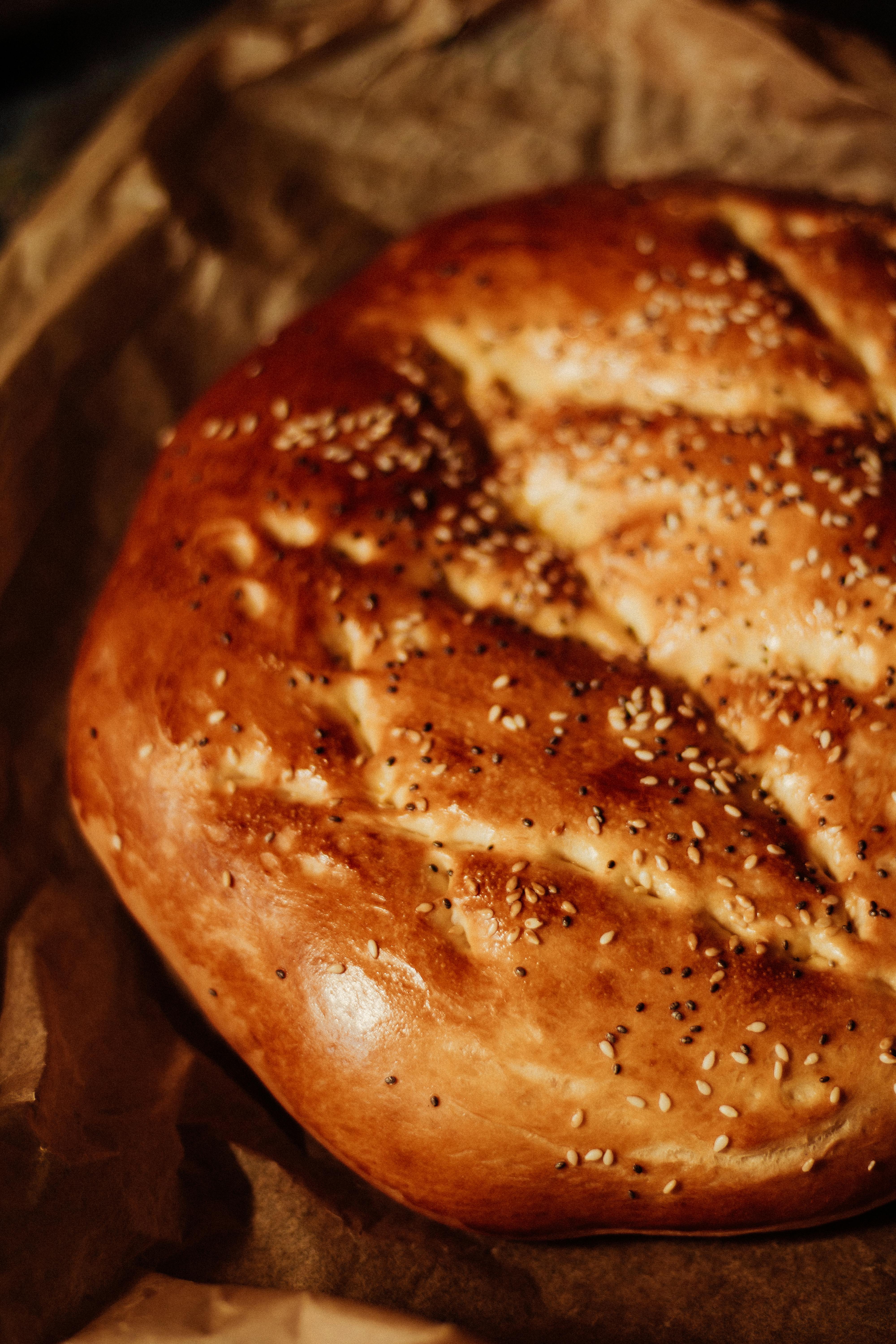
Photo: Anhelina Vasylyk / Pexels
The diets react (see scores below)
Common Ingredients
- flour
- yeast
- water
- salt
- sugar
- oil
Specific recipes may vary.
Incompatible with 7 of 11 diets
Diet Ratings
Malooga is a Yemeni flatbread made primarily from wheat flour, which is a high-carbohydrate grain. A single serving would contain 30-50g or more of net carbs, instantly consuming or exceeding the entire daily keto carb budget. The inclusion of sugar further adds to the carbohydrate load. This food is fundamentally incompatible with ketosis regardless of portion size, as even a small piece would significantly impact blood glucose and insulin levels.
Malooga is a traditional Yemeni flatbread made from flour, yeast, water, salt, sugar, and oil — all entirely plant-based ingredients with no animal products or animal-derived ingredients of any kind. Every component is clearly vegan-compliant. The oil used is unspecified but presumed to be a vegetable oil (commonly sesame or vegetable oil in Yemeni cooking). It is a relatively simple, minimally processed bread, which places it toward the higher end of the approve range. The only mild caveat is that refined flour and sugar are processed ingredients, but they do not affect the vegan status of the dish.
Malooga is a Yemeni flatbread made from wheat flour, yeast, water, salt, sugar, and oil. Nearly every ingredient violates paleo guidelines. Wheat flour is a grain and one of the most explicitly excluded foods in the paleo diet. Added salt and refined sugar are excluded. The unspecified 'oil' is most likely a seed or vegetable oil, also excluded. Yeast, while not strictly forbidden, is irrelevant here as the foundation of the dish is non-paleo. This bread has no paleo-compatible substitution path — it is structurally a grain-based processed food.
Malooga is a Yemeni flatbread made from refined white flour, which is a refined grain with minimal fiber and nutrients. The Mediterranean diet strongly emphasizes whole grains over refined grains, and refined flour-based breads are considered a departure from its core principles. The addition of sugar further detracts from its compatibility. The unspecified 'oil' may or may not be olive oil; if it were extra virgin olive oil, that would be a minor positive, but the overall profile of refined flour plus added sugar places this firmly in the 'avoid' category under strict Mediterranean diet guidelines.
Some Mediterranean diet interpretations acknowledge that traditional bread — even made from refined flour — has long been part of Mediterranean food culture (e.g., white pita in Greek and Levantine traditions), and when consumed in small portions alongside vegetables, legumes, and olive oil, it can fit within a flexible Mediterranean eating pattern.
Malooga is a Yemeni flatbread made entirely from plant-derived and processed ingredients: wheat flour, yeast, water, salt, sugar, and oil. It contains zero animal products. Every single ingredient violates carnivore diet principles — flour and yeast are plant/fungal-derived, sugar is a prohibited carbohydrate, and oil is a plant-based fat. This is a grain-based bread, which is one of the most clearly excluded food categories on any version of the carnivore diet.
Malooga is a Yemeni flatbread made primarily from wheat flour, which is a grain explicitly excluded on the Whole30. Additionally, sugar is listed as an ingredient, which is also excluded as an added sugar. Even setting aside those two violations, Malooga is a bread product, and bread falls squarely into the category of baked goods that Whole30 prohibits recreating even with otherwise compliant ingredients. This dish fails on multiple counts: excluded grain (flour), excluded added sugar, and the 'no bread/baked goods' rule.
Malooga is a Yemeni flatbread made primarily from wheat flour, which is high in fructans — one of the main FODMAP triggers. Wheat-based breads are consistently rated as high-FODMAP by Monash University during the elimination phase. The remaining ingredients (yeast, water, salt, sugar, oil) are all low-FODMAP and pose no concern. However, the wheat flour is the dominant ingredient and the structural base of the dish, making it impossible to consume this bread in a standard serving without a significant fructan load. Unlike sourdough breads where long fermentation can degrade fructans, Malooga uses a relatively standard yeast leavening process without evidence of prolonged fermentation sufficient to meaningfully reduce fructan content. A standard serving of this bread would far exceed safe FODMAP thresholds for wheat.
Malooga is a Yemeni flatbread made from refined white flour, yeast, water, salt, sugar, and oil. From a DASH perspective, it presents several concerns: it uses refined (not whole grain) flour, which lacks the fiber, potassium, magnesium, and other nutrients DASH emphasizes in grains; it contains added salt (sodium content varies by recipe but can be moderate to high); and it contains added sugar and oil, though typically in small amounts. DASH guidelines explicitly favor whole grains over refined grains and encourage limiting added sugars. However, it is not a high-saturated-fat or heavily processed food, and plain flatbreads are a staple carbohydrate that can fit into a DASH diet in modest portions if sodium is controlled. It occupies a 'caution' zone — acceptable occasionally but not a DASH-emphasized food.
NIH DASH guidelines clearly prefer whole grain products and limit refined grains, placing this bread in a less favorable category; however, some updated DASH-oriented dietitians note that traditional flatbreads made with minimal additives can be incorporated in controlled portions, especially if paired with vegetables, legumes, or low-fat protein, and if a whole-wheat flour substitution is used to increase fiber and micronutrient content.
Malooga is a Yemeni flatbread made from refined white flour, yeast, water, salt, sugar, and oil. As a refined grain product, it is high-glycemic and nutritionally comparable to white bread — a category Dr. Sears explicitly lists as 'unfavorable' and advises avoiding in Zone methodology. It is essentially pure high-glycemic carbohydrate with minimal fiber, no lean protein, and whatever fat is present is likely from vegetable oil (potentially omega-6-heavy). There is no protein block contribution, no meaningful low-glycemic carbohydrate, and no monounsaturated fat from a favorable source. While technically a small portion could be worked into a Zone meal as a carb block if balanced with lean protein and favorable fat, the high glycemic load makes it extremely difficult to incorporate without spiking insulin. It scores at the low end of 'caution' rather than 'avoid' only because a very small portion (like a thin sliver) could theoretically represent a carb block in a carefully constructed meal, and it is not nutritionally 'empty' in the same way pure sugar or soda is.
Malooga is a traditional Yemeni flatbread made from refined white flour, yeast, water, salt, sugar, and oil. From an anti-inflammatory perspective, its primary concern is the refined white flour, which is a refined carbohydrate with a high glycemic index that can spike blood sugar and promote inflammatory markers such as IL-6 and CRP. The small amount of added sugar compounds this glycemic load. The oil used is unspecified — if it is a seed oil high in omega-6 (e.g., vegetable or sunflower oil), that adds a mild pro-inflammatory element; if extra virgin olive oil is used (which is common in Yemeni cuisine), the profile improves marginally. Yeast and fermentation are generally neutral to mildly beneficial for gut health. The bread contains no meaningful anti-inflammatory compounds — no omega-3s, no polyphenols, no antioxidants, no fiber worth noting. It is not a strongly pro-inflammatory food (no trans fats, no HFCS, no artificial additives), but it offers little to no anti-inflammatory benefit. Occasional consumption is acceptable, but it should not be a dietary staple on an anti-inflammatory plan. Whole-grain flatbreads would be a preferable alternative.
Malooga is a Yemeni flatbread made from refined white flour, yeast, water, salt, sugar, and oil. It is a refined-grain, high-carbohydrate bread with negligible protein, minimal fiber, and moderate fat from added oil. For GLP-1 patients, it fails on nearly every priority criterion: it offers no meaningful protein to support muscle preservation, little to no fiber to aid digestion or blood sugar stability, and is made from refined grains that spike blood sugar quickly. Its caloric density relative to nutritional value is poor — exactly the kind of empty-calorie food that is counterproductive when appetite and caloric intake are already significantly reduced. The added sugar, though small, provides no benefit. The oil content, while not extreme, adds fat without meaningful nutritional return. GLP-1 patients eating small volumes need every bite to be nutritionally dense; a refined flatbread with no protein and no fiber does not meet that bar.
*See how scores were generated at our methodology page.
Nutritional profile
Six traits that cut across every diet.
Fiber & Plants
How much whole-plant food and fiber it delivers.
Healthy Fats
The quality of its fats (unsaturated, omega-3).
Whole / Unprocessed
How close it is to its natural, unprocessed form.
Gut Gentle
How easy it is on digestion (low FODMAP, few irritants).
Low Glycemic
How little it spikes your blood sugar.
Protein Density
How much protein it packs per calorie.
Controversy Index
Higher controversy = more disagreement between diets.
Diet-Specific Tips
 Vegan — 8/10
View tips
- All six ingredients are fully plant-based
- No dairy, eggs, or animal-derived additives present
- Yeast is a fungus, not an animal product — universally accepted as vegan
- Unspecified oil is assumed to be plant-derived, as is standard in this dish
- Simple, traditional flatbread with minimal processing — scores well even among whole-food plant-based advocates
- Sugar is refined but not filtered through bone char in most non-US contexts, and this does not affect vegan classification regardless
 DASH — 4/10
View tips
- Made with refined white flour, not whole grain — lower fiber and micronutrients
- Contains added salt — sodium level depends on recipe but is a concern for DASH
- Added sugar is a minor negative per DASH principles
- Oil used is likely a vegetable oil, which is acceptable in DASH in small amounts
- No saturated fat or high-sodium processed ingredients — not a severe DASH violation
- Portion control is important; DASH allows 6-8 grain servings/day but prefers whole grains
- Substituting whole wheat flour would significantly improve DASH compatibility
 Zone — 5/10
View tips
- Made from refined white flour — high glycemic index, explicitly unfavorable in Zone
- Contains added sugar, further elevating glycemic load
- No protein contribution — provides no Zone protein blocks
- Oil type unspecified — likely omega-6-heavy vegetable oil, discouraged in Zone
- Zero fiber to offset glycemic impact — net carbs essentially equal total carbs
- No vegetables or low-glycemic carbohydrates to balance the meal
- Would require very small portions and careful pairing to fit any Zone meal block structure
 Anti-Inflammatory — 4/10
View tips
- Refined white flour is a high-glycemic refined carbohydrate linked to elevated CRP and IL-6
- Added sugar increases glycemic load
- Unspecified oil — seed oils would worsen omega-6 load; EVOO would be neutral to mildly beneficial
- No meaningful anti-inflammatory nutrients: no omega-3s, polyphenols, antioxidants, or significant fiber
- No trans fats, artificial additives, or HFCS — not strongly pro-inflammatory
- Occasional consumption acceptable; not suitable as a dietary staple on anti-inflammatory principles