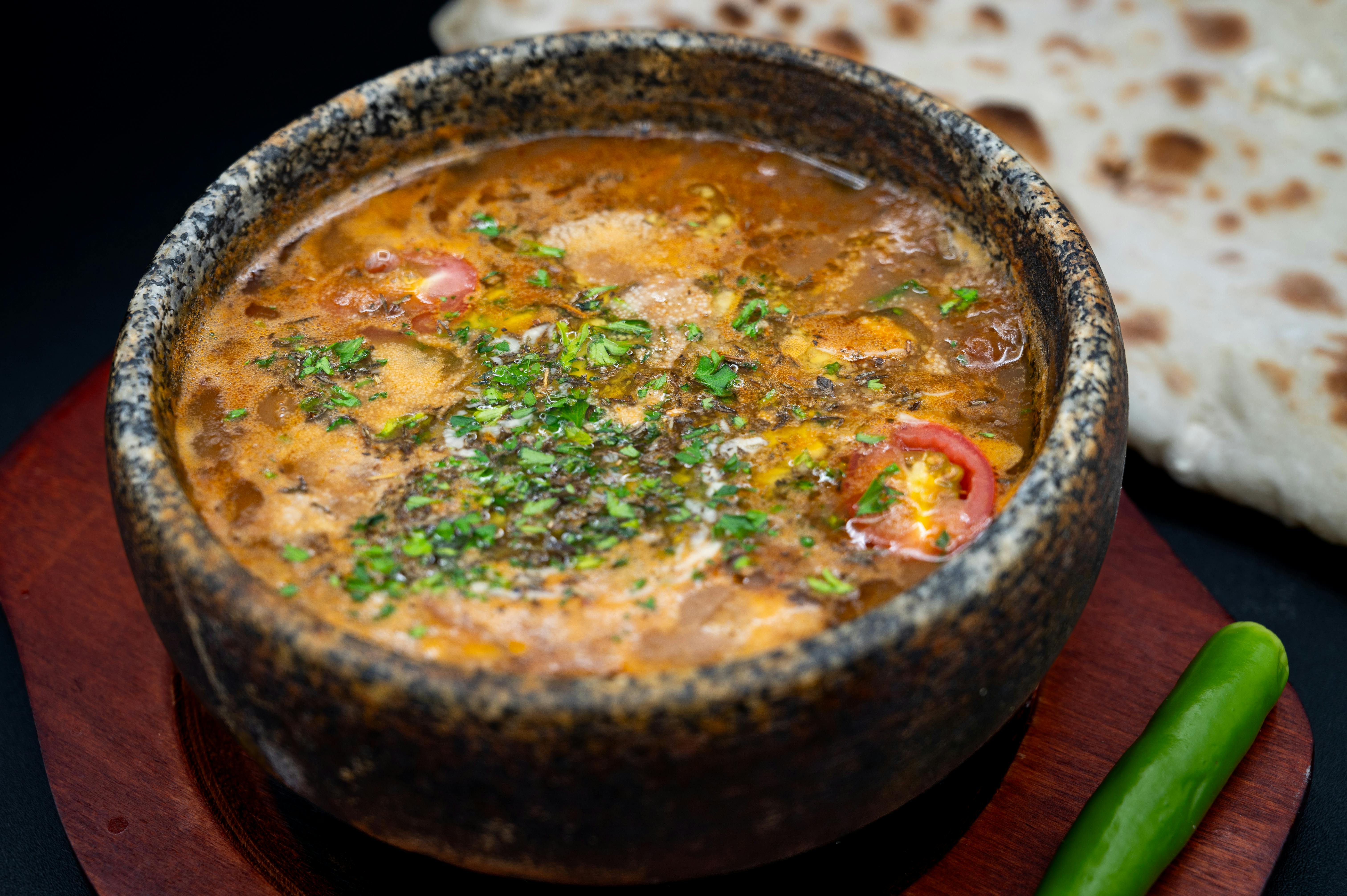
Photo: Saba Foods / Pexels
The diets react (see scores below)
Common Ingredients
- beef
- hilbeh
- tomatoes
- potatoes
- onion
- garlic
- fenugreek
- zhug
Specific recipes may vary.
Incompatible with 5 of 11 diets
Diet Ratings
Saltah is a traditional Yemeni stew that contains potatoes as a primary ingredient, which are a high-starch vegetable delivering roughly 15-17g net carbs per 100g. A standard serving of this dish would easily exceed the daily keto carb limit from potatoes alone. Combined with tomatoes and onions (which add additional net carbs), the total carbohydrate load is incompatible with maintaining ketosis. The beef, hilbeh (fenugreek froth), garlic, fenugreek, and zhug (spicy herb paste) are all keto-friendly components, but the potatoes are a dealbreaker. No reasonable portion size of traditional Saltah would keep net carbs within keto limits.
Saltah is a traditional Yemeni stew that prominently features beef as its primary protein. Beef is an animal product and is unequivocally excluded from a vegan diet. While several of the other ingredients — tomatoes, potatoes, onion, garlic, fenugreek, zhug (a herb-based hot sauce), and hilbeh (a fenugreek paste) — are fully plant-based, the inclusion of beef makes this dish incompatible with vegan eating. There is no ambiguity here: meat is a clear animal product.
Saltah is a Yemeni stew featuring mostly paleo-compliant ingredients: beef (approved), tomatoes, onion, garlic, fenugreek, and zhug (a herb-based hot sauce — paleo-friendly). Hilbeh is a fenugreek paste that is inherently paleo. However, white potatoes are a debated ingredient within the paleo community — originally excluded by Loren Cordain's strict framework, but increasingly accepted by modern paleo practitioners including Mark Sisson and Whole30. The dish as traditionally prepared is relatively clean, but the white potato inclusion keeps it in the caution zone under a strict interpretation. No grains, legumes (fenugreek is a seed/herb, not a legume in culinary context), dairy, or seed oils are core to the dish. Salt is traditionally used in cooking but excluded per paleo rules. Overall, this is a borderline dish that strict paleo followers should modify (swap white potatoes for sweet potatoes), while more flexible paleo practitioners may accept it.
Loren Cordain's original Paleo Diet explicitly excludes white potatoes due to their glycoalkaloid content and high glycemic index. Followers of strict Cordain-school paleo would avoid this dish unless potatoes are substituted with sweet potatoes or another tuber.
Saltah is a Yemeni beef stew featuring beef as its primary protein, which Mediterranean diet guidelines classify as red meat to be limited to a few times per month. While several ingredients are highly compatible with Mediterranean principles — tomatoes, onion, garlic, and potatoes are wholesome vegetables, and fenugreek/zhug are beneficial spices with anti-inflammatory properties — the dish's core identity is built around beef. Hilbeh, a fenugreek-based condiment, is plant-based and nutritious. However, the dominant red meat base pushes this dish into the 'avoid' category for regular consumption, as Mediterranean guidelines explicitly limit red meat due to its saturated fat content and associations with cardiovascular risk.
Some Mediterranean diet interpreters, particularly those referencing traditional North African and Eastern Mediterranean culinary zones, allow modest amounts of red meat in slow-cooked stews where meat serves more as a flavoring agent than a centerpiece. If beef portions are small and the vegetable/legume components dominate the bowl, occasional consumption could be considered 'caution' territory rather than 'avoid.'
Saltah is a Yemeni stew that is fundamentally incompatible with the carnivore diet. While it does contain beef as the primary protein, the dish is dominated by plant-based ingredients: tomatoes, potatoes, onions, garlic, fenugreek (a legume-adjacent seed), and zhug (a spicy herb sauce made from cilantro, parsley, peppers, and spices). Hilbeh is a fenugreek-based paste, also entirely plant-derived. The beef component is the only carnivore-compliant ingredient. This dish cannot be modified into a carnivore meal without fundamentally changing its identity — it would simply become plain beef stew without the defining elements of Saltah.
Saltah is a traditional Yemeni stew whose core ingredients — beef, tomatoes, potatoes, onion, and garlic — are all fully Whole30 compliant. Fenugreek is an allowed spice. Zhug (a Yemeni green chili condiment) is typically made from chili peppers, herbs (cilantro, parsley), garlic, and spices, all of which are compliant. The key ingredient requiring attention is hilbeh, a fenugreek-based foam/paste. Hilbeh is made from soaked fenugreek seeds whipped into a froth, often with lemon juice and zhug — all compliant components. However, commercially prepared versions of zhug or hilbeh could contain non-compliant additives (preservatives, added sugars, or other fillers), so label-reading is advised for any pre-made components. Assuming homemade or clean-label versions, this dish is solidly Whole30 compliant.
The medium confidence reflects that hilbeh and zhug are not explicitly addressed by official Whole30 guidelines, and store-bought versions may contain non-compliant ingredients. Melissa Urban's guidance emphasizes reading labels on any prepared condiment or paste, so community members would advise making these components from scratch or verifying ingredient lists carefully.
Saltah contains multiple high-FODMAP ingredients that make it unsuitable during the elimination phase. Onion and garlic are among the highest-FODMAP foods tested by Monash University, both rich in fructans and problematic at any culinary quantity. Hilbeh is a fenugreek-based foam/paste — fenugreek seeds contain GOS and fructans and are high-FODMAP. Zhug (a Yemeni hot sauce/paste) typically contains garlic and onion as core ingredients, compounding the fructan load. While beef, tomatoes, and potatoes are generally low-FODMAP at standard servings, the combination of onion, garlic, hilbeh (fenugreek), and zhug creates an unavoidable high-FODMAP dish. There is no realistic way to modify this dish to be low-FODMAP without fundamentally altering its character.
Saltah is a Yemeni stew featuring beef, tomatoes, potatoes, onion, garlic, hilbeh (fenugreek froth), and zhug (a spicy herb condiment). Several components align well with DASH principles: tomatoes, onions, garlic, and potatoes are DASH-friendly vegetables rich in potassium, magnesium, and fiber. Fenugreek (hilbeh) is a legume-derived ingredient with potential blood pressure-lowering properties. Zhug is herb-based and generally low in sodium when homemade. However, the beef component is a concern — DASH limits red meat due to saturated fat content, recommending lean cuts in small portions. The dish's DASH compatibility depends heavily on the cut of beef used (lean cuts like sirloin score better than fatty cuts), portion size of the beef, and sodium levels in preparation. Traditional recipes may use fatty cuts and generous salting, which would push this toward 'avoid.' A leaner, lower-sodium preparation keeps it in the 'caution' range — acceptable occasionally but not a DASH staple.
NIH DASH guidelines categorically limit red meat and recommend substituting poultry or fish as primary proteins; however, updated clinical interpretations note that lean beef in small portions (2-3 oz) within an otherwise vegetable-rich dish like Saltah can fit within DASH's overall dietary pattern, especially when the dish's substantial vegetable and legume content is considered.
Saltah is a Yemeni meat stew that presents a mixed Zone Diet profile. The beef provides protein but is not a lean Zone-preferred source (compared to skinless chicken or fish), contributing more saturated fat. Tomatoes, onions, and garlic are favorable low-glycemic Zone carbohydrates. Fenugreek (present in hilbeh, the fenugreek froth) is beneficial — it has a low glycemic index and anti-inflammatory properties that align well with Sears' polyphenol and omega-3 focus. Zhug (a spicy herb condiment of cilantro, parsley, chili, and spices) adds favorable polyphenols with negligible macronutrient impact. The significant Zone concern is potatoes, which are a high-glycemic carbohydrate explicitly unfavorable in Zone methodology — they spike insulin and disrupt the 40/30/30 balance. The fat profile of the dish depends on cooking method; if olive or vegetable oil is used, it is more Zone-compatible, but the beef fat content and undefined cooking fat add uncertainty. To make this more Zone-compatible, potatoes should be minimized or replaced with lower-glycemic vegetables, and lean beef cuts should be used in controlled portions (~3 oz per serving). As-is, the dish requires meaningful modification to fit Zone ratios well.
Some Zone practitioners following Sears' later anti-inflammatory writings (Toxic Fat, The Mediterranean Zone) might rate this more favorably, noting the polyphenol-rich ingredients (zhug herbs, fenugreek, garlic, tomatoes) and the traditional whole-food nature of the dish. They might argue that a small potato portion within a larger vegetable-dominant stew can be balanced within a block structure, especially given the anti-inflammatory spice profile.
Saltah is a traditional Yemeni stew with a notably complex anti-inflammatory profile. On the positive side, the dish contains several powerhouse anti-inflammatory ingredients: hilbeh (fenugreek paste) is rich in saponins and fiber with demonstrated anti-inflammatory effects; zhug (a spiced herb sauce typically made with chili peppers, garlic, cumin, cardamom, and coriander) provides a concentrated dose of anti-inflammatory spices and polyphenols; garlic contains allicin which suppresses inflammatory cytokines; fenugreek seeds are consistently associated with reduced inflammatory markers; and tomatoes provide lycopene and vitamin C. Onions contribute quercetin, a potent flavonoid. Potatoes are nutritionally neutral in this context — starchy but not inherently inflammatory when eaten whole. The main limiting factor is red meat (beef), which is classified under 'limit' in anti-inflammatory frameworks due to saturated fat content and arachidonic acid, which can upregulate inflammatory pathways. The quantity and cut of beef matter significantly — lean cuts used in modest portions tip the dish toward acceptable, while fatty cuts shift it toward more pro-inflammatory. Overall, the exceptional spice and herb profile substantially offsets the beef, making this a cautious-approve rather than an avoid, but the beef prevents a full approval.
A more favorable reading, as suggested by researchers who emphasize the whole dietary pattern (e.g., Mediterranean and Middle Eastern traditional diets overall), would note that the herb and spice density of zhug and hilbeh is exceptional and may functionally outweigh the modest inflammatory contribution of beef in a balanced diet. Conversely, stricter anti-inflammatory practitioners such as those following AIP-adjacent frameworks might also flag fenugreek's lectin content as a potential concern for individuals with autoimmune conditions, though mainstream anti-inflammatory science considers fenugreek beneficial.
Saltah is a traditional Yemeni stew built around a beef broth base with tomatoes, onions, garlic, and potatoes, topped with hilbeh (a fenugreek foam) and zhug (a spicy herb paste). It has several GLP-1-friendly qualities: the broth base is easy to digest and hydrating, tomatoes and onions add fiber and micronutrients, and fenugreek has some evidence for blood sugar stabilization. However, several factors lower the score. First, beef as the primary protein is a concern — unless lean cuts are used (e.g., lean stew beef with fat trimmed), the saturated fat content can worsen GLP-1 GI side effects like nausea and bloating. Second, potatoes are starchy and relatively low in protein density, displacing more nutrient-dense calories in an already small appetite window. Third, zhug is typically very spicy (chili peppers, sometimes habanero-level heat), which may worsen reflux and nausea — significant concerns for GLP-1 patients. Fourth, protein content per serving is highly variable depending on the beef-to-broth ratio and cut used, making it difficult to guarantee the 15–30g per meal protein target is met. The dish is not inherently disqualifying and can be modified (lean beef, modest zhug, larger beef portion relative to potato), but as typically prepared it sits firmly in the caution zone.
Some GLP-1-focused dietitians may rate this higher if prepared with lean beef and broth-forward portioning, noting that stews generally support easy digestibility and hydration — key GLP-1 priorities. Others will flag the spice level of zhug and the saturated fat risk from standard beef cuts as disqualifying features that consistently worsen GI side effects, particularly in the first weeks of GLP-1 therapy.
*See how scores were generated at our methodology page.
Nutritional profile
Six traits that cut across every diet.
Fiber & Plants
How much whole-plant food and fiber it delivers.
Healthy Fats
The quality of its fats (unsaturated, omega-3).
Whole / Unprocessed
How close it is to its natural, unprocessed form.
Gut Gentle
How easy it is on digestion (low FODMAP, few irritants).
Low Glycemic
How little it spikes your blood sugar.
Protein Density
How much protein it packs per calorie.
Controversy Index
Higher controversy = more disagreement between diets.
Diet-Specific Tips
 Paleo — 5/10
View tips
- Beef is fully paleo-approved
- White potatoes are debated — excluded by Cordain, accepted by Sisson and Whole30
- Hilbeh (fenugreek paste) is paleo-compliant as a seed-based condiment
- Zhug is an herb/spice blend — paleo-approved
- Tomatoes, onion, and garlic are all paleo-compliant vegetables
- Added salt is technically excluded under strict paleo rules
- No grains, dairy, or seed oils in the traditional recipe
 Whole30 — 8/10
View tips
- Beef is fully Whole30 compliant as a primary protein
- Tomatoes, potatoes, onion, and garlic are all approved vegetables
- Fenugreek is a compliant spice
- Zhug (chili, herbs, garlic, spices) is compliant when homemade or made without additives
- Hilbeh (fenugreek foam) is compliant in its traditional form — soaked fenugreek seeds, lemon, zhug
- Commercial zhug or hilbeh products require label verification for added sugars or non-compliant preservatives
 DASH — 5/10
View tips
- Red meat (beef) is limited on DASH — saturated fat concern
- Tomatoes, onions, potatoes, and garlic are DASH-approved vegetables rich in potassium
- Fenugreek (hilbeh) is a legume-derived ingredient with favorable cardiovascular properties
- Zhug is herb/spice-based and low in sodium when homemade
- Sodium content varies significantly by preparation — traditional heavy salting is a concern
- Lean beef cuts in small portions are more DASH-compatible than fatty cuts
- Overall vegetable-rich profile partially offsets the red meat concern
 Zone — 5/10
View tips
- Potatoes are a high-glycemic unfavorable Zone carbohydrate that disrupts insulin balance
- Beef is an acceptable Zone protein but less preferred than lean poultry or fish due to saturated fat content
- Tomatoes, onions, and garlic are favorable low-glycemic Zone carbohydrates
- Fenugreek and hilbeh have low glycemic index and anti-inflammatory properties consistent with Zone principles
- Zhug adds polyphenol-rich herbs with negligible macronutrient impact — Zone favorable
- Fat profile is uncertain depending on cooking fat and beef cut used
- Dish can be made Zone-compatible by substituting potatoes with lower-GI vegetables and using lean beef cuts in controlled portions
 Anti-Inflammatory — 5/10
View tips
- Beef (red meat): pro-inflammatory due to saturated fat and arachidonic acid — anti-inflammatory guidelines recommend limiting
- Hilbeh (fenugreek paste): strong anti-inflammatory properties via saponins, fiber, and demonstrated CRP-lowering effects
- Zhug: highly anti-inflammatory spice blend — chili peppers, garlic, and cumin all reduce inflammatory markers
- Fenugreek: anti-inflammatory seed with research support for reducing IL-6 and CRP
- Garlic: allicin and organosulfur compounds suppress NF-κB and inflammatory cytokines
- Tomatoes: lycopene and vitamin C provide antioxidant and anti-inflammatory activity
- Onion: quercetin content is a meaningful anti-inflammatory flavonoid contribution
- Potatoes: neutral starchy vegetable — whole food, not refined, acceptable in moderation
- Overall spice and herb density significantly offsets but does not fully neutralize the pro-inflammatory contribution of beef
 GLP-1 Friendly — 5/10
View tips
- Beef protein quality depends heavily on cut — lean cuts improve rating significantly
- Zhug is very spicy and may worsen GLP-1-related reflux and nausea
- Hilbeh (fenugreek foam) adds fiber and may support blood sugar stability
- Broth base is hydrating and easy to digest — aligns with GLP-1 needs
- Potatoes add starchy calories with low protein density — displaces nutrient-dense eating
- Saturated fat from standard beef cuts may worsen nausea and bloating
- Protein per serving is variable and may fall short of 15–30g meal target without adequate beef portion