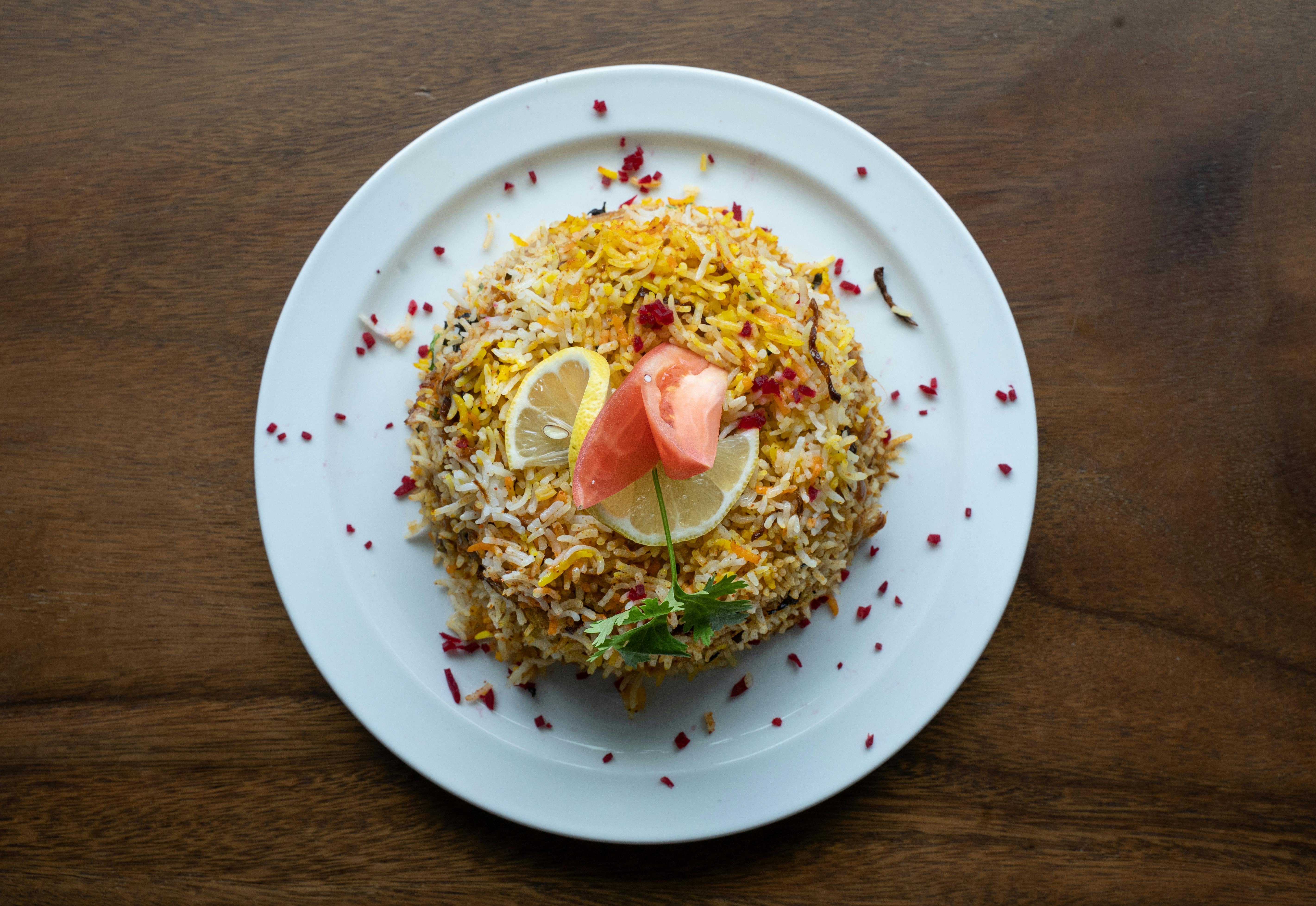
Photo: Alberta Studios / Pexels
The diets react (see scores below)
Common Ingredients
- lamb
- basmati rice
- yogurt
- potatoes
- onion
- saffron
- tomatoes
- cardamom
Specific recipes may vary.
Incompatible with 7 of 11 diets
Diet Ratings
Zurbian is a Yemeni rice and meat dish built around two major keto-incompatible ingredients: basmati rice and potatoes. Basmati rice alone contains approximately 45g of net carbs per cooked cup, and potatoes add another 15-20g of net carbs per medium potato. Together, these two ingredients make a single serving of Zurbian far exceed the entire daily net carb allowance for ketosis (20-50g). While the lamb and spices (saffron, cardamom) are keto-friendly, and yogurt, onion, and tomatoes are acceptable in small portions, the core structural components of this dish—rice and potatoes—are absolute keto disqualifiers. There is no practical way to consume a meaningful portion of Zurbian while maintaining ketosis.
Zurbian is a traditional Yemeni rice and meat dish that contains multiple animal products. Lamb is the primary protein and a direct animal flesh ingredient. Yogurt is a dairy product derived from animal milk. Both ingredients are explicitly excluded under vegan dietary rules. The remaining ingredients (basmati rice, potatoes, onion, saffron, tomatoes, cardamom) are all plant-based, but the presence of lamb and yogurt makes this dish entirely incompatible with a vegan diet.
Zurbian contains multiple non-paleo ingredients that firmly place it in the 'avoid' category. Basmati rice is a grain and is excluded under strict paleo rules, and yogurt is a dairy product, both of which are clear violations. These two ingredients are central to the dish and cannot be considered minor or incidental additions. Lamb, onion, tomatoes, saffron, and cardamom are all paleo-approved, and potatoes occupy a debated but more tolerated gray area in modern paleo. However, the presence of both a grain (basmati rice) and dairy (yogurt) as core structural components of the dish makes Zurbian incompatible with a paleo diet regardless of the other ingredients.
Zurbian is a Yemeni slow-cooked lamb and rice dish that conflicts with Mediterranean diet principles in several ways. Lamb is red meat, which should be limited to only a few times per month under Mediterranean guidelines. Basmati rice, while not the worst refined grain, is still a white refined grain rather than a whole grain. Together, these two core components of the dish — red meat and refined white rice — place it firmly outside the approved category. The supporting ingredients (yogurt, potatoes, onion, tomatoes, cardamom, saffron) are more diet-friendly, but they are secondary to a foundation of lamb and white rice, which are both discouraged. This dish could be an occasional indulgence but should not be a regular feature of a Mediterranean diet.
Some Mediterranean diet interpreters note that lamb is deeply embedded in traditional Eastern Mediterranean and Middle Eastern culinary cultures (e.g., Greek and Turkish traditions), and when consumed in modest portions infrequently, it is not categorically excluded. The yogurt and vegetable components do add nutritional value, and some practitioners argue such dishes fit a 'few times per month' red meat allowance without being labeled 'avoid.'
Zurbian is a Yemeni lamb and rice dish that is fundamentally incompatible with the carnivore diet. While the lamb itself is an excellent carnivore-approved ruminant protein, the dish is built around multiple plant-based and non-carnivore ingredients. Basmati rice is a grain — strictly excluded. Potatoes are a starchy vegetable — excluded. Onions, tomatoes, cardamom, and saffron are all plant-derived — excluded. Yogurt is dairy, which is debated on carnivore but secondary to the larger issue here. The dish as a whole is a carbohydrate-heavy, plant-dominated meal. The lamb component alone would be approved, but the overall dish cannot be considered carnivore in any tier of the diet.
Zurbian contains two excluded ingredients that make it non-compliant with Whole30 rules. First, basmati rice is a grain and is explicitly excluded from the Whole30 program. Second, yogurt is a dairy product and is also explicitly excluded. The remaining ingredients — lamb, potatoes, onion, saffron, tomatoes, and cardamom — are all Whole30-compliant. However, the presence of both rice and yogurt as core structural components of this dish means it cannot be made compliant without fundamentally altering the recipe.
Zurbian contains multiple high-FODMAP ingredients that make it unsuitable during the elimination phase. Onion is one of the highest-FODMAP foods tested by Monash University, rich in fructans, and is problematic even in small quantities. Yogurt contains significant lactose and is high-FODMAP at typical serving sizes (though lactose-free yogurt would be an alternative). These two ingredients alone are enough to classify the dish as 'avoid.' The remaining ingredients are more favorable: lamb is FODMAP-free, basmati rice is low-FODMAP, potatoes are low-FODMAP at standard servings, tomatoes are low-FODMAP at up to 65g (about half a medium tomato), saffron is low-FODMAP, and cardamom is low-FODMAP at normal culinary quantities. However, the combination of onion (virtually unavoidable in this dish's preparation) and lactose-containing yogurt used as a marinade or sauce component means this dish cannot be consumed safely during the elimination phase without significant reformulation.
Zurbian is a Yemeni lamb and rice dish with a mix of DASH-friendly and less-ideal components. The basmati rice, yogurt, potatoes, onion, tomatoes, saffron, and cardamom are all DASH-compatible ingredients — vegetables, whole grains (if white basmati, still acceptable), and low-fat dairy align well with DASH principles. However, lamb is a red meat with moderate-to-high saturated fat content, which DASH explicitly limits. DASH recommends limiting red meat and preferring lean poultry or fish as primary proteins. A typical serving of lamb can deliver 5-9g of saturated fat, pushing toward or exceeding the DASH daily limit of ~6g saturated fat. The dish itself has no inherently high-sodium ingredients listed, which is a positive. With lean lamb cuts (leg of lamb, trimmed), modest portions, and low-fat yogurt, the dish can be made more DASH-compatible, but as commonly prepared with fattier cuts, it warrants caution.
NIH DASH guidelines categorize red meat as a food to limit, recommending no more than 6oz of lean meat/poultry/fish per day and favoring plant proteins and fish. However, some updated clinical interpretations note that lean, trimmed lamb in moderate portions can fit within overall DASH dietary patterns, particularly when paired with fiber-rich vegetables and whole grains as seen in this dish — the key issue is portion size and fat trimming rather than categorical exclusion.
Zurbian is a traditional Yemeni layered rice and lamb dish that presents multiple Zone Diet challenges. The dish combines three high-glycemic carbohydrate sources simultaneously — basmati rice, potatoes, and potentially yogurt sugars — which makes achieving the 40/30/30 macro ratio extremely difficult without radical portion modification. Lamb is a higher-fat protein compared to Zone-preferred lean proteins like skinless chicken or fish, contributing saturated fat that complicates the 30% fat target (especially given the fat block rules). Potatoes are explicitly listed as an 'unfavorable' carbohydrate in Dr. Sears' Zone methodology, and white basmati rice is high-glycemic and occupies many carb blocks quickly. On the positive side, the dish does contain tomatoes and onion (favorable low-glycemic vegetables), yogurt (provides some protein), and saffron/cardamom (polyphenol-rich spices that align with the anti-inflammatory focus). The core problem is structural: this is a carbohydrate-dominant dish where the carb sources are predominantly unfavorable, and getting a Zone-balanced plate would require a very small serving of the rice-potato base paired with a larger lamb portion, which is not how the dish is traditionally served or portioned.
Zurbian is a Yemeni slow-cooked lamb and rice dish that presents a mixed anti-inflammatory profile. On the positive side, the spice blend — particularly saffron and cardamom — offers meaningful anti-inflammatory compounds (crocin and terpene derivatives respectively). Tomatoes contribute lycopene, onions provide quercetin, and yogurt supplies probiotics that can support gut-mediated inflammation regulation. Basmati rice, while a refined-ish carbohydrate, has a lower glycemic index than many other white rices, making it a more moderate choice. However, lamb is red meat, which is flagged under anti-inflammatory guidelines as a food to limit due to saturated fat content and potential to raise arachidonic acid levels and inflammatory markers like CRP with regular consumption. Potatoes are a neutral starchy vegetable with modest antioxidant value. The dish lacks omega-3-rich ingredients, leafy greens, or strong polyphenol sources beyond its spices. As an occasional meal, the beneficial spice profile and vegetable components partially offset the lamb, but the absence of anti-inflammatory protein sources and the red meat centerpiece prevent an approval rating.
Some anti-inflammatory frameworks (particularly those emphasizing traditional whole-food diets and the Mediterranean/Middle Eastern eating pattern) would view slow-cooked lamb with warming spices like saffron and cardamom as a reasonable choice — lamb from pasture-raised sources has a better omega-6:omega-3 ratio than grain-fed beef, and the spice complexity can meaningfully shift the dish's inflammatory burden. Conversely, strict anti-inflammatory protocols would flag any red meat as pro-inflammatory and recommend replacing lamb with a legume-based or fish-based protein entirely.
Zurbian is a traditional Yemeni slow-cooked lamb and rice dish that has a mixed nutritional profile for GLP-1 patients. On the positive side, lamb provides meaningful protein, and the dish includes yogurt (additional protein, probiotics), tomatoes, onions, and spices like cardamom and saffron that are well-tolerated and nutrient-supportive. However, lamb is a fatty red meat with notable saturated fat content, which can worsen GLP-1 side effects like nausea, bloating, and slowed digestion — especially if prepared with fattier cuts (shoulder, leg with fat cap) as is traditional. Basmati rice and potatoes add significant refined/starchy carbohydrates with low fiber and no protein contribution, making the calorie profile less efficient for GLP-1 patients eating small portions. The combination of lamb fat, starchy carbs, and potatoes in one dish creates a calorie-dense, moderate-to-high-fat meal that sits heavy in a slowed GI system. Portion sensitivity is high — a small, controlled serving centered on the lamb and yogurt components is far more acceptable than a full traditional plate. If prepared with leaner lamb cuts and a reduced rice-to-protein ratio, the score improves meaningfully.
Some GLP-1-focused dietitians may view slow-cooked lamb as acceptable given that the cooking process renders fat and can produce a leaner result depending on the cut, and yogurt adds a protein and digestive benefit. Others maintain that any fatty red meat dish with a starchy base is poorly suited to GLP-1 patients regardless of preparation, given the compound effect of high fat and slow gastric emptying.
*See how scores were generated at our methodology page.
Nutritional profile
Six traits that cut across every diet.
Fiber & Plants
How much whole-plant food and fiber it delivers.
Healthy Fats
The quality of its fats (unsaturated, omega-3).
Whole / Unprocessed
How close it is to its natural, unprocessed form.
Gut Gentle
How easy it is on digestion (low FODMAP, few irritants).
Low Glycemic
How little it spikes your blood sugar.
Protein Density
How much protein it packs per calorie.
Controversy Index
Higher controversy = more disagreement between diets.
Diet-Specific Tips
 DASH — 5/10
View tips
- Lamb is a red meat limited by DASH guidelines due to saturated fat content
- Saturated fat in lamb (especially fattier cuts) may exceed DASH daily limits in a full serving
- Basmati rice, tomatoes, onion, and potatoes are DASH-compatible carbohydrate and vegetable sources
- Yogurt contributes beneficial calcium and potassium aligned with DASH goals — use low-fat version
- No inherently high-sodium ingredients listed, which is favorable
- Saffron and cardamom are sodium-free spices that support flavor without salt
- Dish can be optimized for DASH by using lean trimmed lamb cuts and controlling portion size
- Overall dish has a good vegetable and grain base that partially offsets the red meat concern
 Zone — 4/10
View tips
- Basmati rice is a high-glycemic, 'unfavorable' Zone carbohydrate that rapidly fills carb blocks
- Potatoes are explicitly classified as an unfavorable carbohydrate in Zone methodology
- Triple carbohydrate stacking (rice + potatoes + yogurt sugars) makes 40/30/30 ratio very hard to achieve
- Lamb is higher in saturated fat than Zone-preferred lean proteins, complicating the fat block balance
- Tomatoes and onion are favorable low-glycemic vegetables that partially offset the unfavorable carb sources
- Saffron and cardamom contribute polyphenols, aligning with Zone's anti-inflammatory principles
- Yogurt provides additional protein blocks but also adds carbohydrate load
- Traditional serving sizes of this dish would significantly overshoot Zone carbohydrate targets
 Anti-Inflammatory — 5/10
View tips
- Lamb is red meat — flagged as 'limit' under anti-inflammatory guidelines due to saturated fat and arachidonic acid
- Saffron contains crocin and safranal with documented anti-inflammatory and antioxidant properties
- Cardamom provides terpene-based anti-inflammatory compounds
- Tomatoes and onions contribute lycopene and quercetin respectively
- Yogurt provides probiotics supporting gut-inflammation balance
- Basmati rice has a relatively lower glycemic index vs. other white rices but is still a refined carbohydrate
- No omega-3-rich ingredients, legumes, or leafy greens present
- Suitable occasionally but not ideal as a frequent meal under anti-inflammatory principles
 GLP-1 Friendly — 4/10
View tips
- Lamb is a fatty red meat — saturated fat content can worsen GLP-1 GI side effects (nausea, bloating, reflux)
- Basmati rice and potatoes are starchy, low-fiber carbohydrates that reduce nutrient density per calorie
- Yogurt is a positive ingredient — adds protein and may aid digestion
- Spices (cardamom, saffron) are well-tolerated and not a concern
- Traditional preparation is calorie-dense and portion-sensitive — small servings are critical
- Fiber content of the dish is low overall despite inclusion of tomatoes and onions
- Leaner lamb cuts (e.g., trimmed leg) would improve the rating; fattier cuts (shoulder, untrimmed) would lower it
- Heavy, slow-digesting combination of fat, starch, and meat is poorly suited to slowed gastric emptying